How Hedge Funds and Institutions Invest in Bitcoin Mining
From public miner equities and ETFs to hashrate derivatives, ASIC-backed lending, and private JVs — how institutions get Bitcoin mining exposure in 2026.

Hedge funds and institutions invest in Bitcoin mining through five main channels: public miner equity (MARA, CLSK, RIOT, CORZ), mining ETFs (WGMI, MNRS), hashrate derivatives on Luxor and Bitnomial, ASIC-backed lending and equipment financing, and private joint ventures that co-locate capital next to utility-scale sites. Each channel offers a different mix of BTC beta, operating leverage, and counterparty risk.
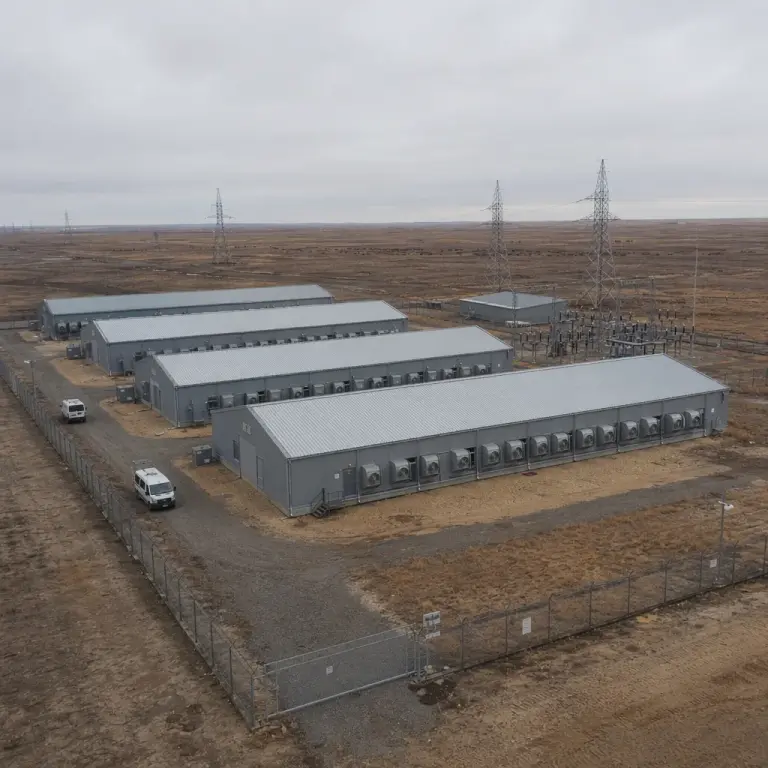
Why institutions care about mining exposure
Bitcoin mining is not just "buying BTC with extra steps." For an allocator, it behaves like a levered call option on Bitcoin, an energy arbitrage business, and an infrastructure play rolled into one. When BTC rallies, well-run miners outperform spot — revenue scales with price while most operating costs (power contracts, staff, depreciation) are sticky in USD. When BTC falls, that same operating leverage turns brutal.
By early 2026, the sector's combined public market cap exceeds $25 billion, and network hashrate hovers near 1.1 ZH/s. Hashprice — daily revenue per PH/s — has compressed to roughly $34–$35, according to Hashrate Index data, which has pushed weaker operators toward consolidation, AI data center repurposing, or both. For institutional investors, this maturing ecosystem has finally produced the regulated instruments needed to deploy meaningful size.
Levered BTC beta
Mining stocks historically deliver 2–3x the volatility of spot BTC, offering amplified upside during bull cycles and an explicit risk profile that most funds can model.
Infrastructure optionality
Miners own megawatts of power, land, and high-density racks — assets that convert into AI and HPC hosting when hashprice compresses, creating a second revenue leg.
Non-correlated cash flow
With hashrate derivatives and ASIC-backed lending, institutions can isolate mining cash flow from BTC spot, building yield strategies that only a handful of asset classes support.
The 5 institutional vehicles, ranked by liquidity
Different allocators need different wrappers. A macro hedge fund wants daily liquidity and shortable exposure; a private credit fund wants collateral with a clear recovery path; a sovereign-adjacent pool wants long-duration infrastructure. The table below maps each vehicle to the investor profile it actually fits.
| Vehicle | Liquidity | BTC beta | Best for |
|---|---|---|---|
| Public miner equities | Daily, very high | ~2–3x | Long/short, momentum, event-driven |
| Mining ETFs (WGMI, MNRS) | Daily | ~2x | Allocators who need single-ticker exposure |
| Hashrate derivatives | Monthly contracts | Isolated hashprice | Relative-value desks, miner hedgers |
| ASIC-backed lending | 6–24 month paper | Low, credit-like | Private credit, yield seekers |
| Private JVs & co-location | 3–7 year lockup | ~1x plus infra | Infrastructure & energy funds |
1. Public miner equities — the default entry point
Buying shares of listed miners is still the simplest way for a fund to express a mining thesis. The "big four" by hashrate — Marathon Digital (MARA), CleanSpark (CLSK), Riot Platforms (RIOT), and Core Scientific (CORZ) — dominate institutional flow. CleanSpark crossed 50 EH/s of operational hashrate in 2025 and holds more than 12,000 BTC on its balance sheet, giving allocators both operating exposure and an embedded treasury position.
The appeal is mechanical: these stocks move roughly 2–3x the magnitude of spot BTC in either direction, and most are shortable and optionable on US exchanges. That lets a fund build pair trades — long MARA / short BTC futures to express "miners catch up," or the inverse during hashprice crunches. Hedge funds like Leopold Aschenbrenner's Situational Awareness disclosed large positions in Core Scientific, Riot, and Hut 8 as an AI-infrastructure convergence play, treating the megawatts themselves as the underlying asset.

2. Mining ETFs — diversification without single-name risk
For funds that can't hold single miners — or don't want to re-run the due diligence each quarter — mining ETFs wrap the sector into one ticker. CoinShares' Valkyrie Bitcoin Miners ETF (WGMI) and Grayscale's Bitcoin Miners ETF (MNRS) are the two most commonly referenced vehicles, both rebalancing periodically to track companies deriving meaningful revenue from Bitcoin mining.
The tradeoff is concentration risk inside the basket. The top three to four names typically account for the majority of AUM, so an ETF is not as diversified as it looks. Still, for a family office or endowment getting first exposure, an ETF eliminates custody headaches, passes through 1099 reporting cleanly, and fits inside existing prime brokerage workflows.
3. Hashrate derivatives — pure mining beta, no hardware
This is the vehicle that changed institutional mining in 2024–2026. Hashrate derivatives let a trader buy or sell daily mining revenue per unit of computing power (hashprice) without ever touching an ASIC. Luxor Technology launched OTC hashprice forwards in 2023, and in 2024 partnered with Bitnomial to list the first CFTC-regulated Bitcoin Hashrate Futures in the US, sized at 1 PH contracts with monthly expiries.
By 2026, the hashrate forward market has surpassed $200 million in open interest, with daily settlement volumes reaching up to 25 EH/s, according to Luxor's derivatives reports. Three institutional use cases dominate:
Miner revenue hedging
A public miner locks in six months of forward hashprice at, say, $45/PH/day. If hashprice drops to $30, the derivative payoff offsets revenue compression — smoothing reported earnings for analysts.
Synthetic long hashrate for funds
A hedge fund that wants pure mining exposure — no equity-management risk, no SG&A drag — simply buys forward hashprice. The payoff isolates network economics from corporate execution.
Halving and difficulty arbitrage
Desks trade the shape of the hashprice curve around halvings or expected difficulty jumps, expressing views on supply/demand of global hashrate rather than on BTC spot itself.
Don't have a prime broker? Rent hashrate directly.
Hashrate futures and ETFs are built for institutional balance sheets. For individual investors who still want exposure to modern-fleet Bitcoin mining economics — $0.035/kWh industrial power, Antminer S21s at 12–17.5 J/TH — NoxHash gives you the same underlying as a monthly rental, starting at $20.
4. ASIC-backed lending — mining as private credit
For funds that want credit-like returns instead of equity beta, ASIC-backed lending has emerged as a distinct institutional product. The basic structure: a lender advances USD or BTC against a pledged fleet of ASIC miners (the collateral), with the loan typically serviced from mining revenue.
For years this model barely worked, because hashprice volatility made future revenue uncollateralizable. The rise of hashrate derivatives changed the math: a lender can now require the borrower to hedge a portion of forward hashprice as a loan covenant, converting a volatile revenue stream into something closer to a fixed coupon. Luxor's miner-financing desk pioneered this playbook, and traditional private credit funds have started following.
What the lender gets
Senior-secured paper yielding 12–18% in recent vintages, backed by tangible ASIC hardware with an active secondary market and optional hashprice hedges.
What the miner gets
Capital to upgrade fleet without diluting equity or waiting on BTC price appreciation — critical in the window between halvings when fleet efficiency decides survival.
The key risk
ASICs depreciate fast — a 2-year-old machine can lose 60% of its resale value. Aggressive advance rates plus a bear market can leave lenders under-collateralized.
The institutional wrapper
Increasingly packaged as closed-end credit funds or SMAs, with quarterly marks, an independent valuation agent for hardware, and a derivative overlay on forward hashprice.
5. Private JVs, co-location, and strategic equity
The most patient capital goes directly into the ground. Large allocators — infrastructure funds, energy firms, and sovereign-adjacent pools — partner with mining operators to fund new sites in exchange for equity in the holdco or a claim on a share of mined BTC. Grayscale Investments and Foundry Digital (backed by Digital Currency Group, and still the largest Bitcoin mining pool globally by hashrate in 2026) launched a joint entity to invest directly in mining hardware, an arrangement that institutionalized what used to be bilateral, handshake deals.
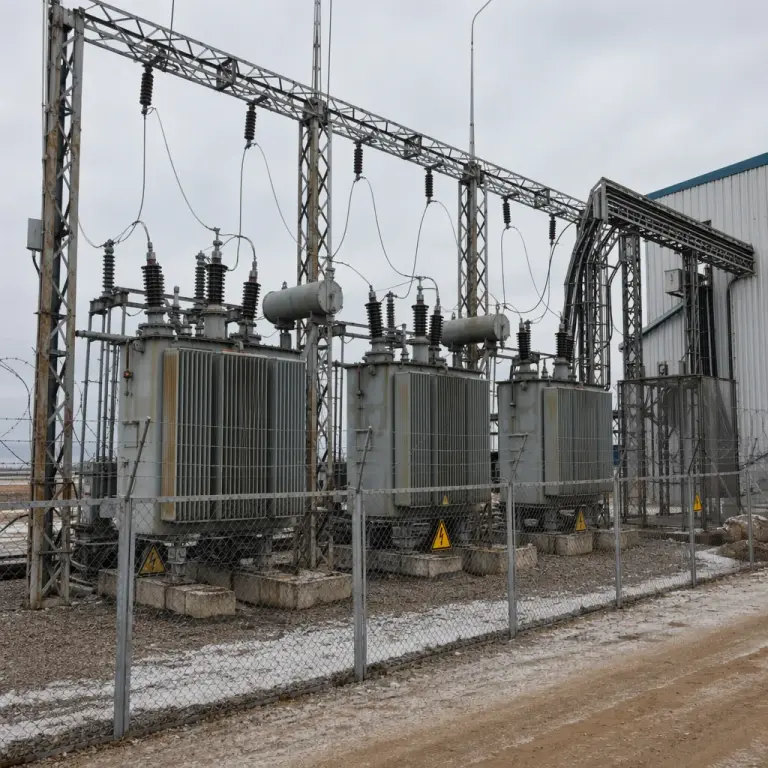
Recent capital raises underline the appetite. Canaan attracted $72 million in equity from Brevan Howard's BH Digital, Galaxy Digital, and Weiss Asset Management, according to Bitcoin.com News. These are not passive public-market positions — they are strategic stakes designed to back a specific operator's buildout. For the investor, the return profile looks less like a tech stock and more like a renewable-energy infrastructure fund: 3–7 year lockups, hard assets, and cash distributions once a site is ramped.
What retail investors can learn from institutional playbooks
You won't be trading 1 PH hashrate futures on a personal account. But the institutional framework carries three lessons any individual mining investor can apply — and all three are things we see reflected in how NoxHash users who stay long-term approach the platform.
| Institutional principle | Retail translation |
|---|---|
| Separate operator risk from market risk | Let a professional operator (NoxHash, or a miner you hold equity in) absorb hardware and power risk while you take BTC-price risk. |
| Size to fleet efficiency, not hashrate | J/TH beats TH/s. A 12–18 J/TH fleet (like NoxHash's S21 series) has room to survive hashprice compression that kills older rigs. |
| Ladder your entry over time | Rather than one large commitment, rent in tranches — the retail version of DCA-ing into hashrate forwards across multiple expiries. |
| Cap your exposure to what you can lose | Institutions have strict position limits. You should too — start with a single Basic Miner before scaling, and avoid entering during deep BTC drawdowns. |
Where NoxHash fits in this landscape
NoxHash is not a hedge fund vehicle — it's a cloud mining operator. But structurally we sit on the same infrastructure layer that institutional capital funds: a Kazakhstan-based data center with industrial power contracts at $0.035/kWh, a fleet built around Antminer S21 variants (12–17.5 J/TH), and a dual-revenue model where USDT rental fees stabilize cash flow the same way hashprice forwards stabilize a public miner's earnings. Users rent a slice of that operator-grade infrastructure instead of underwriting it.
The logic scales down cleanly. An institution buys a forward on 1 PH of hashprice for 90 days; a NoxHash user rents a 150 TH/s Standard Miner for 3 months at a 5% discount. Different wrappers, same underlying economics — and the retail version carries no counterparty risk beyond the platform itself, no margin calls, and no minimum allocation above $20.

Get the infrastructure exposure without the $500k minimum
You just read how funds pay millions to own what NoxHash rents out by the month: modern-fleet ASICs, industrial power contracts, and 24/7 operator support. The retail version starts at $20 — or try 2 days free with a Basic Miner, no deposit required.
FAQ
Do hedge funds actually hold Bitcoin, or just mining stocks?
Most institutional mining exposure is indirect — through equities, ETFs, or hashrate derivatives — rather than spot BTC, because those instruments settle through traditional prime brokers. Funds that want pure BTC typically use the spot ETFs (IBIT, FBTC) separately, keeping mining and spot as distinct positions.
What is hashprice, and why do institutions track it?
Hashprice is the daily USD revenue generated per PH/s of hashrate — it combines BTC price, block reward, network difficulty, and transaction fees into one number. It is the single cleanest proxy for miner profitability, and the underlying on which regulated hashrate futures settle.
Why are miners pivoting to AI and HPC hosting?
Miners own megawatts of grid-connected power, high-density cooling, and permitted sites — the exact bottlenecks AI data centers face. When hashprice is depressed, repurposing capacity for AI hosting can unlock higher-margin revenue, which is why allocators now treat some miners as de facto power-infrastructure plays.
Can I access hashrate futures as an individual investor?
Hashrate futures on Bitnomial are available to qualified participants through futures brokers, but contract sizes (1 PH and up) and margin requirements make them impractical for most retail. A monthly cloud mining rental offers similar hashrate exposure without margin, minimum-account, or qualification hurdles.
Is institutional participation good or bad for Bitcoin mining?
Both. Institutional capital accelerates fleet upgrades, deepens derivative liquidity, and stabilizes financing — all positives. The trade-off is concentration: more hashrate held by fewer, larger operators raises decentralization concerns that the Bitcoin community continues to debate openly.
Further reading
For deeper data on the institutional side of mining, we recommend reviewing Hashrate Index's primer on Bitcoin Mining Hashrate Futures for the mechanics of the derivatives layer, and CoinDesk's reporting on the Luxor–Bitnomial hashrate futures launch for the institutional context around how these products reached US regulated markets.
Not investment advice
This article is informational and educational only — it is not investment advice. Bitcoin mining investments, whether through equities, derivatives, lending, or cloud mining contracts, carry significant market, counterparty, regulatory, and technical risks. Mining revenue depends on BTC price, network difficulty, and market conditions, all of which can change rapidly. Past performance does not guarantee future results. Only invest what you can afford to lose, and consult a qualified financial advisor for advice specific to your situation.