Bitcoin Mining as a Corporate Treasury Strategy
Mining vs spot buying BTC for corporate treasuries — CapEx vs OpEx, FASB fair-value accounting, DCA via hashrate, and the ops risk CFOs must weigh.

Bitcoin mining as a corporate treasury strategy means accumulating BTC through proof-of-work production rather than open-market spot purchases. Companies like Marathon Digital and Hut 8 add roughly a block's worth of BTC every day at a cost set by their electricity and hardware, not by today's exchange price. Since FASB ASU 2023-08 took effect in 2025, those holdings hit the balance sheet at fair value — making the accounting cleaner, but the quarterly earnings wilder.
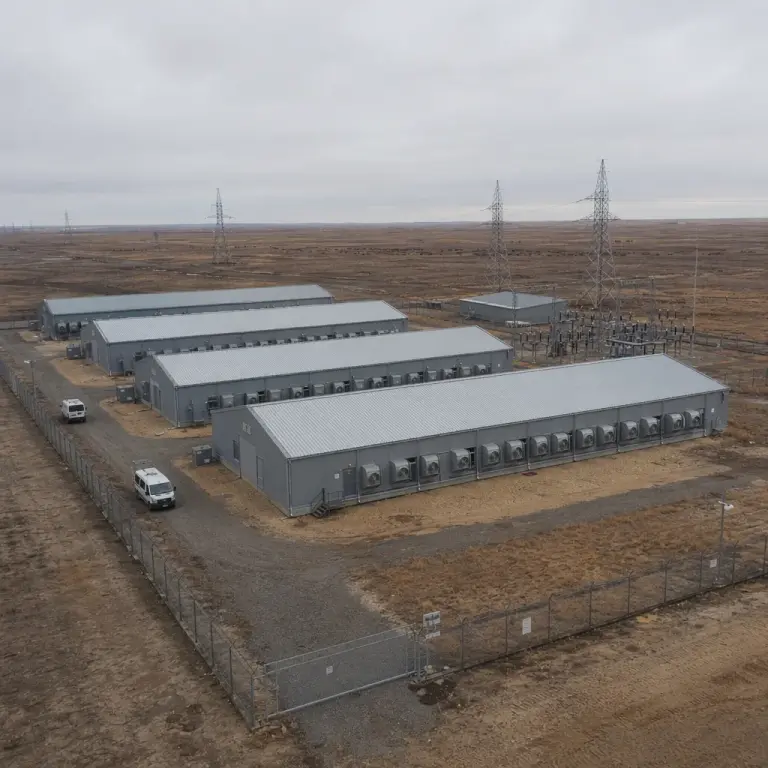
Two Ways to Put BTC on the Balance Sheet
A CFO approving a Bitcoin allocation today has two honest routes. Route one is the Strategy (formerly MicroStrategy) model: raise capital via equity or convertibles and buy BTC on the open market. Route two is the Marathon / Hut 8 / Riot model: build or contract mining capacity and let proof-of-work produce BTC at a marginal cost set by your power price. The first is pure price timing. The second is an operating business that happens to settle in BTC.
As of April 2026, Strategy holds more than 815,000 BTC acquired through capital markets, while Marathon Digital's production-based treasury sits near 17,000 BTC and Hut 8 around 9,000 BTC per the public BTC treasury holdings tracker. The gap is not a ranking — it is a model choice. Capital allocators optimise for price and leverage; miners optimise for energy and uptime.
The Three Corporate Accumulation Models
Spot buying (Strategy model)
Issue equity, convertibles, or preferreds, then buy BTC at market. Pure price exposure, instant settlement, zero ops burden — but every purchase is a single timing decision marked daily against NAV.
Owned mining (Marathon model)
CapEx-heavy build-out of ASIC fleets, power contracts, and facility operations. BTC is produced daily at a marginal cost — effectively a structural DCA — with meaningful operating leverage to hashprice and difficulty.
Hashrate contracts (hybrid)
Rent hashrate from an operator under a fixed-USD contract. You get the DCA and production-cost benefits of mining without CapEx, permitting, or ops — but carry operator counterparty risk and contract-term commitment.
Dollar-Cost Averaging via Hashrate, Not Calendar
Traditional DCA for treasuries means "buy $X of BTC on the first of every month." That averages your entry price, but it still requires a recurring discretionary approval, an FX line, and an execution venue. Mining DCAs differently — you convert fixed-USD operating costs (power, hosting, or hashrate rental fees) into BTC at whatever the network is paying that day.
In a bull tape, your fixed cost buys fewer BTC, but the BTC itself is worth more. In a bear, your USD cost is unchanged but each satoshi produced is cheaper to mine — you are structurally accumulating more units at lower prices, which is the entire point of DCA. The averaging happens on the production side, not the execution side. That is a useful property for a CFO who wants the allocation to be a line item, not a weekly debate.
CapEx vs OpEx — How Treasurers Should Frame It
The accounting framing matters almost as much as the economics. Owning rigs creates a depreciable asset on the balance sheet plus a monthly power expense. Renting hashrate collapses the whole thing into a pure OpEx line item. A spot purchase is neither — it is a financial asset held at fair value.
| Dimension | Spot buying | Owned mining (CapEx) | Rented hashrate (OpEx) |
|---|---|---|---|
| Upfront capital | Full BTC notional | Rigs + facility + power deposit | None — monthly fee only |
| Accounting treatment | Crypto asset at fair value (ASC 350-60) | PP&E + depreciation + mined BTC at fair value | Simple OpEx + mined BTC at fair value |
| Operating risk | None | Hardware, power, permits, staff | Operator counterparty only |
| Time to first BTC | Minutes | 6–18 months (build, permit, energise) | Same day |
| Averaging effect | Only if scheduled DCA | Structural — daily BTC payouts | Structural — per-minute BTC payouts |
| Best suited for | Pure allocators, public issuers with strong equity | Operators with cheap power + industrial expertise | Corporates wanting production exposure without ops |
FASB ASU 2023-08 — The Fair-Value Rule That Changed the Math
Before 2025, US GAAP treated Bitcoin as an indefinite-lived intangible. Firms booked BTC at cost, wrote it down on any drop, and could never mark it back up until sale. A CFO holding BTC through a drawdown watched impairments pile up while an equivalent rally was invisible — a brutal one-way ratchet that made Bitcoin treasury programs a reporting headache.
FASB Accounting Standards Update 2023-08 replaced that regime with fair-value measurement through net income, effective for fiscal years beginning after December 15, 2024. In plain English: BTC on the balance sheet now moves up and down with market price every quarter, and the delta hits earnings directly.
The upside
Rallies flow through earnings the same quarter they happen. No more lag between economic reality and reported NAV. Balance sheet finally reflects what the treasury is actually worth.
The tradeoff
Drawdowns also flow through earnings in real time. Strategy reported a roughly $4.22B fair-value loss in Q1 2025 — the same BTC, just a lower mark. Expect louder quarterly EPS swings, even in mining firms.
For miners specifically, ASU 2023-08 is a double signal. BTC produced and held on the balance sheet is now mark-to-market, which means a miner's reported earnings are a blend of mining margin (operating) and BTC price delta (financial). Treasurers modelling this need to separate the two in guidance, or investors will conflate ops performance with tape moves.
Test the OpEx route before committing CapEx
If the OpEx column of the comparison above is what fits your treasury policy, the cheapest way to sanity-check the model is to run hashrate from an industrial operator for a month. NoxHash's Pro and Enterprise tiers rent the same Antminer S21 fleet used by public miners, at Kazakhstan power costs — no rigs to buy, no permits to file.

Proof of Reserves — What Mining Gives You That Spot Buying Does Not
A corporate treasury holding BTC bought on an exchange needs to prove custody — usually through cold-storage attestations and on-chain signatures from the holding wallet. Mining adds a second, independent proof vector: every satoshi can be traced back to a specific block reward or pool payout, with the coinbase transaction or FPPS distribution visible on-chain.
This matters for audit, for regulators, and for investor confidence. When Hut 8 or Marathon publishes monthly production, the figures reconcile to block-by-block on-chain data in a way that a spot-buyer's exchange statements cannot. For a treasurer who sits in front of auditors, that chain of custody is a meaningful risk reducer — and one of the honest reasons production-based accumulation is finding a second wind post-FASB.
Production Cost vs Spot Price — The Miner's Edge (And Its Limits)
Public miners report an all-in cost to produce one BTC — typically in the $35,000–$55,000 range for efficient fleets as of early 2026, depending on power price, fleet vintage, and hashrate. When spot BTC trades above that band, every coin mined is accumulated at a discount to market. That is the structural edge a well-run mining operation has over an open-market buyer.
The edge is real but not unconditional. Three forces erode it: halving (block subsidy fell from 6.25 to 3.125 BTC in April 2024, with the next cut due around 2028), difficulty growth as new hashrate comes online, and power cost inflation in jurisdictions without locked-in contracts. A treasury that underwrites "we mine below market forever" is underwriting a forecast — not a fact.
How a CFO Should Evaluate This — A Four-Step Framework
Anchor the treasury policy first
Decide the target BTC allocation as a % of cash, the tolerance for quarterly mark-to-market swings under FASB, and the board mandate. Without this, any vehicle choice is premature.
Decide allocator vs operator
If your competitive advantage is capital access, go allocator (spot buy, Strategy model). If it is cheap power or industrial real estate, go operator (owned mining). If neither, rented hashrate is the honest answer.
Model the two-year cost curve
Build a 24-month model with sensitivity on BTC price (−40%, flat, +50%), hashprice, and difficulty. Compare BTC accumulated per $1M deployed across spot, owned, and rented — include the 1.5% withdrawal fee and any hosting or pool fees.
Pilot small before scaling
Run a 90-day pilot at 1–5% of the intended allocation. Validate the accounting workflow with your auditor, the custody flow with treasury ops, and the reporting story with IR. Only then ratchet up.
The Ops Risks Nobody Mentions on Earnings Calls
Every honest assessment of mining-based treasury has to name the failure modes. Concentration risk is real — Kazakhstan, Texas, and Paraguay dominate cheap-power supply, and any single jurisdiction can flip on tax or curtailment policy overnight. Hardware cycle risk is real — an S21 fleet that is the efficiency leader in 2026 will be mid-pack by 2028, forcing a reinvestment decision right when halving cuts revenue.
Counterparty risk for rented hashrate is the quiet one. A hosted miner who mismanages power contracts, loses permits, or runs a fractional-reserve operation transfers that failure straight onto your P&L. The right questions for a hashrate provider are: which data centre, what power contract duration, what uptime SLA, who audits the production figures? If an operator cannot answer those clearly, the "OpEx-only" elegance disappears fast.
Frequently Asked Questions
Is mining or spot buying better for a corporate BTC treasury?
Neither is universally better. Spot buying wins on speed, simplicity, and pure price exposure. Mining wins on production-cost accumulation, natural DCA, and proof-of-reserves. Most corporates should pick based on whether their edge is capital access (spot) or operating infrastructure (mining).
How does FASB ASU 2023-08 change Bitcoin treasury accounting?
Effective for fiscal years beginning after December 15, 2024, ASU 2023-08 requires in-scope crypto assets to be measured at fair value each quarter, with gains and losses flowing through net income. Rallies now lift earnings; drawdowns now hit them. The old impairment-only model is retired.
Can a company mine Bitcoin without owning the hardware?
Yes — through hashrate rental or cloud mining contracts. The corporate pays a fixed monthly USD fee and receives BTC at whatever rate the rented hashrate produces. It avoids CapEx, permitting, and operations, but introduces operator counterparty risk that needs real due diligence.
What is the production cost of 1 BTC in 2026?
All-in production cost for efficient public miners currently sits in the $35,000–$55,000 range per BTC, driven mostly by power price and fleet efficiency. Home or retail setups trend much higher. Whenever spot trades above this band, each mined BTC is accumulated at a discount to market.
Why does mining give better proof of reserves than buying?
Mined BTC can be traced on-chain from the coinbase transaction or pool payout into the treasury wallet, giving auditors a verifiable origin story. Exchange-bought BTC relies on custodian statements and cold-storage attestations. Both can prove reserves, but mining adds an independent production-side trail.
Run step 4 of the framework — a 90-day mining pilot
Before you ratchet a corporate BTC treasury program, validate the accounting, custody, and reporting flows with a small production-based allocation. NoxHash lets a treasury team start with a single Enterprise Miner ($250/month), track per-minute BTC payouts on the dashboard, and withdraw to cold storage when the pilot closes.
Not investment, tax, or accounting advice
This article is general information for finance professionals evaluating Bitcoin treasury strategies. It does not constitute investment, tax, or accounting advice for your jurisdiction or entity. Production costs, BTC price, network difficulty, and FASB guidance interpretations change — confirm every figure with a qualified advisor and your auditor before committing corporate capital. Past performance of any miner or treasury program does not guarantee future results.