How Large-Scale Mining Operations Negotiate Electricity Rates
Inside the PPAs, demand-response deals, stranded-energy contracts and behind-the-meter tactics industrial Bitcoin miners use to push power costs below $0.04/kWh.

Large-scale mining operations negotiate electricity rates through long-term power purchase agreements (PPAs), demand-response contracts, stranded-energy partnerships and behind-the-meter generation — stacking several of these at once to push delivered power below $0.04/kWh. The lever that matters is not the posted utility tariff but the custom contract built around a mining farm's ability to flex, curtail, and sign for decades of load.
Why miners can negotiate when almost nobody else can
Electricity is sold at posted tariffs for residential users and small businesses, but industrial customers sign bespoke contracts. Mining operations are the most unusual of those customers — they combine three traits utilities rarely see together: multi-megawatt baseload, willingness to sign 5–15 year commitments, and the ability to turn off in seconds.
A typical 100 MW mining site consumes about 876 GWh per year — the equivalent of 80,000 U.S. homes — at a steady, predictable profile. That baseload is what a generator or utility dreams of when financing a new power plant. In exchange for signing a long contract, miners walk out with rates that would be impossible for any other commercial buyer.
The second negotiating chip is interruptibility. ASIC miners compute stateless SHA-256 hashes: kill the power mid-cycle and nothing is lost except a few seconds of expected revenue. Aluminium smelters, data centers, chemical plants — they cannot say the same. This turns miners into flexible load, a category that unlocks discounts, demand-response payments, and behind-the-meter deals that fixed industrial loads never qualify for.
The six levers of a mining electricity contract
Before looking at specific deal structures, it helps to know the knobs being turned. Every negotiation cycles through the same six variables, and the winning miner pushes on the ones that match the site's profile.
| Lever | What the miner gives | What the miner gets |
|---|---|---|
| Contract tenor | 5–15 year commitment | Fixed $/MWh well below short-term market |
| Capacity reservation | Guaranteed MW draw + demand charge | Priority connection, grid upgrade funded by utility |
| Curtailment flexibility | Right to shut off on grid signal | Ancillary-service payments, reduced demand charge |
| Time-of-use structuring | Pause during peak hours (4CP windows) | Next-year transmission charges cut sharply |
| Basis / settlement point | Accept node-level pricing risk | Lower headline $/MWh than hub settlement |
| Credit support | Parent guarantees or letters of credit | Counterparty accepts longer tenor |
Pricing, tenure, credit support and basis risk are the four points Bracewell LLP highlights as the most fought-over lines in any mining PPA — they determine whether a theoretically cheap $/MWh actually arrives cheap at the meter.
Power purchase agreements (PPAs)
A PPA is a long-term contract — commonly 5, 10, or 15 years — between a miner (the offtaker) and a power generator. Instead of buying from a utility at retail rates, the miner buys a fixed block of generation directly from the source, usually a wind farm, solar plant, or gas peaker. According to Wood Mackenzie analysis, long-term PPAs for miners in North America and Scandinavia are clearing at roughly 3.2–4.5 cents per kilowatt-hour — half the U.S. industrial average.
Physical PPA
Miner takes actual electrons from the plant through a direct interconnect or the nearest utility node. Simplest, lowest risk — but only works if the generator is geographically close.
Virtual (financial) PPA
Miner keeps buying from the utility but settles a contract-for-difference against the generator's output. Geographically decoupled, but exposes the miner to basis risk between generation and load nodes.
Curtailable PPA
Hybrid where the miner commits to drop load when the generator's counterparty obligations to the grid would otherwise be at risk. Lowest $/MWh of the three, but the miner must accept unplanned downtime.
The credit-support conversation often determines whether a PPA closes at all. Generators financing a new wind or solar project need the offtaker to prove it will still be solvent in year 12. Miners that are publicly traded or have institutional backers post parent-company guarantees. Smaller operators post letters of credit sized at 3–6 months of expected payments — a meaningful capital lock-up, but cheaper than accepting a higher $/MWh.
ERCOT Texas: the demand-response playbook
Nowhere has the "paid to turn off" model matured faster than in Texas, where the grid is run by ERCOT — the only U.S. grid operator not under full federal jurisdiction. ERCOT treats large flexible loads as a tradable asset class, and miners participate by stacking several programs at once. Per U.S. Energy Information Administration data, crypto mining and data-center loads are now the fastest-growing demand segment in the ERCOT footprint.
Four Coincident Peak (4CP) shaping
Transmission charges for the following year are set by a customer's load during four 15-minute peak intervals across June–September. A miner that reliably powers down during those windows can slash its delivered transmission cost for the next 12 months — worth millions on a 100+ MW site.
Ancillary services (RRS, ECRS, Non-Spin)
ERCOT pays capacity to resources that can respond within seconds (Responsive Reserve Service), ten minutes (ERCOT Contingency Reserve Service), or thirty minutes (Non-Spinning Reserve). Stacked, these programs can pay on the order of $100,000 per MW-year of reserved curtailment capacity.
Emergency Response Service (ERS)
A seasonal program that pays customers to be on-call for true grid emergencies — rare events, typically a handful of hours per year. Low call frequency plus meaningful capacity payment makes ERS one of the simplest programs to layer on.
Real-time energy arbitrage
Miners on floating (index) contracts simply shut off when the real-time Locational Marginal Price (LMP) spikes above the miner's breakeven hashprice. During the July 2022 Texas heatwave, public filings showed one large miner earning more from not mining than from mining that month.
The math is extreme during scarcity events. Texas LMPs can touch the $5,000/MWh cap; a miner earning $50–80/MWh from hashing that stays online through a $3,000/MWh interval loses an enormous amount of opportunity cost. Shutting off and selling the capacity back is the obvious trade.

Access industrial-grade electricity without signing a 10-year contract
Everything above — PPAs, capacity reservations, curtailment rights — takes a corporate balance sheet and years of negotiation. NoxHash already did that work in Kazakhstan at $0.035/kWh. Rent hashrate from $20/month and inherit the contract.
Stranded energy and behind-the-meter generation
The most aggressive electricity rates — often below $0.03/kWh — do not come from grids at all. They come from energy that would otherwise be wasted. Two archetypes dominate.
Flared natural gas. Oil wells routinely produce associated gas with no pipeline to carry it, so it is burned off on-site — combusted for emissions reasons without generating revenue. A mining container parked at the wellhead runs a generator on that gas and turns it into hashrate. The producer recovers royalty-grade revenue on stranded molecules; the miner gets a fuel cost that can translate to $0.02–0.05/kWh of effective electricity, according to research from Compass Mining. Both sides benefit; no grid interconnection is required.
Stranded renewables. Hydro plants in remote regions, new wind farms built before transmission upgrades catch up, or curtailed solar during midday overbuild — these generators face negative local pricing or forced curtailment. A miner offering to consume the overflow behind the meter, at the generator's busbar, avoids transmission charges, regulatory line items, and grid-congestion surcharges entirely. The contract skips the utility and becomes a direct commercial agreement between miner and generator.
Why "behind the meter" is cheaper
Power that never touches the public grid skips transmission, distribution, and ancillary-service charges — often 40–60% of a retail bill. The miner and generator split that saving in whatever ratio they negotiate.
The regulatory catch
Some jurisdictions have restricted behind-the-meter mining — notably New York's two-year moratorium on fossil-fueled BTM crypto permits. Deals now include regulatory-change clauses and force-majeure provisions.
Case study: the NoxHash $0.035/kWh Kazakhstan contract
NoxHash operates its fleet out of Kazakhstan under a multi-year industrial electricity contract at $0.035/kWh delivered. That number is not an accident — it sits at the intersection of all the levers described above.
| Negotiation point | How NoxHash structured it |
|---|---|
| Jurisdiction | Kazakhstan — one of three global mining hubs after China's 2021 ban; coal + gas-fired baseload with industrial surplus capacity. |
| Contract type | Long-term industrial purchase at regulated tariff, within the licensed digital-miner quota framework introduced by Kazakh law. |
| Delivered $/kWh | $0.035/kWh — roughly half of U.S. Texas industrial, one-third of Canadian Québec, one-fifth of average U.S. residential. |
| Cooling cost leverage | Average winter temperatures of -15°C to -30°C cut HVAC spend 20–30% versus data centers in hot climates — the cooling saving is effectively a "hidden" electricity discount. |
| Fleet efficiency | Antminer S21 series (12–18.5 J/TH) — the lowest-energy generation on the market, multiplying the value of every negotiated kWh. |
| Settlement stability | Customer rental fees settle in USDT (USD-pegged stablecoin) — fiat-side revenue is stable while BTC rewards fluctuate, making long-term electricity commitments financeable. |
The operational impact is concrete. A single Antminer S21 (200 TH/s, 3,500 W) running 24/7 draws about 2,520 kWh per month. At $0.035/kWh, that's roughly $88/month in electricity. The same machine in Texas at $0.05/kWh would cost about $126/month — a 43% premium. In a U.S. residential market at $0.12/kWh, the bill balloons to about $302/month, which is the difference between profitable and underwater when BTC price dips.

Capacity reservation and time-of-use structuring
Two under-discussed levers round out the playbook.
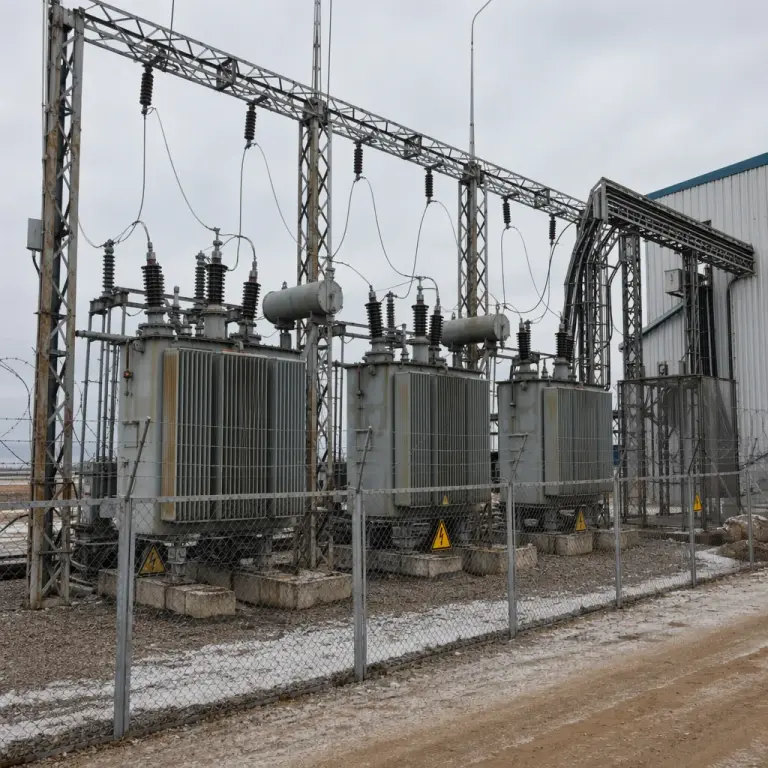
Capacity reservation. Large miners often co-fund the utility's substation and transmission upgrades in exchange for a guaranteed MW block and a lower demand charge. The upfront capital outlay can run into the tens of millions, but it locks in a priority queue position and transforms the utility's own financial model — they get a secured anchor tenant for their new feeder, and the miner gets power that would otherwise be five years away in the interconnection queue.
Time-of-use (TOU) structuring. Retail and industrial tariffs almost always vary by hour. Peak hours (hot summer afternoons, cold winter evenings) can cost 3–5× off-peak. Miners that can reliably power down during peak windows negotiate lower blended rates — sometimes stripped of the peak component entirely, paying only the off-peak price for 18–20 hours per day and going dark the rest. The trade is simple: give up the hours that cost the most, keep the hours that cost the least.
TOU example: 20-hour mining day
A miner running only 20 hours/day at $0.03/kWh off-peak — versus 24 hours at a blended $0.06/kWh — still produces more revenue per dollar of electricity. Capital efficiency (hashrate × uptime) has to be re-optimised, not maximised.
Capacity reservation trade
Paying $5–15M upfront for a dedicated 50–100 MW interconnect can cut delivered $/MWh by 10–25% over a 10-year contract. The NPV math usually wins for operators that already have scale.
Why retail miners inherit these deals through cloud rentals
Every lever described above — PPAs, capacity reservations, ERCOT program stacking, stranded-gas partnerships, TOU shaping — requires corporate-grade negotiation, credit capacity, and multi-year commitment. None of it is accessible to a retail miner plugging a single ASIC into a garage outlet.
That asymmetry is exactly why cloud-mining rentals exist. When NoxHash signs a $0.035/kWh Kazakhstan contract, the economic benefit flows through to the monthly rental price a user pays. A Basic Miner at $20/month or a Pro Miner at $100/month is not a markup on residential electricity — it is a share of an industrial contract that a single user could never negotiate alone.
What the user actually buys when renting hashrate from a legitimate operator is not just hardware time; it is a claim on the operator's electricity contract, fleet efficiency, cooling advantage, and engineering team. Everything written above is the reason those contracts exist — and why outsourced mining can still produce real returns in an environment where home mining rarely does.
Skip the 10-year contract. Share the $0.035/kWh outcome.
Industrial PPAs and demand-response programs are how big farms hit their rates. NoxHash runs that playbook in Kazakhstan — you just rent a Basic Miner and earn BTC every minute.
Frequently asked questions
What electricity rate do the cheapest mining farms actually pay?
Long-term PPAs in North America and Scandinavia commonly clear at $0.032–$0.045/kWh. Flared-gas and stranded-renewable deals can deliver $0.02–$0.05/kWh effective cost. Kazakhstan industrial contracts — including the one NoxHash operates under — settle around $0.035/kWh delivered.
Can a small miner negotiate an industrial rate?
Not directly. Utilities reserve industrial tariffs for customers drawing at least a few hundred kilowatts on a dedicated feeder, backed by credit support. Retail-scale miners access the same economics only by renting hashrate from an operator whose contract already covers them.
How much can a miner actually earn from ERCOT demand response?
Public filings and grid-operator reports point to roughly $100,000 per MW per year when ancillary-service programs are stacked — plus one-off real-time arbitrage during scarcity events that can, in extreme months, exceed mining revenue itself. Exact numbers vary with weather and market conditions.
Why is Kazakhstan's $0.035/kWh rate sustainable?
Kazakhstan built its industrial grid around coal and natural-gas baseload designed for Soviet-era heavy industry. Post-2021, as Chinese miners relocated, the government introduced a licensed digital-miner quota framework with market-rate tariffs and metering requirements — creating a stable, legally defined industrial power market for miners.
What is basis risk in a mining PPA and why does it matter?
Basis risk is the gap between the price at the generation node and the price at the load node. A miner with a virtual PPA settles against the generator's output, but pays the utility at the load node — if transmission congestion pushes those prices apart, the miner can pay a headline "cheap" rate yet still see a real-world higher bill.
Informational only — not investment advice
Electricity contract structures, demand-response program economics, and mining returns vary widely by jurisdiction, counterparty, and market conditions. Rates quoted reflect public sources and NoxHash's own contract as of April 2026 and are not guarantees of future pricing. Mining returns depend on BTC price, network difficulty, and other factors outside any operator's control. Only rent hashrate with funds you can afford to lose.