How Mining Supports Bitcoin's Decentralization — A Miner's Role in the Network
Every miner — Bitaxe to Kazakhstan farm — adds a vote to Bitcoin's decentralization. How Stratum V2, geography and hashrate portability keep BTC neutral.

Bitcoin's decentralization is not an abstract property — it is the cumulative result of every miner, everywhere, choosing where to plug in, which pool to trust, and which transactions to include. When hashrate is spread across countries, pools, and hardware sizes, no single party can censor a transaction or rewrite history. This guide looks at the miner's specific role in keeping the network neutral.

Why Miner-Level Decentralization Is the Whole Point
Bitcoin's security model does not depend on goodwill. It depends on a simple economic rule: as long as no single entity controls a majority of the hashrate, no single entity can dictate which transactions confirm or which history is canonical. That "no single entity" is the miner-level decentralization story — and it has three measurable dimensions that the community actually watches.
The first is geographic: where the machines physically sit, which grids they pull from, and which jurisdictions can pressure them. The second is pool-structural: how the hashrate that talks to pools decides what goes into a block. The third is scale: whether the barrier to participate is a billion-dollar farm or a $150 board on a desk. A network that is healthy on all three axes is extraordinarily hard to capture. A network that is concentrated on any of them is one bad year away from a serious problem.
This article focuses on what miners — of every size — actually do to move those three axes. The separate discussion about how pools themselves shape decentralization is a related but distinct topic; here the lens is on the hashrate-producing side.
Geographic spread
Hashrate located across many countries and energy markets makes the network resistant to any single government, weather event, or grid crisis.
Template authority
Who chooses the transactions that go into each block — the pool operator or the miner? Under Stratum V2, individual miners can reclaim that choice.
Scale permissionless
A $150 Bitaxe running in a bedroom is protocol-indistinguishable from a 100 MW farm. Both contribute to network security on equal consensus footing.
Axis 1 — Geographic Distribution of Hashrate
The Cambridge Centre for Alternative Finance publishes a mining map that tracks hashrate by country using a geolocated sample of around 32–38% of total Bitcoin hashrate, drawn from partner pools' IP data. It is the most widely cited public measure of where mining actually happens — and it tells a story of deliberate redistribution after 2021.
When China banned mining in mid-2021, roughly half of the global hashrate picked up and left inside six months. It did not die. It moved. The United States absorbed a large share, Kazakhstan absorbed another, and dozens of smaller jurisdictions — Paraguay, Oman, Ethiopia, Texas' ERCOT grid, Québec, Siberia — each took a slice. As of 2025, the U.S., China (still a meaningful re-emergent share), and Kazakhstan together account for just over 75% of mining electricity use per Cambridge's data, meaning the remaining 25% is spread across dozens of countries.
| Region | Why miners are there | Decentralization effect |
|---|---|---|
| United States | Deep capital markets, public miners, ERCOT demand-response economics. | Adds institutional legitimacy and regulatory diversity — but concentration risk is real. |
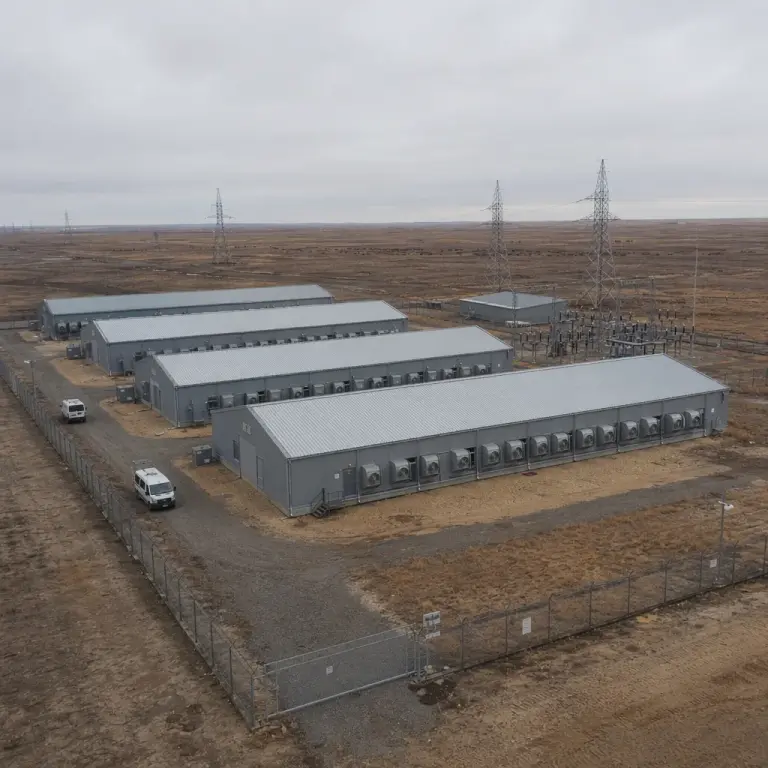
| Kazakhstan & Central Asia | Industrial power contracts at $0.03–0.04/kWh, cold climate, mature mining regulation. | Counter-balance to Western concentration; critical geographic diversification. |
| Latin America (Paraguay, El Salvador) | Abundant hydro, stranded energy, crypto-friendly policy. | Growing slice monetising renewable surplus that would otherwise curtail. |
| Nordics & Canada | Hydro and geothermal surplus, cold free-air cooling, political stability. | Small in percentage terms but high-uptime anchor hashrate. |
| Long tail (30+ countries) | Flare gas in Oman, geothermal in Kenya, home miners across every continent. | The most important axis — no single ban can neutralise the long tail. |
The key insight is that miners are economically motivated to disperse. Cheap electricity lives where demand is low; demand is low where populations or industry are low; so miners by default go to the places other industries have ignored. A 2021 concentration shock was absorbed because hashrate is physically portable — ASIC miners weigh about 14 kg and fit in a shipping container. That physical optionality is decentralization's first line of defence.
At NoxHash we sit on the Kazakhstan side of that map — contributing hashrate to the Central Asian cluster that emerged after 2021 — which is itself an argument for why geographic spread across every hosting provider matters. If every major cloud-mining operator were in one country, the network would be weaker. It is not.
Axis 2 — Stratum V2 and Who Chooses the Transactions
For most of Bitcoin's history, a subtle but important thing has been true: miners produced hashes, but mining pools decided which transactions went into the blocks those hashes secured. Under the legacy Stratum V1 protocol (released in 2012), the pool built the block template and handed it to miners as a fixed job. The miner hashed whatever the pool gave it. That design was efficient — and it accidentally concentrated transaction-selection authority in a handful of pool operators.
As of Q3 2025, the top two mining pools account for more than half of the network's hashrate, and roughly four pools control about 78% of the market. Each of those pools, under V1, builds every block that its pointed hashrate finds. That is a meaningful centralization pressure point even when the underlying hashrate is geographically spread across thousands of operators.
| Layer | Under Stratum V1 (legacy) | Under Stratum V2 |
|---|---|---|
| Transaction selection | Pool operator chooses every transaction in every block. | Miner (or third-party template provider) can build its own template. |
| Censorship resistance | A regulator pressuring one pool affects all its pointed hashrate. | Pressure on a pool no longer automatically filters transactions — miners keep choice. |
| Communication | Plaintext — hijackable, observable by ISPs. | End-to-end encrypted, lower latency, fewer stale shares. |
| Efficiency | Baseline. | Up to ~7.4% more profit per TH/s from reduced wasted work. |
The shift is quiet but profound. Under V2's Job Negotiation sub-protocol, a miner points its hashrate at a pool and runs a local "template provider" — which can be the miner's own Bitcoin node, an independent service, or even a protocol like DATUM. The miner sends the pool a completed template ("hash this"), and the pool only validates and pays out. Transaction selection becomes the miner's call.
Adoption is now real, not theoretical. DEMAND (DMND), launched in 2025, is the first pool built on Stratum V2 end-to-end using the Stratum Reference Implementation. Bitcoin Core v30, released in late October 2025, added experimental Stratum V2 support directly into the reference node software — meaning any node operator can, in principle, now be a template provider. For readers interested in the protocol itself, the official site at stratumprotocol.org publishes the full specification and reference code.
The practical upshot: pool concentration is still worth watching, but it is no longer automatically equivalent to censorship capability. A V2-connected miner can keep mining through a concentrated pool while refusing to filter transactions the pool's lawyers might prefer to exclude. That is a decentralization gain that happens at the miner layer, not the pool layer.
Add your slice to the decentralized map
You do not need a data center to contribute to Bitcoin's geographic and protocol-level decentralization. Rent hashrate hosted in Kazakhstan — a deliberate counter-weight to Western concentration — and your TH/s joins the non-US, non-single-pool side of the map.
Axis 3 — Solo Mining and the Bitaxe Revival
The most visually dramatic decentralization trend of the past two years is not a protocol upgrade. It is a $150 open-source ASIC board called the Bitaxe, plus its follow-up NerdQaxe++. These devices run a single BM1366 or BM1368 chip salvaged from retail Antminer units, produce between 0.5 and 2+ TH/s, and cost less than a good mechanical keyboard. They are also, against all statistical odds, winning real blocks.
The timeline tells the story:
July 2024 — Block 853,742
A single Bitaxe Ultra running at ~500 GH/s found block #853,742 solo. The full block reward of 3.125 BTC plus fees — roughly $206,000 at the time — went to one home miner hashing at a ten-millionth of the network.
March 2025 — Block 887,212
A cluster of six Bitaxes totalling ~3.3 TH/s found block #887,212. Reward: 3.15 BTC, worth roughly $250,000. The miner's share of network hashrate: approximately 0.0000005%.
October 2025 — Block 920,440
A Solo Satoshi customer solved block #920,440, earning approximately $342,000 in BTC — the largest confirmed payout to a home miner on open-source hardware to date.
By late 2025 — 5+ solo blocks, $1M+ in rewards
Open-source home mining hardware has now found at least five confirmed Bitcoin blocks with combined payouts exceeding $1 million. A statistical anomaly has become a pattern.
The expected value of solo-mining a Bitaxe is negative — that is the honest framing. A 1 TH/s miner represents about a trillionth of the network, and the expected wait for a block is on the order of thousands of years. People still do it for two reasons. First, a single block hit at current prices pays back a decade of electricity in one afternoon — the lottery-ticket psychology is real. Second, and the reason it matters for this article: every Bitaxe on a shelf is a node that cannot be taken down by regulation, pool capture, or hardware supply-chain pressure.
The Bitaxe design is also open-source hardware. The schematics, firmware, and BOM are public on GitHub. That means the ability to produce miners is no longer gated by Bitmain or MicroBT. A hobbyist in any country with access to a PCB fab and a supply of recycled BM1368 chips can build one. Supply-chain decentralization is a decentralization axis people rarely mention, and the Bitaxe movement is the strongest signal that it is healthy.

Axis 4 — Hashrate Is Portable Between Pools, and That Is the Kill Switch
The strongest decentralization feature of Bitcoin mining is one most users never think about. Redirecting hashrate from one pool to another takes about thirty seconds. Open the miner's firmware, change the pool URL and worker credentials, save, reboot. Done. This is true for a 200 TH/s Antminer S21 in an industrial farm and for a 1.5 TH/s Bitaxe on a kitchen shelf.
That thirty-second switching cost is why pool concentration is a watch-list item, not a game-over item. In 2014, when GHash.io briefly exceeded 51% of network hashrate, miners voluntarily left the pool within days after public pressure — no technical upgrade, no hard fork, just firmware field-changes. The same dynamic applies today. If Foundry or AntPool ever pushed policy their pointed hashrate disagreed with, the hashrate would move. And the pool operators know it.
Re-pointing is a firmware edit
No hardware change, no cool-down, no regulator approval. A miner operator moves hashrate the way a trader moves orders.
Pool operators know it
Any pool that tries to censor or re-write history is one angry forum thread away from losing the hashrate that makes it a pool at all.
GHash.io 2014 proved it
Briefly crossed 51%; hashrate left voluntarily within days. The threat of the switch was enough — no upgrade needed.
Cloud mining inherits it
Rented hashrate points at whichever pool the operator selects. If that operator switches pools for its users' benefit, decentralization moves with them.
This is what mining researchers call exit cost. The lower the exit cost, the more decentralization pressure the ecosystem can exert on intermediaries without anyone needing to fork anything. Bitcoin's exit cost is thirty seconds. Very few systems on earth have that property.
Where Cloud Mining Fits in the Decentralization Picture
Cloud mining — the model NoxHash runs — occupies a specific spot on all four axes. Honest framing matters here, so here is the trade-off:
On the geographic axis, cloud mining via a provider located in Kazakhstan adds hashrate to the Central Asian cluster — one of the strongest counter-weights to Western concentration in the Cambridge data. A renter contributing $50/month of Standard Miner hashrate to a Kazakhstan-hosted fleet is measurably adding to non-US geographic diversity. On the template-authority axis, the provider picks the pool and the protocol version, which means the renter has less direct control than a sovereign home miner — but gains whatever V2 adoption the provider chooses to pursue on their behalf. On the scale axis, cloud mining is net-positive: it lets people hash at all who would never buy a $4,500 Antminer. And on the portability axis, the provider retains the thirty-second switch capability across the whole pointed fleet.
Pure solo mining on a Bitaxe maximises axes 2 and 3 (template authority, scale-permissionless) but is a negative-expected-value activity for most participants. Running your own industrial farm maximises everything but requires seven-figure capital. Cloud mining is the pragmatic middle option for people who want to add hashrate to a non-dominant region without building a facility themselves. All three paths strengthen different parts of the decentralization story, and the healthiest network has all three coexisting.
Take the middle path — add non-Western hashrate without buying hardware
If cloud mining in Kazakhstan is the axis-1 contribution you want to make, the 2-day Basic Miner free trial gets your TH/s counted on the Cambridge map without a deposit. It is the shortest distance between reading about decentralization and participating in it.
Frequently Asked Questions
Does cloud mining actually decentralize the network, or does it centralize it more?
It depends on where the provider hosts and which pool it points to. Cloud hashrate in Kazakhstan adds to non-US geographic diversity, which is a decentralization gain. Cloud hashrate pooled at a single dominant pool without Stratum V2 is a centralization risk. Check both before renting.
What is a template provider in Stratum V2?
A template provider is the software component that selects which transactions go into a candidate block. Under V2 it can run on the miner's own Bitcoin node, a third-party service, or a protocol like DATUM — reclaiming transaction-selection authority that V1 had concentrated in pool operators.
Can a Bitaxe actually find a Bitcoin block?
Yes, though the odds are extremely long. As of late 2025 at least five home Bitaxe and NerdQaxe++ miners have found solo blocks with combined payouts exceeding $1 million. The expected wait is still measured in thousands of years at 1 TH/s, so do not rely on it for income.
Why is pool concentration a problem if miners can switch pools in thirty seconds?
Portability is the defence, but until it is exercised, a concentrated pool can still censor transactions or exert short-term policy pressure. Stratum V2 reduces the damage window by moving transaction selection to miners even while they stay pointed at a concentrated pool.
Does NoxHash support Stratum V2?
NoxHash routes rented hashrate to FPPS-model pools, and protocol version follows pool-side adoption. As V2-native pools like DEMAND and V2-supporting legacy pools continue rolling out, the upstream protocol upgrade happens without any action required from renters.
Informational content, not investment advice
Hashrate figures, solo-block statistics, and protocol adoption numbers in this article are accurate as of early 2026 and change constantly. Bitcoin mining involves market, regulatory, and hardware risks — income depends on BTC price, network difficulty, and pool luck, none of which can be guaranteed. Only commit capital you can afford to lose, and do your own research before renting hashrate or buying hardware.