Understanding Your NoxHash Mining Earnings — Dashboard Explained
Learn how NoxHash mining earnings work: per-minute BTC accrual, 115-125% profit tier, the 7-day warning, and why trial earnings never credit your wallet.
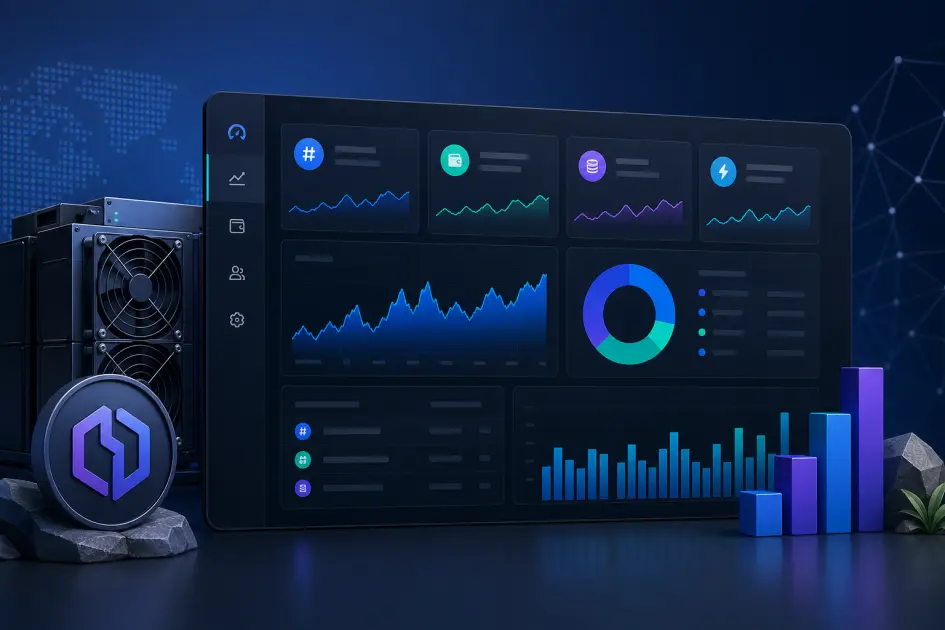
Your NoxHash dashboard shows estimated BTC earnings that accrue every minute from each paid miner, targeting 115–125% of your monthly rental price over time. A 30-day chart tracks both BTC and USD value, while a 7-day average flags weak markets. Trial earnings display but never credit your withdrawable wallet.

How BTC Earnings Actually Accrue
NoxHash is a cloud mining platform — you rent hashrate from our data center in Kazakhstan and receive a share of the BTC that hashrate produces. The single most important thing to know about your dashboard is the cadence: earnings accrue every minute, not once a day, not on withdrawal, not at the end of the month. Each paid miner adds a small amount of BTC to your wallet every 60 seconds while it runs.
That minute-by-minute rhythm is why the Total BTC Mined counter on your dashboard ticks upward continuously rather than jumping at fixed times. Refresh the page after a coffee break and you'll see a new number. This also means there is no "settlement lag" to worry about — the BTC you see credited is already in your balance, ready to be withdrawn (subject to the 1.5% withdrawal fee and 0.00001 BTC minimum).
Every minute
A scheduled tick credits a fresh amount of BTC to your wallet for each running miner — no manual claim needed.
Per machine
Each miner earns separately. Running three Standard Miners means three independent accrual streams, summed on your dashboard.
Paused when stopped
A miner in Stopped status earns nothing. Start/stop is a useful control, but stopping pauses the accrual clock immediately.
The 115–125% Profit Tier — Why Every Minute Is Different
NoxHash targets a specific earnings range relative to what you paid in rent. For 1 to 9,999 running miners per account — essentially every realistic user — the tier is 115% to 125% of the monthly rental price, paid in BTC, over the full rental term. Each minute, the accrual engine draws a random percentage inside that window and credits the corresponding slice of BTC.
That per-minute randomness is the reason your minute-to-minute earnings vary. You might see slightly more in one 10-minute window than another, even though nothing about the hardware or the network changed. Zoom out to a day or a week and the variance averages out close to the tier midpoint — that's by design. Think of each minute like a small, bounded sample; the daily and monthly totals are where the tier shape becomes visible.
| Miner tier | Monthly rent | Estimated earnings window (BTC, USD-equivalent) |
|---|---|---|
| Basic Miner | $20 | ~$23–$25 / month |
| Standard Miner | $50 | ~$57.50–$62.50 / month |
| Pro Miner | $100 | ~$115–$125 / month |
| Enterprise Miner | $250 | ~$287.50–$312.50 / month |
These are potential returns, not guarantees. The BTC you receive converts to USD at live market prices, so the USD-equivalent in the table assumes market conditions stay roughly similar to when you rented. When BTC drops, the dollar value of the same BTC amount drops with it, even if the tier math is still working as intended. Keep this in mind when comparing rent cost (fixed USD) against earnings (BTC).
Reading the Dashboard — Every Number Explained
Your dashboard aggregates everything across every miner on your account. Here's what each figure means and how to interpret it without guessing.
BTC balance (with USD equivalent)
The total withdrawable BTC sitting in your wallet right now, plus its live USD value for reference. The USD number changes even when you're not mining — it reacts to BTC price. Only paid mining earnings flow into this balance.
Today's BTC earned
The BTC credited since midnight UTC. Useful for a quick sanity check — if it's close to the per-day share of your monthly tier, the accrual is behaving normally. Expect some variance day-to-day because of the random per-minute percentage.
Total BTC mined (all-time)
The cumulative amount your account has ever mined across every paid miner, past and present. Shown alongside the current USD equivalent — but remember, the USD figure is a snapshot of what it's worth today, not what you earned at the time of each accrual.
30-day earnings chart (BTC + USD view)
A bar chart of the last 30 days of mining, with a toggle between BTC and USD views. BTC view shows operational consistency (tier math). USD view shows market exposure — two bars at the same BTC height can differ in USD because the price moved.
Per-machine vs aggregate view
The dashboard homepage shows aggregate figures. Open My Machines to see each miner's individual BTC earned, remaining rental days, and Start/Stop state. Use the per-machine view to spot an underperformer or to confirm every miner is in Running status.
The 7-Day Average Warning — What It Means and Why It Matters
NoxHash continuously tracks the rolling 7-day average profit ratio across your running miners, expressed as a percentage of the monthly rental price. If that 7-day average drops to or below a configurable threshold — currently ≤ 105% — the dashboard surfaces a warning banner.
The warning is not a bug in your miner; it's an honest signal. It means that, measured in USD terms, the last week has delivered less cushion above your rental cost than usual. This typically happens when BTC price softens, when network difficulty spikes, or around halving cycles. The hardware is still running, the tier math is still firing — but the market environment temporarily makes cloud mining a thinner deal, and you deserve to know before renewing or adding miners.
What to do when you see the warning
- •Don't panic-stop. A week of weak USD earnings can fully recover if BTC rebounds — stopping only freezes you out of that recovery.
- •Check the 30-day USD chart. If the chart shows a gradual slide, market conditions may genuinely be weakening — not just a single-day blip.
- •Delay new rentals. Especially long terms. Locking in 12 or 24 months while BTC is depressed can stretch break-even; shorter terms preserve flexibility.
- •Zoom out. Crypto cycles are long. The warning is a short-term weather report, not a long-term forecast.
Trial Earnings vs Paid Earnings — The Boundary on Your Dashboard
If you're using a free 2-day trial, the dashboard will display BTC earnings from your 50 TH/s Basic Miner (Trial) in real time — they tick every minute, just like paid miners. But there is one hard boundary: trial earnings are never credited to your withdrawable BTC wallet. Only paid miners feed the balance that you can eventually withdraw.
This boundary is intentional and visible in two places. On My Machines, trial miners are tagged (Trial) and their status flips to Expired after 48 hours. On the dashboard home, the main BTC Balance card only reflects credited balance — so if you only run a trial, that card stays at zero even while the 30-day chart shows activity. Knowing this up front prevents the #1 surprise for new users.
| Dashboard element | Paid miners | Trial miners |
|---|---|---|
| Per-minute accrual | Yes — real BTC | Displayed, not credited |
| Adds to BTC balance | Yes | No |
| Withdrawable | Yes (1.5% fee, min 0.00001 BTC) | Never |
| Shown on 30-day chart | Yes | Yes (separately labelled) |
| Counts toward 7-day average | Yes | No |
See the dashboard from the inside — with a real BTC wallet attached
You've now seen how per-minute accrual, the profit tier, the 30-day chart, and the trial boundary fit together. Create an account to watch the same dashboard live, with a withdrawable BTC balance the moment you rent a paid miner.

What Moves Your Earnings Up or Down
The tier math is stable. The earnings themselves — especially when measured in USD — are not, because they depend on three forces outside anyone's control. Understanding them prevents the classic mistake of blaming the platform when the market moves.
BTC price
Your rent is in USD. Your earnings are in BTC. When BTC rises, the USD value of the same BTC amount rises — the tier stays at 115–125% but the dollar outcome is stronger. When BTC drops, the reverse applies.
Network difficulty
Bitcoin auto-adjusts difficulty roughly every two weeks. When more miners compete globally, each TH/s earns slightly less BTC. The Bitcoin network currently hovers near a ~110–120 T difficulty level (as of early 2026).
Halving cycles
Every ~4 years, Bitcoin's block reward halves. The last halving (April 2024) dropped rewards from 6.25 to 3.125 BTC. The next is projected around 2028. Halvings compress mining revenue industry-wide until price and fees adjust.
Market volatility
BTC can move 30–50% in weeks. The tier keeps your BTC flow predictable in coin terms; it cannot stabilise the USD value of that coin. This is the core risk every cloud-mining user accepts.
You can verify current network data independently at sources like Blockchain.com's difficulty chart — difficulty, block reward, and global hashrate are all public. Cross-checking these against your dashboard is a healthy habit.
Frequently Asked Questions
How often does NoxHash credit mining earnings?
Every minute. A scheduled accrual engine credits a small slice of BTC to your wallet for each running paid miner, all day, every day. You never need to claim, compound, or settle manually. The Today's BTC figure and Total BTC Mined counter update continuously as ticks occur.
Why do my minute-to-minute earnings fluctuate?
Each minute, the accrual engine applies a random percentage inside the 115–125% monthly tier window. Because the sample is tiny, short windows vary. Zoom out to a full day or week and the variance averages toward the tier midpoint — the randomness is bounded, not open-ended.
Can I withdraw the BTC I see from my free trial?
No. Trial earnings display on the dashboard so you can see accrual in real time, but they never credit your withdrawable BTC wallet. Only paid miners produce withdrawable BTC. This boundary is what lets NoxHash offer the 48-hour trial at zero cost with no payment method required.
What does the 7-day low-profit warning mean?
The warning appears when your rolling 7-day average profit ratio drops to or below the configured threshold (currently ≤105%). It signals that BTC price, difficulty, or market conditions have weakened your USD-measured margin. It is informational — not a malfunction — so you can decide whether to renew, pause, or wait.
Why is the USD value of my Total BTC Mined lower than what I earned over time?
The USD figure next to Total BTC Mined is a snapshot — it multiplies your cumulative BTC by today's BTC price. If BTC has fallen since you mined, that snapshot is lower than the sum of historical values at the time each tick was credited. The BTC amount itself is unchanged.
Are the earnings numbers on my dashboard a promise or an estimate?
The BTC credited to your wallet is real and final — that's not an estimate. What is variable is the USD value and the exact percentage within the 115–125% tier each minute. NoxHash targets the tier in good faith, but BTC price and network difficulty are market variables nobody controls.
Not financial advice — earnings are estimates, not guarantees
This guide explains how the NoxHash dashboard displays mining activity; it is not investment, financial, or tax advice. The 115–125% tier describes target BTC output relative to the monthly rental price — it is not a promise of USD returns. Actual earnings depend on Bitcoin price, network difficulty, halving cycles, and broader market conditions, all of which can change quickly and are outside NoxHash's control. Past performance does not guarantee future results. Renting mining hashrate when BTC is depressed can produce USD earnings that fall short of your rental cost. Only commit funds you can afford to lose, consider the risk of a prolonged drawdown, and consult a local tax advisor about how crypto earnings are treated in your jurisdiction.