The Rise of Cloud Mining — Why More People Are Renting Hashrate
ASICs cost $1,500–6,000, home power runs 18 cents/kWh, and noise bans are spreading. Here is why more people rent hashrate instead of owning rigs in 2026.
Cloud mining is rising in 2026 because the barriers to owning Bitcoin hardware keep growing. A new S21 Pro still runs $4,000–6,000, U.S. residential power now averages 18¢/kWh, and more neighborhoods ban the noise outright. Renting hashrate from an industrial data center sidesteps all three — for roughly the cost of a streaming subscription.
What Cloud Mining Actually Is
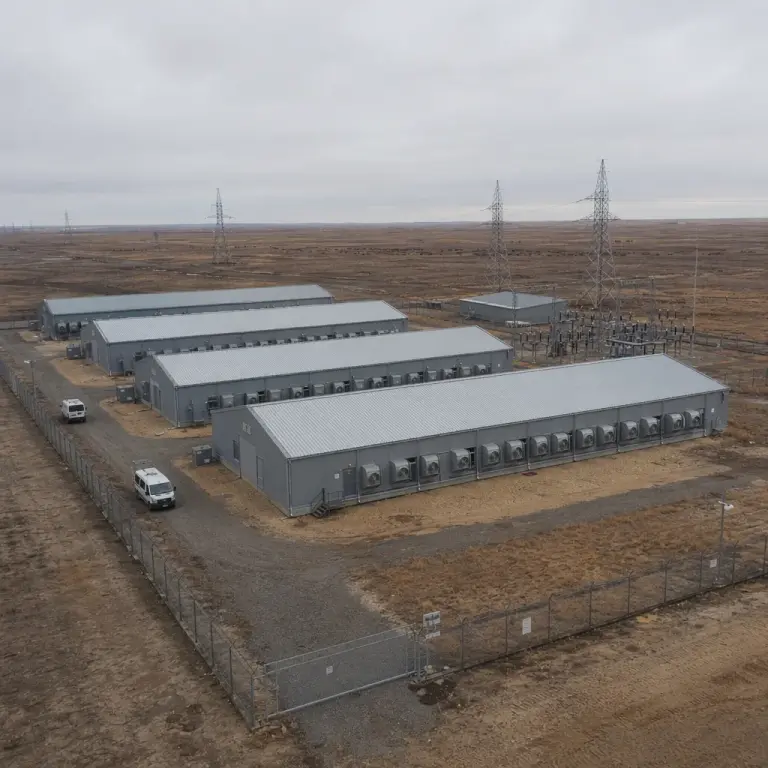
Cloud mining is an arrangement where you pay a monthly fee to a mining operator and receive a share of the Bitcoin their physical ASICs produce, without owning, housing, or powering any hardware yourself. The operator runs the data center, pays the electricity bill, maintains the machines, and connects to a mining pool. You pick a plan, pay in stablecoin, and BTC accrues to your account.
In practical terms it is the same distinction as owning a generator versus paying the utility: the output (electricity, or in this case BTC rewards) is similar, but one model requires capex, floor space, expertise, and ongoing maintenance — the other is a subscription.
Why More People Are Renting Hashrate in 2026
The cloud-mining trend is not driven by one factor — it is the compound effect of four barriers that keep getting taller for individual miners. Each one on its own is manageable; stacked, they tilt the math decisively toward renting.
Hardware cost is a wall
A new Antminer S21 Pro is priced in the $4,000–6,000 range in 2026, and used units still sit around $1,500. That is before you pay for shipping, import duties, a PSU shelf, or a rack.
Residential power kills margins
The U.S. residential rate averaged about 18¢/kWh in early 2026, while industrial miners sign contracts for 3–5¢/kWh. At home rates, one S21 can cost $300–500/month in power alone.
Noise and heat are neighborhood problems
A single S21 fan wall hits around 75 dB — closer to a vacuum cleaner than a PC. HOAs, apartment leases, and city noise ordinances increasingly ban that in residential zones.
Operational overhead is real work
Firmware updates, pool configuration, thermal tuning, PSU failures, dust cleaning, watchdog scripts — self-mining is a hobby at best and a part-time job at worst. Most buyers underestimate this.
The DIY Cost Reality — Self-Mining vs Renting
Numbers make the barrier concrete. Below is a same-hardware comparison: buying and running a single Antminer S21 at home versus renting the equivalent tier from an industrial operator like NoxHash. We are comparing monthly operating cost, not BTC output — output depends on Bitcoin price and network difficulty, which are the same for both.
| Line item | Self-mining S21 at home | Cloud rental (NoxHash) |
|---|---|---|
| Up-front hardware | $4,500–6,000 (new S21) | $0 |
| Electricity, 3,500W x 720h | ~$302/month at $0.12/kWh | Included ($0.035/kWh baked in) |
| Cooling & ventilation | $30–100/month (HVAC, fans) | Free (−15 to −30°C winter) |
| Noise & space | ~75 dB, dedicated room needed | Machine lives off-site |
| Hardware failure risk | User pays 100% of replacement | Operator swaps within 4–8h |
| Minimum entry | $4,500+ (can't buy 0.1 of an S21) | $20/month (Basic plan, 50 TH/s) |
The punchline: the self-miner needs roughly $5,000 capex and $330/month in operating cost before a single satoshi lands. The cloud renter on an equivalent Basic tier pays $20/month, all-in. Whether the output justifies either cost depends on BTC price and network difficulty — but the starting line is not remotely the same.
The Risk Trade-off — Who Carries What
Renting does not eliminate risk — it redistributes it. A good way to think about cloud mining is as a clean split between two categories of risk that used to sit entirely on the miner's shoulders.
| Risk | Who carries it in cloud mining |
|---|---|
| Hardware failure — dead hash boards, PSU blowouts, chip degradation | Operator |
| Power outages, grid failures, cooling breakdowns | Operator (UPS + diesel backup) |
| Obsolescence — next-gen ASIC makes current one unprofitable | Operator (fleet upgrades) |
| BTC price falling below rental break-even | User |
| Network difficulty rising, halvings cutting block reward | User |
| Operator counterparty risk (fraud, insolvency) | User — vet the operator |
The deal is: the operator handles the engineering problems they are equipped to solve, and you handle the market exposure you chose to take on. That split is genuinely rational for someone without data-center experience. The one item that never goes away is counterparty risk — which is exactly why verifiable infrastructure matters.
What Separates a Real Platform from a Vague One
Cloud mining has a scam-heavy history, and that is worth saying out loud. For every operator running a real facility, there has been a marketing page that described "a farm somewhere" and paid withdrawals until it didn't. A legitimate modern offering is identifiable by four concrete signals — any platform missing two or more deserves skepticism, regardless of how polished the dashboard looks.
A way to see the machine
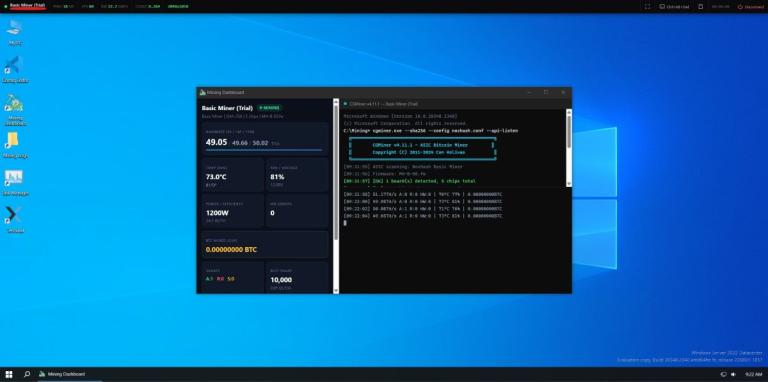
A real operator can expose something like a live miner desktop, raw pool share output, or third-party hashrate verification. If "trust us" is the entire proof, you are not cloud mining — you are funding someone's promise.
Named, verifiable hardware
"Latest-generation miners" is marketing copy. "Antminer S21 Pro at 15 J/TH" is a claim you can look up on the manufacturer's spec sheet. Legitimate operators name the models they run.
Realistic, honest pricing
Numbers that hold up to network math. If a plan implies 5–10% daily returns, it is mathematically inconsistent with Bitcoin's actual global hashrate economics tracked by the Cambridge CBECI index. Real cloud mining pays in single-digit monthly margins.
Stablecoin in, BTC out — no in-house token
Platforms that only pay out in their own token, lock your earnings behind "tier upgrades," or charge withdrawal in a yield vault are the historical scam pattern. Plain USDT-in, plain BTC-out is the sober model.
NoxHash was designed around these four signals on purpose. Every rented miner exposes a Live Mining Desktop button that opens the real Windows Server session of your ASIC, showing CGMiner's raw pool output. The fleet is named publicly — Antminer S21 XP Hyd, S21 Pro, S21, WhatsMiner M66S and M60S at 12–18.5 J/TH. Pricing starts at $20/month with transparent break-even math, and withdrawals go out in plain BTC to any Segwit or legacy address.
See the machine behind the hashrate before you pay anything
You just read the four signals that separate a real cloud-mining operator from a landing page. NoxHash was built to pass all four — the easiest way to confirm is to claim the free 2-day Basic trial and open the Live Mining Desktop on a real ASIC in Kazakhstan.
Frequently Asked Questions
Is cloud mining safe?
The mining model is legitimate — you rent real ASIC output from a real facility. Safety depends on the operator: look for verifiable infrastructure, named hardware, stablecoin-in/BTC-out flow, and realistic pricing. Counterparty risk remains, so commit only funds you can afford to lose while you evaluate the platform.
Isn't cloud mining just a rebadged Ponzi scheme?
Many historical platforms were. A real cloud miner can show the physical hardware producing the hashrate and pay earnings from actual pool rewards, not new user deposits. If the business model only works when new users sign up faster than old ones withdraw, it is a Ponzi — regardless of branding.
Why would a mining farm share hashrate instead of hoarding it?
Rental fees arrive in USDT, which pays USD-denominated costs like electricity and salaries regardless of BTC price. That stable cash flow funds fleet expansion. The operator still mines some capacity for itself, and user rentals let the facility run at 100% utilization even when BTC drops — everyone wins.
Do cloud-mining returns actually beat just buying Bitcoin?
Sometimes, sometimes not — it is genuinely conditional. When BTC is rising and difficulty is stable, a low-cost operator can beat spot buying on a per-dollar basis. When BTC falls, dollar-cost averaging into spot BTC is often better. Cloud mining is closer to a yield instrument than a directional bet.
How do I spot a cloud-mining scam?
Watch for guaranteed daily percentages, no named hardware, in-house tokens as the only payout option, vague "farm somewhere" claims, and pressure to deposit quickly. Honest operators publish hardware models, show live machine output, and price plans in the low-single-digit monthly margin range that matches real mining economics.
Who is cloud mining actually for?
People who want BTC-denominated exposure without $5,000 of hardware, a 75 dB rig in the spare room, or a 3¢/kWh industrial contract. It is also useful for anyone in jurisdictions where home mining is banned or restricted, and for users who want exposure without the operational learning curve.
Not financial advice
This article is a market-trend piece, not investment guidance. Cloud mining earnings depend on Bitcoin price, network difficulty, operator performance, and wider market conditions — all of which can move sharply and are outside our control. Past performance does not guarantee future results. Only commit funds you can afford to lose, and consider speaking to a local tax advisor about crypto income in your jurisdiction.