Public Mining Companies vs Cloud Mining — Comparison for Investors
Compare MARA, RIOT, CLSK, CIFR, HUT8 shares vs cloud-mining hashrate rentals in 2026 — dilution, hashrate per dollar, fees, and tax treatment for investors.

Public mining stocks (MARA, RIOT, CLSK, CIFR, HUT8) and cloud mining are two ways to invest in Bitcoin hashrate — but you end up owning very different things. A mining stock gives you equity in a corporation that mines BTC; the share count keeps growing as the company raises capital. Cloud mining gives you a direct slice of hashrate that produces BTC you withdraw to self-custody. This guide compares them across the four dimensions that actually move investor returns.

Two Different Ways to Own "Bitcoin Hashrate"
Both products let you benefit when miners are profitable, but the legal and operational wrapper is totally different. A share of MARA, RIOT, CleanSpark, Cipher, or Hut 8 is a claim on a publicly traded company — you own a slice of its balance sheet, which includes ASIC fleets, electricity contracts, BTC treasury, debt, convertible notes, and (increasingly) AI/HPC data-center pivots. Cloud mining is closer to a contract for difference on hashrate: you rent a defined amount of TH/s for a defined period, and the BTC that hashrate mines flows into your wallet.
The first question is not "which returns more?" — it is "which exposure are you actually trying to buy?" Brokerage ownership of a miner gives you leveraged, operational, and increasingly AI-diversified exposure. Cloud mining gives you a purer line into BTC accrual, measured in satoshis per terahash, without stock-market beta layered on top.
Public Mining Stocks
Equity in a listed company that operates ASIC fleets — MARA, RIOT, CLSK, CIFR, HUT8, IREN, CORZ. You own a share of the whole business: miners, power contracts, BTC treasury, debt, and any AI/HPC pivot they layer on top.
- Fee model: implicit — cost of capital + SG&A + dilution
- Yield: none (most miners do not pay dividends)
- Liquidity: market hours, 5 days/week
- Custody: brokerage — no BTC on-chain
Cloud Mining (NoxHash)
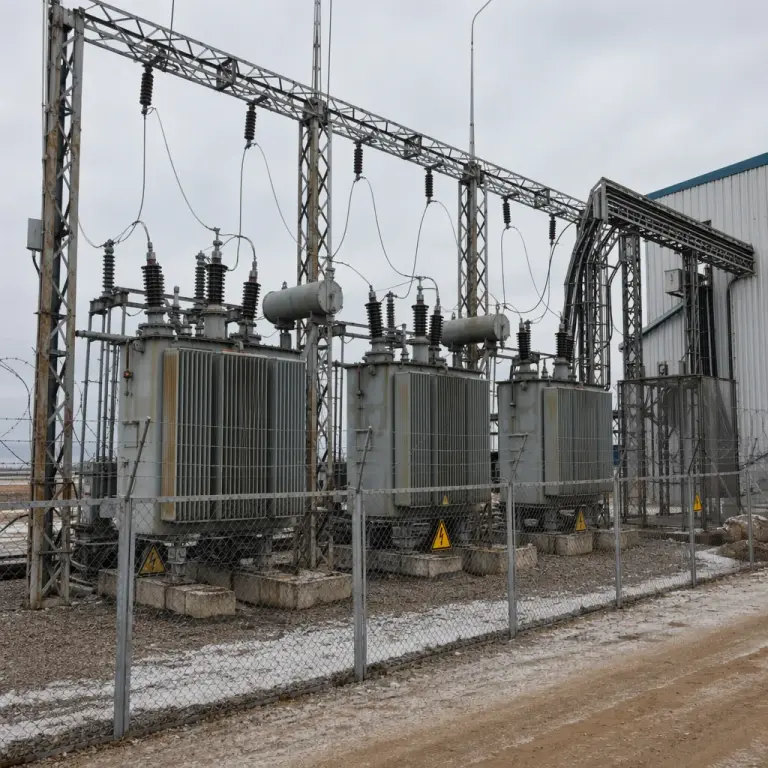
A rental on live hashrate from a Kazakhstan data center using Antminer S21-class fleet at 12–17.5 J/TH. The BTC produced accrues to your wallet every minute; the rental fee is fixed in USDT, with no capex or dilution.
- Fee model: explicit — $20 – $250/mo per plan
- Yield: BTC accrual paid per minute
- Liquidity: 24/7, contract length 1–24 months
- Custody: self-custody after withdrawal
The Four Dimensions That Decide After-Fee, After-Tax Returns
Both vehicles are long BTC in the general direction — when price rallies, both go up; when difficulty spikes, both get squeezed. But four specific mechanics separate the outcomes that land in your brokerage statement versus your BTC wallet. Here is how public miners stack up against a NoxHash-style rental.
| Dimension | Public Mining Stock | Cloud Mining Rental |
|---|---|---|
| Expense structure | Implicit: SG&A, interest on convertibles, ATM dilution. Not shown as one line item. | Explicit: flat monthly USDT fee + 1.5% BTC withdrawal fee. |
| Share dilution | Persistent. MARA raised $750M in convertibles in 2025; RIOT $500M; CLSK $300M equity. Hashrate grows, per-share EH/s often shrinks. | None. Your contracted TH/s is fixed for the term. |
| Hashrate per dollar | ~419 EH/s across 14 U.S.-listed miners against ~$62B combined market cap (Jan 2026) = roughly 6.8 TH/s per $1 of equity. | Pro plan: 350 TH/s for $100/mo = 3.5 TH/s per $1 of monthly spend (recurring, not equity). |
| Price exposure | 1.5–3× BTC beta typically. Also carries equity-market beta + company-specific risk (AI pivot, financing). | ~1× BTC beta on output, minus fixed USD cost. No equity-market correlation. |
| Tax (U.S.) | Capital gains — long-term 0/15/20% after 1 year. No income event until sale. | Ordinary income on each BTC received (IRS Notice 2014-21), then capital gain/loss on disposal. |
| Custody of BTC | None directly — company holds any BTC treasury. | Withdraw to hardware wallet you control. |
| Minimum ticket | 1 share (~$5–$30 depending on ticker). | $20/mo (Basic) or 2-day free trial. |
| IRA/401(k) eligible | Yes — standard brokerage account. | Usually no — most retirement wrappers do not support it. |
Market-cap and hashrate figures as of January 2026, per Bitcoin Mining Stock hashrate tracker and JPMorgan's 14-miner coverage universe. Individual-miner capital raise figures for 2025 from The Block's coverage of the JPMorgan miner reset.
The Dilution Problem Most Stock Investors Underestimate
The single biggest structural difference between mining stocks and cloud mining is that public miners fund their hashrate growth by issuing more shares. ASICs cost roughly $4,000–$12,000 per unit, and a fleet expansion of 100 MW can run into the hundreds of millions. Miners rarely have that cash on hand, so they turn to at-the-market (ATM) equity programs, convertible notes, and secondary offerings.
In 2025 alone, MARA raised $750M via zero-coupon convertibles, Riot Platforms secured $500M in similar financing, and CleanSpark issued $300M in equity. The hashrate number goes up on every press release — but if your share count grew by 20% while the fleet grew by 25%, you only captured a fraction of the gain. CleanSpark is the notable outlier, funding most growth from BTC production and avoiding equity raises, and its share-price performance has reflected that discipline.
Headline hashrate
MARA energized 53.2 EH/s, CLSK 45.6 EH/s, Riot 31.5 EH/s in late 2025. Impressive in aggregate — but what matters is the hashrate attributable to each share.
Per-share hashrate
Shares outstanding at MARA rose 15% in 2025 alone. Even with total hashrate growth, per-share exahash growth is often flat or negative — a silent tax on long-term holders.
Rental contract
A cloud-mining contract is a fixed amount of TH/s for a fixed term. The provider cannot dilute it. What you paid for in month 1 is what you still own in month 12.
Hashrate Per Dollar — A Worked Example
The cleanest way to compare the two vehicles is: how many terahashes does $1,000 of capital put under your control? The answer depends on whether you are buying equity (a permanent claim) or renting (a time-bounded one), but the magnitudes are revealing.
Scenario: $1,000 invested, 12-month horizon
Comparison uses early-2026 market data. Numbers are illustrative and ignore BTC price moves on both sides.
Option A — Public miner equity
At the aggregate ratio of ~6.8 TH/s per $1 of market cap across the 14 U.S.-listed miners, $1,000 of equity gives you a claim on roughly ~6,800 TH/s of gross fleet hashrate.
- Minus: your share of corporate SG&A, debt service, taxes.
- Minus: expected 10–20% annual dilution at most names.
- Plus: exposure to AI/HPC pivots if they pay off.
- Plus: any BTC treasury appreciation on the balance sheet.
Option B — NoxHash cloud rental
$1,000 spread over 12 months = ~$83/mo. The Standard Miner ($50/mo = 150 TH/s) plus a Basic ($20/mo = 50 TH/s) gives ~200 TH/s for 12 months, with room to spare for the annual-term discount.
- Minus: BTC price risk on output.
- Minus: difficulty growth over the year.
- Plus: BTC flows to a wallet you control weekly.
- Plus: fixed rental cost — no dilution, no convertibles.
The stock route gets you leveraged claim on 6,800 TH/s but through 7+ layers of corporate friction — you control none of the BTC mined directly. The cloud route gets you 200 TH/s of direct, self-custodial BTC accrual with no intermediaries. Different products for different investor mandates — one optimizes for equity upside, the other for satoshi accumulation.
Want the satoshi-accumulation side of that trade?
If the math above convinced you that direct, dilution-free hashrate is what you actually want to own alongside (or instead of) your MARA/RIOT/CLSK position — NoxHash is the production-side wrapper. A Standard Miner at $50/mo gives you 150 TH/s of S21-class hashrate that pays BTC to a wallet you control.
Tax Treatment — The Quietest Return Killer
For U.S. investors, the tax profiles of these two vehicles are genuinely different, and it changes what they should hold in which account. Stocks get the capital-gains wrapper; cloud-mining rewards are ordinary income on receipt, per IRS Notice 2014-21.
Mining stocks — capital gains, deferred
You owe nothing until you sell. Hold >12 months and you pay long-term capital gains (0/15/20%). Dividends are rare in this sector. Losses net against other securities. Fits naturally into taxable brokerage, IRA, and 401(k) accounts.
Cloud mining — ordinary income on receipt, then capital gains
Each BTC payout is taxed at fair market value on the day received — at your ordinary rate (up to 37% federal). When you later sell that BTC, the gain or loss is measured from that cost basis. Two tax events per satoshi, and no retirement-wrapper shelter for most investors.
Hobby vs business for cloud miners
If the IRS classifies your activity as a business (Schedule C), you can deduct rental fees and platform costs but owe self-employment tax (~15.3%) on net income. Hobby miners report on Schedule 1, line 8 — no self-employment tax, but no expense deductions either. Most casual renters fall into the hobby bucket.
Practical takeaway: if tax-advantaged space is your binding constraint, public mining stocks are strictly better — they fit inside an IRA and defer tax for years. If you are already at your IRA/401(k) limits and holding additional BTC exposure in a taxable account anyway, cloud mining competes head-to-head — and the ability to push BTC into long-term holding status before selling gives you the same 0/15/20% preferential rate on the appreciation portion.
Tax rules sourced from the IRS digital-assets guidance. Rates and thresholds are current as of April 2026 and do not constitute tax advice — consult a qualified CPA for your situation.
When Does Each Vehicle Actually Fit?
Neither product wins across every investor profile. The question is which one matches the account structure you already have, the tax regime you face, and what you want to end up owning in year 5.
Public mining stocks fit you if...
- • You want IRA/401(k)-compatible BTC exposure.
- • You want leveraged beta to BTC (miners historically run 1.5–3×).
- • You want optionality on AI/HPC pivots (CORZ, HUT8, CIFR).
- • You prefer paper instruments and no wallet management.
- • You trade positions rather than hold indefinitely.
Cloud mining fits you if...
- • You want actual BTC accruing to self-custody weekly.
- • You already hit your IRA/401(k) contribution caps.
- • You want no dilution and no corporate-layer friction.
- • You are comfortable managing a wallet and seed phrase.
- • You prefer dollar-cost averaging into BTC over equity beta.
These are not mutually exclusive. Many investors run both — MARA/CLSK in the IRA for leveraged equity exposure, NoxHash hashrate in a taxable account for steady BTC accumulation. The combined profile delivers tax-advantaged upside plus on-chain sats, with offsetting risks (dilution on one side, difficulty on the other). That is usually the stronger portfolio than either position alone.
Add the on-chain leg of the trade
Keep your MARA, RIOT, CLSK positions where they get the best tax treatment — and run a NoxHash rental alongside for real BTC on the balance sheet. A 2-day Basic Miner free trial lets you see the accrual flow before committing a dollar.
Frequently Asked Questions
Which public mining stocks are most dilution-resistant?
CleanSpark (CLSK) has publicly committed to funding growth from BTC production rather than equity raises. Cipher (CIFR) and Hut 8 (HUT) have leaned more on debt and partnerships. MARA and Riot have historically issued more equity and convertibles, making them the most dilution-exposed of the large caps.
Is cloud mining effectively a synthetic mining stock?
Partially. Both expose you to hashprice (BTC price × network difficulty). The key differences: cloud mining has no equity leverage, no stock-market beta, no dilution, and pays BTC to self-custody. Think of it as the unlevered operational layer underneath a miner's income statement.
How do AI/HPC pivots change the case for mining stocks?
Significantly. Core Scientific, Hut 8, and Cipher have signed large AI/HPC hosting contracts, meaning a portion of their revenue no longer tracks BTC. This lowers the correlation to hashprice but introduces new execution and customer-concentration risk. Cloud mining remains pure-play BTC production.
Can I hold cloud-mining exposure in an IRA?
Most standard IRAs do not support crypto-native contracts. A self-directed IRA custodian can technically hold BTC, but plugging a cloud-mining subscription into one involves administrative friction. For tax-advantaged BTC exposure, public miners and spot Bitcoin ETFs remain the practical choices.
What happens to both vehicles in a deep BTC bear market?
Mining stocks usually drop 2–3× harder than BTC itself and often do emergency dilutive raises to survive. Cloud-mining rentals lose output value (BTC is worth less) but the contract terms hold; you keep accumulating sats at a lower dollar price. Neither is comfortable; the failure mode is different.
Not investment or tax advice
This article is informational. Mining-stock tickers (MARA, RIOT, CLSK, CIFR, HUT8 and others) are mentioned as representative examples, not recommendations. Bitcoin mining — whether via equities or cloud contracts — carries market, regulatory, operational, and tax risk. Past performance and historical ratios do not predict future returns. Consult a qualified financial advisor and CPA for your situation.