NoxHash by the Numbers — Platform Stats, Hashrate, and Uptime
Verifiable launch-day specs for NoxHash cloud mining: 4 plans from $20, 12-18.5 J/TH fleet, Kazakh power at $0.03-0.04/kWh, quarterly stats.
Here's NoxHash by the numbers — the verifiable specs our platform ships with on launch day, plus the cumulative stats we'll update quarterly as real activity accumulates. Four plans from $20/month, a fleet at 12–18.5 J/TH, power at $0.03–0.04/kWh, a 99.9% uptime target, six languages, and withdrawals paid in BTC.
About these numbers
Published at launch on April 24, 2026. The “always-true” specs below are verifiable against our internal platform documentation. Cumulative statistics with a time-series nature — total BTC paid to users, aggregate active hashrate, achieved 12-month uptime — are marked [TBD — updated quarterly] because NoxHash just launched. We would rather leave a field empty than fabricate a number.
The Specs That Are True From Day One
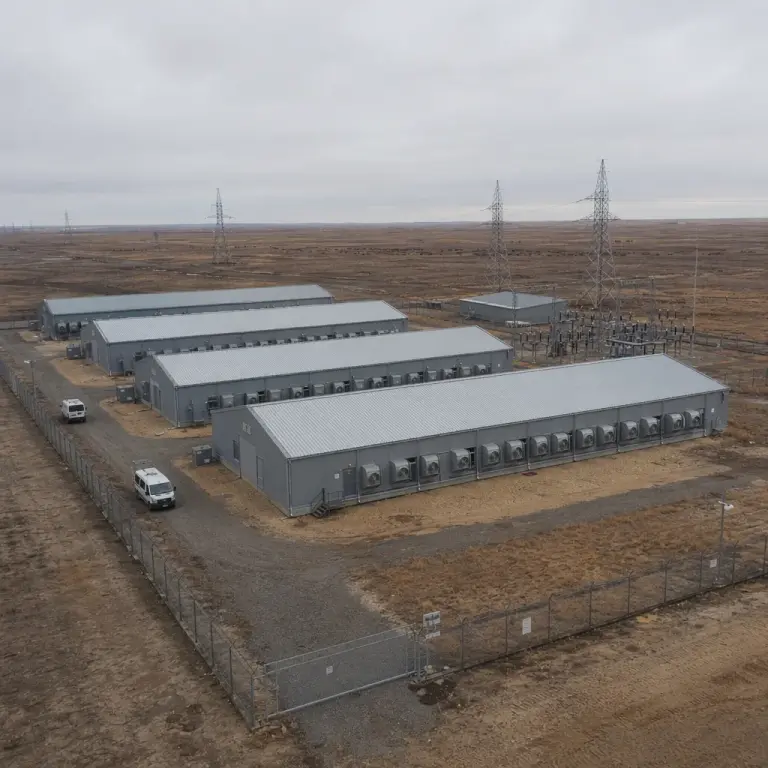
Every row below is set by contract, hardware, or code — it does not depend on how many users sign up or how long we have been running. These are the numbers you can hold us to today. Each one matches the internal platform knowledge base; we have also noted the underlying source.
| Metric | Value at launch | Source of truth |
|---|---|---|
| Entry plan price | $20/month (Basic, 50 TH/s) | Plan configuration |
| Flagship plan hashrate | 1,000 TH/s (Enterprise, $250/mo) | Plan configuration |
| Free trial duration | 2 days, Basic Miner, no deposit | Trial rule, one per account |
| Industrial electricity cost | $0.03–0.04 / kWh | Kazakh industrial grid contract |
| Fleet energy efficiency range | 12.0–18.5 J/TH | ASIC manufacturer specs |
| Uptime commitment | 99.9% target | Platform service commitment |
| Hardware-fault replacement SLA | 4–8 hours | On-site technician rotation |
| Deposit networks | USDT on TRC-20, BEP-20 | Wallet module |
| Deposit min / max (single tx) | $10 / $50,000 | Deposit policy |
| Withdrawal fee | 1.5% flat, min 0.00001 BTC | Withdrawal policy |
| Supported BTC address formats | Segwit (bc1), P2PKH (1), P2SH (3) | Withdrawal module |
| Interface languages | 6 (EN, VI, ZH, RU, KO, JA) | i18n configuration |
| Two-factor authentication | TOTP + 8 recovery codes | Security module |
| Payout cadence | Every minute, while miner runs | Payout scheduler |
| Pool model | FPPS with automatic failover | Pool configuration |
The Plan Lineup at a Glance
All four tiers run the same SHA-256 algorithm on the same Kazakh fleet — the difference is how much hashrate you control and the power draw assigned to you. Longer rental terms drop the monthly rate by up to 20%.
| Plan | Hashrate | Power | Price / month |
|---|---|---|---|
| Basic | 50 TH/s | 1,200 W | $20 |
| Standard | 150 TH/s | 3,000 W | $50 |
| Pro | 350 TH/s | 5,500 W | $100 |
| Enterprise | 1,000 TH/s | 12,000 W | $250 |
Duration discounts stack on every tier: 1 month at full price, 3 months −5%, 6 months −10%, 12 months −15%, 24 months −20%. A Pro miner on a 12-month commitment comes out to $85 per month (about $180 saved across the year). The longer the term, the more predictable your unit economics.
The Fleet Running It
Hashrate numbers only matter if the underlying hardware is real. Six ASIC models power NoxHash today, sourced from the two manufacturers (Bitmain and MicroBT) that together hold roughly 90% of the global ASIC market. We pick for efficiency — low J/TH, not just high TH/s — because electricity is the lifetime cost that matters most.
| Model | Hashrate | Power | Efficiency |
|---|---|---|---|
| Antminer S21 XP Hyd | 473 TH/s | 5,676 W | 12.0 J/TH |
| Antminer S21 Pro | 234 TH/s | 3,510 W | 15.0 J/TH |
| Antminer S21 Hyd | 335 TH/s | 5,360 W | 16.0 J/TH |
| WhatsMiner M66S | 298 TH/s | 5,066 W | 17.0 J/TH |
| Antminer S21 | 200 TH/s | 3,500 W | 17.5 J/TH |
| WhatsMiner M60S | 186 TH/s | 3,441 W | 18.5 J/TH |

Deposits and Withdrawals, at a Glance
Money in is USDT, money out is BTC. The spreads are tight, the network choices keep fees low, and the automation on both sides is the same logic that powers the live dashboard.
Deposits — USDT
- Networks: TRC-20 (Tron, ~$1 gas) · BEP-20 (BSC, ~$0.05–0.30)
- Minimum: $10 per transaction
- Maximum: $50,000 per single transaction
- Auto-match window: exact cent value, 30 minutes
- Conversion: USDT auto-converts to BTC at live market rate
Withdrawals — BTC
- Unit paid out: Bitcoin (BTC)
- Minimum: 0.00001 BTC per request
- Fee: flat 1.5% of the withdrawn amount
- Address types: Segwit (bc1…), P2PKH (1…), P2SH (3…)
- Flow: user request → admin review → on-chain send
Cumulative Platform Stats (TBD — Updated Quarterly)
The stats below need real activity to have meaning. NoxHash launched on April 24, 2026, so there is no honest way to report a 12-month uptime, a lifetime BTC payout, or an aggregate user hashrate on day one. We would rather leave a field marked TBD than invent a number. The first meaningful update to this section is scheduled for the end of Q3 2026.
Total active miners rented
[TBD — updated quarterly]
Total BTC paid to users
[TBD — updated quarterly]
Aggregate user hashrate
[TBD — updated quarterly]
Achieved 12-month uptime
[TBD — updated quarterly]
Users across 6 languages
[TBD — updated quarterly]
Median deposit / plan size
[TBD — updated quarterly]
When these numbers are live, we will also publish the methodology behind each one — the observation window, the data source on our side (scheduler logs, wallet ledger, rental table), and any exclusions — so readers can judge the claim, not just the figure.
Check every spec you just read — on a free trial miner
The fleet efficiency, the plan prices, the 99.9% uptime target, the 1.5% withdrawal fee — you can verify each one inside the dashboard before spending a single USDT. The 2-day Basic Miner trial is the easiest way to see the platform behave against its own numbers.

How These Numbers Compare to Home Mining
The specs above exist because industrial infrastructure is cheaper per unit of hashrate than a single rig in a spare room. The table below, drawn from our internal comparison in the NoxHash knowledge base, shows the gap for one Antminer S21 class machine.
| Line item | Home mining (1× S21) | NoxHash rental |
|---|---|---|
| Up-front hardware | $4,500–6,000 | $0 — rental model |
| Electricity / month (~2,520 kWh) | ~$302 at $0.12/kWh home rate | ~$88 included ($0.035/kWh) |
| Cooling | AC + fans, $30–100/month | Natural Kazakh winter air |
| Hardware replacement on failure | You — parts, RMA, downtime | NoxHash, 4–8 hour SLA |
| Noise / space | ~75 dB, dedicated room | Browser tab |
| Lowest starting cost | $4,500+ capex | $20 / month |
The comparison is not saying home mining is bad — it is saying the unit economics of running one rig at home rarely match an industrial site at $0.035/kWh. That gap is the whole reason the rental model exists.
Frequently Asked Questions
Why are some stats marked TBD?
Because NoxHash launched on April 24, 2026. Cumulative numbers like total BTC paid out, aggregate user hashrate, or measured 12-month uptime only become honest after months of real operation. Rather than invent a launch-day figure, we mark each one TBD and fill it in quarterly.
How often do you update this page?
Always-true specs update only when the underlying platform changes — new plan tier, new hardware, new network. Cumulative stats refresh every quarter, typically in the month after the quarter closes. The updated date at the top of the post reflects the most recent change.
Are these numbers independently audited?
Not yet. At launch they are self-reported against internal data (plan configuration, scheduler logs, wallet ledger, pool dashboard). Hardware specs are manufacturer-published and independently verifiable. Third-party attestation of cumulative stats is on our roadmap once enough history exists to audit meaningfully.
Can I verify any of this myself?
Yes — several of them. The plan prices and free trial live on the signup flow. Withdrawal fee, minimum, and address support appear in the wallet page. ASIC efficiency is published by Bitmain and MicroBT. And every paid miner exposes a live Windows Server view with real-time CGMiner output.
What is the single biggest competitive advantage in these numbers?
The combination of $0.03–0.04/kWh industrial Kazakh power with a 12–18.5 J/TH fleet. Cheap electricity alone is common; current-generation ASICs alone are common. Pairing them at industrial scale is what lets a $20/month entry plan exist at all.
Do these specs change after the Bitcoin halving?
Platform specs do not — plan prices, hashrate, power, and withdrawal fees stay the same. What halving changes is the network-wide block reward (currently 3.125 BTC per block since April 2024), which affects how much BTC every miner in the world produces per unit of hashrate. We track that in separate news posts.
Not financial advice
This page lists platform specifications, not investment projections. Actual cloud mining earnings depend on Bitcoin price, network difficulty, and broader market conditions — all of which can move sharply and sit outside our control. Past performance does not guarantee future results. Only commit funds you can afford to lose, and consider a local tax advisor for crypto-related income in your jurisdiction.