Why Is My Mining Earnings Lower Than Expected?
Earnings below the advertised range? Here are the 5 real reasons — BTC price, difficulty, fees, variance, and misread promises — with a worked example.
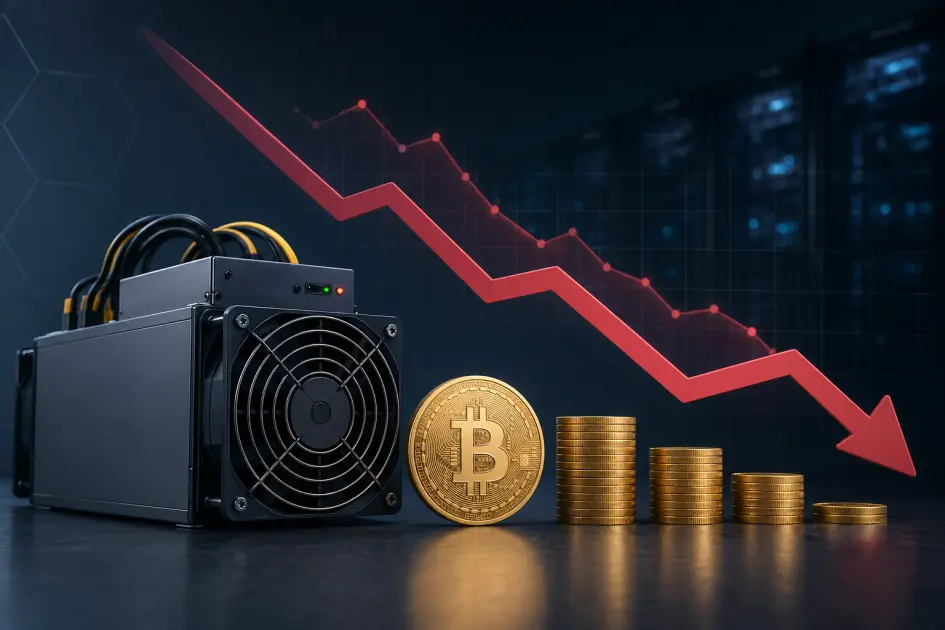
Lower earnings than expected usually come from five causes: a falling BTC price, a spike in network difficulty, thin transaction-fee income, the natural daily variance of mining payouts, or reading an advertised "up to" range as a guaranteed return. This guide walks you through diagnosing which factor is hitting your payout — with the math to prove it.

Start Here: Advertised Returns Are a Range, Not a Promise
When you rent a NoxHash miner, the marketplace shows a potential return "up to around 125%" of the monthly rental price. That number is the top of a modeled range under favorable conditions — stable BTC price, moderate difficulty, healthy transaction fees. It is not a guaranteed payout, and no cloud mining platform can honestly promise a fixed BTC amount because the variables that produce the number are outside anyone's control.
The actual range, based on our own fleet data, typically falls somewhere between roughly 90% and 125% of your rental cost in any given month — occasionally below 90% during sharp BTC drawdowns or difficulty spikes. If your earnings are sitting inside that band, nothing is broken. If they're sitting far below it, one of the five causes below is almost always responsible.
The 5 Real Reasons Your Earnings Look Low
Mining revenue is the product of four moving pieces — BTC/USD price, network difficulty, block reward, and transaction fees — divided across the global hashrate. Change any one and your USD earnings change, even though nothing on your miner did.
1. BTC price dropped since you rented
Your rental fee is fixed in USD, but earnings are paid in BTC. If BTC drops 15% after you sign up, the USD value of your earnings drops too — even if the BTC amount credited each day is identical.
2. Network difficulty spiked
More hashrate joined the network, so the pie is split more ways. Same TH/s, fewer BTC per day. Difficulty can rise 3–8% at a single adjustment (every 2,016 blocks, roughly every 2 weeks) — enough to noticeably shift payouts.
3. Transaction fees are thin right now
Miners earn the block subsidy (3.125 BTC post-halving) plus transaction fees. When the mempool is quiet, fees can fall below 3% of block rewards — versus 20%+ during busy congestion periods. Post-halving, this matters more than ever.
4. Your sample is too short
FPPS payouts smooth out most variance, but day-to-day earnings still wobble with pool performance and difficulty retargets. Judging a miner by 3 days is like judging a coin toss by 3 flips — wait for a 7-to-30-day average.
5. You read "up to 125%" as a guarantee
The advertised figure is the top of a realistic range under good market conditions — not the typical outcome and not a floor. Plan for a band of roughly 90%–125%, accept that some months will land lower, and size your rental accordingly. No honest operator can promise a fixed BTC yield because four of the inputs above can change without warning.
Worked Example: Advertised vs Actual on a Standard Miner
Let's walk through a concrete case. You rent a Standard Miner (150 TH/s) for $50/month. The marketplace hints at around 125% as the upper-range return. Here's how the math actually plays out when two of the five causes turn against you at once.
| Stage | Expected (top of range) | After real market conditions |
|---|---|---|
| Monthly rental (fixed USD) | $50.00 | $50.00 |
| Advertised upper return | ~125% → $62.50 | Treat as ceiling, not floor |
| Gross BTC earned in the month | ~0.00066 BTC (at $95k) | ~0.00060 BTC (difficulty +8%) |
| BTC price at payout time | $95,000 | $80,750 (–15%) |
| USD value of earnings | ~$62.70 | ~$48.45 |
| Return on rental | ~125% | ~97% |
Nothing went wrong with the hardware. The miner hashed for the full month, the pool paid fairly, and your BTC balance grew by roughly the amount the model predicted in BTC terms. But a 15% BTC drawdown plus an 8% difficulty increase compressed the USD result from ~$62.70 down to ~$48.45 — a shift of nearly 30 percentage points without anything in the data center changing.
This is the core insight: your rental is a claim on future BTC, not a claim on future USD. The illustrative figures above use a BTC reference near $95k (see CoinGecko's live Bitcoin price for the current level) — your actual numbers will differ.
See the 5 causes in your own data
Your dashboard shows daily BTC earnings, hashrate, and USD conversions side-by-side. Create a free account and activate the 2-day Basic Miner trial — you'll see exactly how BTC amount and USD value move independently, before you commit a single dollar.

Self-Diagnosis: Which of the 5 Is Hitting You?
Before you open a support ticket or give up on mining, run through this 60-second check. Four tabs, four numbers, a clear answer.
Check the BTC price move since you rented
If BTC is down more than 10% from when you clicked rent, you've likely found cause #1. Pull up any reputable price source and compare today's price to your rental-day price. Anything above 10% down is enough to noticeably reshape USD returns.
Check the current network difficulty
Bitcoin difficulty retargets roughly every two weeks. A single adjustment of +5% to +8% — perfectly normal when total hashrate rises — means your TH/s earns proportionally less BTC. Compare the current reading to the value when you rented.
Check mempool and fee conditions
Look up the mempool size and median fee rate. A nearly empty mempool with sat/vB in the single digits means miners collect little beyond the subsidy. Busy mempool days deliver a fatter fee slice — the difference can be 5–20% of total block revenue.
Check your sample size — days, not hours
Open your earnings chart and count the days. Fewer than 7 days is too few to conclude anything. 7–14 days gives a fair read. 30 days smooths out a full difficulty cycle and almost always lands inside the realistic return band.
If you've gone through all four and none of them explain the shortfall — your BTC earnings are credited on time, the daily BTC amount matches roughly what 150 TH/s should yield, but the USD reads low — then it's almost always a BTC price story, not a platform story.
For live reference data while you diagnose, two trusted sources: Blockchain.info maintains a public Bitcoin network difficulty chart, and mempool.space shows real-time mempool congestion and fee estimates.
Setting Realistic Expectations Going Forward
Once you understand what moves your earnings, you can set expectations that hold up. Four habits separate users who are satisfied with their results from those who feel blindsided every month.
Track BTC earned, not just USD
A steady daily BTC credit is the real sign your miner is working. USD value is a second, separate layer driven by the market. Keep the two metrics mentally separate.
Judge on 30-day averages
A single low day or week is noise. A 30-day view covers at least one full difficulty retarget and smooths out daily pool variance. It's the shortest honest window.
Don't rent right after a BTC spike
Rental prices are in USD; earnings are in BTC. Renting into a local top means you pay a full USD rate, then earn BTC whose USD value often settles lower. Volatile tops are the worst entry point.
Size the rental so a slow month is OK
If a month landing at 90% of rental cost would hurt, the rental is too large. Plan on the lower end of the band and treat upside months as a bonus, never as the baseline.
Frequently Asked Questions
Is my miner broken if USD earnings drop?
Almost certainly not. Check the BTC amount credited each day on your dashboard. If BTC keeps arriving on schedule, the hardware is fine — the USD figure simply reflects BTC's market price at the moment. A falling BTC price reduces USD value without any change to the miner itself.
How long before I can judge a rental fairly?
Wait at least 7 days for a rough read and 30 days for a fair one. Bitcoin difficulty retargets every ~2 weeks, so a month captures at least one adjustment plus normal pool variance. Shorter samples are statistically too small — any single low day can mislead.
Why did my daily BTC amount drop on its own?
Most often, a difficulty retarget just happened. When more hashrate joins the network, each TH/s claims a smaller share of the 450 BTC mined each day globally. Transaction-fee cycles also play a role — fewer on-chain transactions means thinner miner rewards on top of the block subsidy.
Does the advertised "up to 125%" mean I'll get 125%?
No. "Up to" is the top of a modeled range under favorable market conditions — it is not a guarantee or a floor. A realistic band runs roughly 90%–125% of rental cost in typical months, and can fall below 90% during BTC drawdowns, difficulty spikes, or thin fee environments.
Should I stop mining when BTC is falling?
That depends on your view of BTC. Mining during a downtrend means accumulating BTC at a lower cost basis — if you believe in long-term upside, that's attractive. If you need USD back within the month, starting a new rental during a falling market is usually a worse entry than waiting for stability.
When should I contact support instead?
If your dashboard shows zero BTC credited for a full 24 hours, the miner is marked Running but hashrate is missing, or BTC earnings look out of line with the global network (well below what 150 TH/s or 350 TH/s should produce that day). Those are hardware or platform signals — the five causes above are market signals.
Important — This Is Not Financial Advice
Bitcoin and cloud mining involve substantial risk. BTC price, network difficulty, transaction fees, and block reward schedules can all change without warning — sometimes sharply — and all four directly affect the USD value of mining earnings. Advertised return ranges (including any "up to" figure shown in the NoxHash marketplace) are modeled illustrations under favorable conditions, not guarantees, and actual results can fall below the illustrated band in adverse markets.
All numbers in this article — BTC amounts, USD values, percentage returns — are illustrative examples based on reference market conditions, not projections or promises. Past performance does not predict future performance. Only rent hashrate with funds you can afford to lose, understand that renting during a BTC drawdown can mean sustained periods of sub-breakeven results, and consult a qualified tax and financial professional in your jurisdiction before making investment decisions.