How Kazakhstan Became a Global Bitcoin Mining Hub
From near-zero in 2020 to 18% of global hashrate, a 2022 power crisis, and a stable top-3 spot today — the full story of Kazakhstan Bitcoin mining.

Kazakhstan went from a Bitcoin-mining footnote to ~18% of global hashrate in under a year, crashed during a 2022 energy crisis, and stabilised as a top-three mining country. China banned mining in 2021, ASIC containers crossed the border, the grid strained, rules tightened — and what remained is now one of the most mature industrial mining markets on Earth.
Why Kazakhstan Works for Bitcoin Mining in the First Place
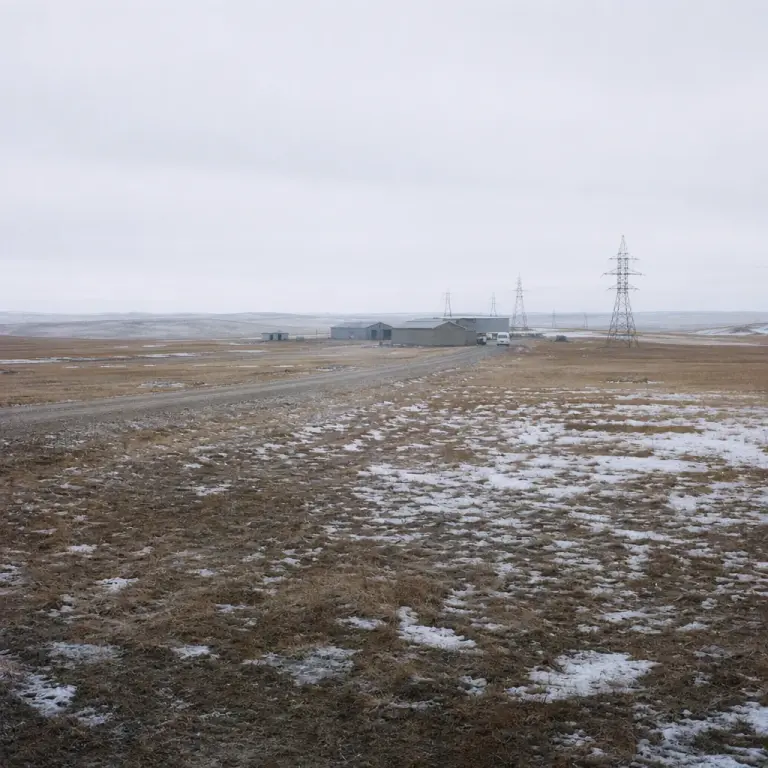
Before the story of migration and crisis, it helps to know why miners looked at this country at all. Bitcoin mining is ultimately a bet on cheap, abundant electricity — and Kazakhstan sits on several layers of it. The country is the world's top uranium producer, a major coal and natural-gas economy, and historically a net energy exporter to Central Asia and Russia.
Add a continental climate where winter temperatures routinely drop to -15°C to -30°C, and an unusually business-friendly regime for industrial power contracts, and the economics start to look obvious. Three structural advantages stand out.
Cheap industrial power
Industrial tariffs of $0.03–0.05/kWh, backed by domestic coal and gas generation — a fraction of the $0.10–0.20 household rates common across Europe and North America.
Cold continental climate
Average annual temperatures of 2–7°C and winters that push to -30°C let ASIC halls run on ambient airflow for most of the year — cutting HVAC costs by 20–30% versus tropical regions.
Formal legal framework
A dedicated digital-mining law introduced in 2023 replaced the earlier grey-market status with registration, licensing, and explicit tax rules — removing one of the biggest risks for institutional operators.
How the Hub Came to Be — a Five-Stage Timeline
Kazakhstan's rise didn't happen gradually. It compressed into roughly 24 months of explosive growth and correction, followed by a slower stabilisation phase that is still playing out. Five moments explain the whole arc.
Before 2020 — near-zero footprint
Cambridge CBECI estimates put Kazakhstan at roughly 1–2% of global hashrate through the late 2010s. Domestic entrepreneurs ran small operations near coal-fired power stations, but the global industry was overwhelmingly Chinese — China alone hosted 65–75% of hashrate.
May–June 2021 — China bans mining
Beijing ordered a nationwide shutdown. Within weeks, Sichuan, Xinjiang, and Inner Mongolia farms went dark. Operators packed ASICs into shipping containers and looked for the nearest jurisdiction that combined cheap power with a tolerant legal stance — Kazakhstan, sharing a 1,700 km land border, was the fastest option.
October 2021 — peak at ~18% of global hashrate
CBECI data placed Kazakhstan second only to the United States. Kazakh electricity demand grew 8% between January and October 2021 — four times the normal annual rate — with the new mining load driving most of the spike. The country briefly hosted nearly one in every five Bitcoin blocks produced worldwide.
Winter 2021–22 — blackouts and crackdown
Six regions experienced rolling blackouts as residential winter heating piled on top of the new mining load. In January 2022, protests over fuel prices coincided with a national internet shutdown — Bitcoin's global hashrate fell about 12% overnight. Authorities cut miners off from the grid, introduced a 100 MW cap on new crypto operations, and moved to shut down unregistered grey-market miners.
2023–2026 — formalisation and stable top-3
Parliament passed a dedicated digital-mining law in 2023 requiring licensing, reporting, and taxation. Share of global hashrate dipped as low as 4% in mid-2023, then recovered. Per the Cambridge CBECI mining country map, Kazakhstan has since held roughly 10–14% of global hashrate, consistently inside the world's top three alongside the US and Russia.
The Numbers Today
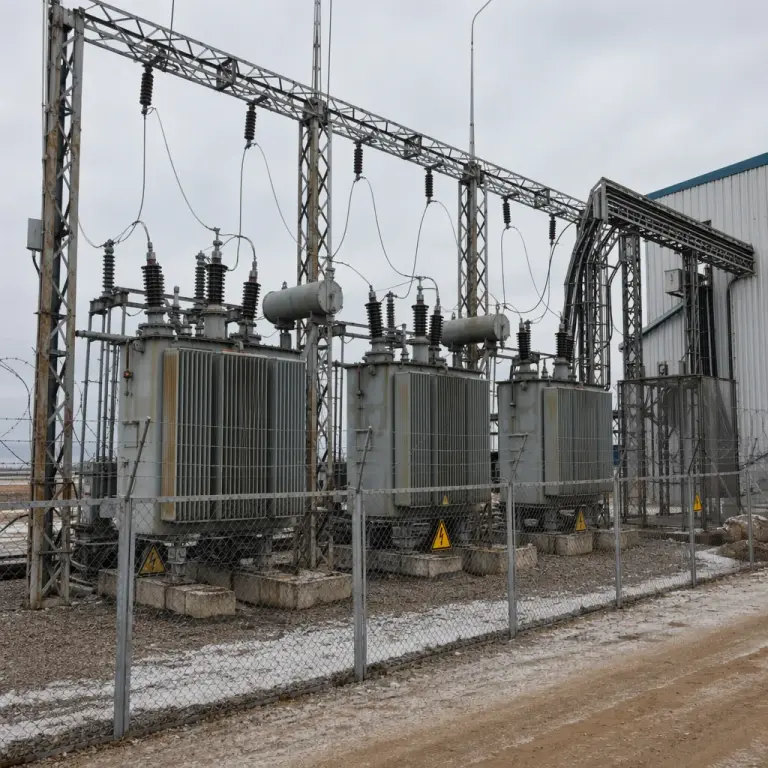
Tracking Kazakhstan's exact share is easier said than done — CBECI itself notes that hashrate-by-country data relies on miner-pool geolocation, which VPNs can distort. Still, a consistent picture emerges from Cambridge, MIT Technology Review, and the Kazakh National Association of Blockchain and Data Centers.
| Indicator | Kazakhstan (2024–2026) | Context |
|---|---|---|
| Share of global hashrate | ~10–14% | Down from 18% peak, ahead of every country except the US |
| Global ranking | Top 3 | Alongside the United States and Russia |
| Industrial power tariff | $0.03–0.05/kWh | Roughly 3–5× cheaper than typical residential rates globally |
| Capacity cap on new miners | 100 MW | Per-project cap introduced after the 2022 grid crisis |
| Legal status | Licensed and taxed | Dedicated digital-mining law in force since 2023 |
The shape of the industry has changed too. The 2022 crackdown wiped out most of the unregistered grey market that had sprung up along the China border — the miners that survived are generally larger, formally licensed, and running newer generation hardware. That consolidation is part of why the country now looks more like Texas or Iceland than the wild-west 2021 version of itself.
The Risks That Remain
A healthy Kazakhstan chapter doesn't mean a risk-free one. Anyone looking at the country as a mining destination — whether running their own fleet or using a cloud operator like NoxHash — should be honest about the open questions.
Energy pricing can move
Industrial tariffs that look permanent can shift with seasonal demand or political pressure. Kazakhstan has already introduced surcharges specifically aimed at crypto miners, and winter heating load still takes grid priority.
Political volatility
The January 2022 unrest reminded everyone that Kazakhstan is not immune to sudden policy shocks. Internet shutdowns, curfews, or emergency grid cuts are low-probability but not zero-probability events.
Grid still fossil-heavy
Roughly 70% of Kazakhstan's electricity comes from coal, with most of the rest from natural gas. For miners or investors with ESG constraints, the country's energy mix is a meaningful consideration.
Licensing adds friction
The post-2023 framework is a net positive for legitimacy, but it adds reporting, tax, and compliance overhead. New entrants without local legal support will find it slower to set up than Texas or Paraguay.
None of these risks is unique to Kazakhstan. They're the normal trade-offs of mining in a resource-rich emerging market — but they are real, and pretending otherwise is how investors got burned in 2022.
Where NoxHash Sits in This Story
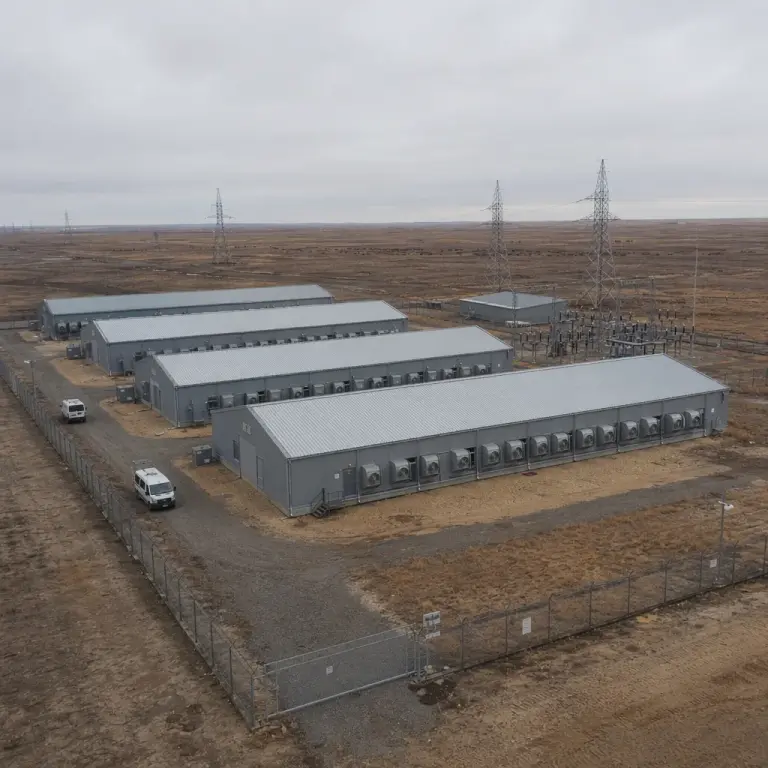
We are one of the licensed, post-2022 operators. NoxHash's data center sits inside the Kazakh industrial grid on a long-term contract at $0.03–0.04/kWh, with diesel and UPS backup for the kind of grid-cut scenarios the country experienced in 2022. The fleet is all post-halving generation hardware — Antminer S21 XP Hyd, S21 Pro, S21, WhatsMiner M66S, M60S — running at 12–18.5 J/TH, which is roughly twice as efficient as the 2021-era rigs that first rolled across the China border.
The broader story above is, frankly, why we can offer cloud mining plans starting at $20/month. The country's top-three hashrate share isn't a marketing claim — it's independently reported by Cambridge University and the industry press cited in this article. The cheap winter cooling and industrial tariffs that attracted the China refugees in 2021 are the same tariffs that show up inside our monthly rental price.
Rent from the Kazakh hub you just read about
You've seen the history — the cheap industrial power, the cold climate, the mature post-2023 regulation. Open a free NoxHash account and claim a 2-day Basic Miner trial to see the infrastructure live, straight from the country this article is about.
Frequently Asked Questions
Why did Bitcoin miners leave China in 2021?
In May and June 2021 the Chinese government ordered a nationwide shutdown of cryptocurrency mining, citing energy consumption and financial-stability concerns. Within weeks, operators in Sichuan, Xinjiang, and Inner Mongolia packed ASICs into containers and relocated to jurisdictions with cheap power, Kazakhstan among the first.
Is Kazakhstan still safe for Bitcoin mining after 2022?
For licensed operators, yes. The 2022 blackouts and the subsequent crackdown hit unregistered grey-market miners hardest. Registered farms working under the 2023 digital-mining law now enjoy clear tax treatment, explicit energy allocations, and protection against the kind of arbitrary cuts that happened during the winter crisis.
Is the Kazakh grid overloaded again?
Not like 2021. The 100 MW cap on new mining projects and the shutdown of grey-market capacity reduced mining load by roughly 70% from the peak. Winter still stresses the system as residential heating demand rises, but miners now operate with defined power allocations rather than uncapped grid access.
What is the tax situation for Kazakh Bitcoin miners?
Since 2023 Kazakhstan applies a tiered electricity surcharge to licensed mining companies — higher per-kWh fees for miners who draw from the national grid during peak hours, lower fees for those using dedicated generation or off-peak power. Corporate income tax and VAT apply under standard rules.
Does NoxHash disclose the exact facility address?
We confirm the country and the top-3 CBECI ranking but not the street address — that's standard practice for mining sites, which attract physical-security risk. What you can verify live is the hardware: every paid miner exposes a Windows Server view with real CGMiner output running against a real pool.
Will Kazakhstan keep its top-3 position?
Short term, almost certainly. The combination of cheap coal and gas generation, cold winters, installed mining infrastructure, and formal regulation is hard to replicate. Longer term, competition from US sites using stranded gas and African countries with hydroelectric surplus could compress the share — but not eliminate it.
Not financial advice
This article is industry history and analysis, not investment advice. Hashrate figures are drawn from Cambridge CBECI and public reporting; country-level data can shift quickly and has known measurement limitations. Bitcoin mining returns depend on BTC price, network difficulty, energy cost, and regulation — all of which can change without warning. Only commit funds you can afford to lose, and consult a local tax advisor about crypto income in your jurisdiction.