Is Bitcoin Mining Bad for the Environment? An Honest Look
Bitcoin mining uses serious energy — but the "bad for the planet" story depends on renewable share, grid services, and what you compare it against. Honest 2026 look.
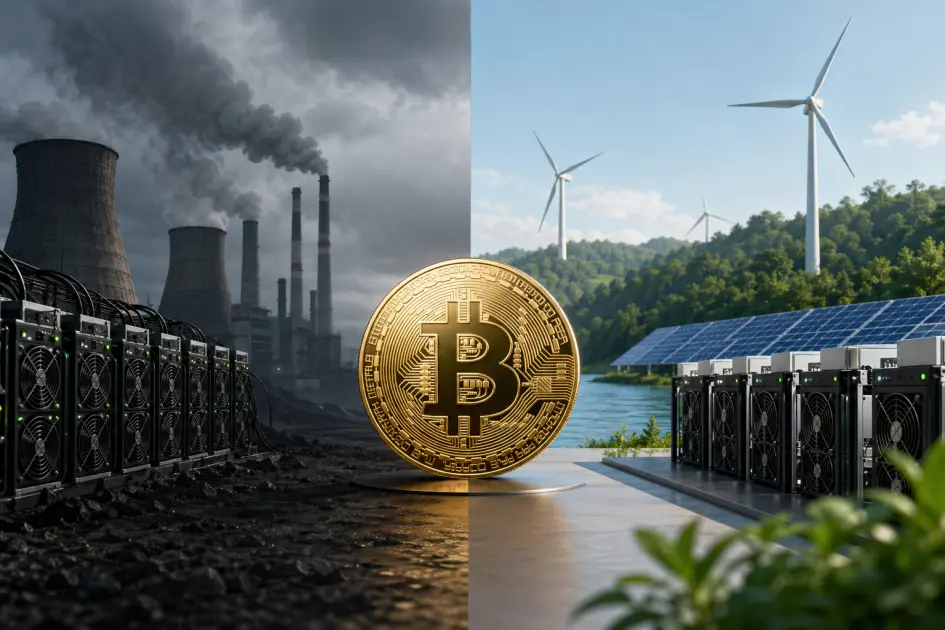
Is Bitcoin mining bad for the environment? The honest answer is: it uses real energy, not a trivial amount, and whether that is "bad" depends on the grid it runs on, what you compare it against, and how efficiently the hardware runs. The Cambridge CBECI puts the network at roughly 150–180 TWh per year in 2025–2026 — about 0.6% of global electricity — with a renewable share near 50–60%.
The honest answer, upfront
Bitcoin mining uses a real amount of energy. Not a trivial amount, not a token amount — the global network pulls something in the range of 150 to 180 terawatt-hours per year, according to the Cambridge Bitcoin Electricity Consumption Index (CBECI), the most widely cited academic tracker. That is roughly 0.6% of global electricity use, close to what the world's data centers consume in total, and more than some small countries.
So is that "bad"? It depends on three things: what grid mix powers the machines, what you compare the number to, and what the alternative use of that energy would have been. A joule of coal-fired power in a coal-heavy region has a very different carbon footprint from a joule of hydro in Québec or wind in West Texas. Dismissing mining as "killing the planet" ignores that nuance. Waving it away as "fine" ignores that coal-heavy operations still exist and still emit.
This article walks through the actual numbers, where the honest criticisms land, and where the critics oversimplify. At the end, we share where NoxHash sits — honestly.
The hard numbers, in context
"Bitcoin uses a lot of energy" becomes a very different statement once you put it next to other industries. Here is how the Bitcoin network's energy footprint stacks up against other sectors most people never think twice about. All figures are approximate annual electricity consumption.
| Activity / Industry | Approximate energy use (TWh/year) | Notes |
|---|---|---|
| Global data centers (incl. AI) | ~460 TWh | Rising fast with AI compute (IEA, 2024) |
| Gold mining industry | ~240 TWh | Includes diesel fuel for extraction (industry estimates) |
| Bitcoin network | ~150–180 TWh | Cambridge CBECI, 2025–2026 range |
| Traditional banking & ATMs (estimate) | ~260 TWh | Branches, ATMs, card networks, data centers combined |
| Household tumble dryers (USA) | ~100 TWh | US residential only |
| Christmas lights (USA, seasonal) | ~6 TWh | A few weeks per year, US alone |
Two takeaways. First, Bitcoin mining is not small. It is a real industrial-scale electricity consumer, comparable to a mid-sized country. Second, it is not uniquely enormous either. Data centers overall, gold mining, and the banking system each pull more. The question is less "does Bitcoin use a lot of energy" and more "is that energy doing something society values, and on what grid mix."
Why "bad for the planet" oversimplifies
The strongest version of the environmental critique is that Bitcoin's energy use translates directly into a proportional carbon footprint. That is not quite how electricity works, and it is the first place the simple story breaks down.
Bitcoin mining runs on a mix of sources — hydroelectric in Québec and Paraguay, wind and solar in West Texas, flared natural gas in the Permian Basin, geothermal in El Salvador, and yes, coal and natural gas in places like Kazakhstan and parts of the United States. The same joule of work has very different emissions depending on which source produced it. Cambridge's separate Bitcoin Electricity Consumption Index tracks this and estimates the sustainable-energy share at roughly 50–60% in recent years — similar to or slightly ahead of the global electricity mix overall.
Mixed energy sources
Hydro, wind, flared gas, geothermal, coal and natural gas — joules are not equal on carbon intensity.
Renewable share ~50–60%
Cambridge's sustainable electricity index for Bitcoin runs similar to or ahead of most national grids.
Flexible baseload demand
Miners can curtail in seconds, absorb surplus renewables, and monetize stranded energy that no other buyer wants.
There is also a more subtle argument: in places where renewables are abundant but variable — West Texas wind at 3 a.m., Icelandic geothermal near the source, remote hydro without nearby population — building more generation needs a buyer who can absorb surplus. Miners are one of the few loads on earth that can be switched off in seconds and back on just as fast. That makes them a controversial but real tool for renewable buildout in places where baseload demand does not exist yet.
Why "it's fine" also oversimplifies
The opposing industry narrative — that mining is simply misunderstood, net-neutral, or already green enough — is also too neat. Several legitimate concerns do not go away by quoting the renewable share.
Coal-heavy regions still emit
Mining in Kazakhstan, parts of Wyoming, or Iran-style off-books operations is carbon-heavy full stop. The network average hides regional extremes.
E-waste from ASIC turnover
ASICs get replaced every 3–5 years as efficiency jumps. Some analyses estimate ~30,000 tonnes/year of e-waste, though the figure is disputed and chip recycling is improving.
Water use for hydro-cooled sites
Large immersion and hydro-cooled facilities draw significant water for heat rejection. In water-stressed regions this is a real local cost, not offset by green power.
Stranded energy is not free
The "we only use wasted energy" argument is real but limited — most mining runs on regular grid power, and adding demand can drive new generation too.
You can hold both of these truths simultaneously: the network-average mix is cleaner than critics claim, and the dirtiest 20% of mining still has real environmental cost that no amount of hydro elsewhere can cancel out.
The real question is "where," not "whether"
Here is the reframe that matters: Bitcoin's energy footprint is roughly fixed by network difficulty — it adjusts upward as more hashrate comes online. But the carbon footprint of that energy is entirely a function of where miners plug in. Move 1 gigawatt of hashrate from a coal-heavy grid to a hydro-heavy one and global emissions drop, even though the network's total energy use is unchanged.
That is why operator location matters more than the network average. A site in Paraguay running ~100% hydro has maybe a 10x lower emissions per TH/s than a site on a coal-heavy grid in Kazakhstan or Wyoming. The ASICs, the hashrate, the BTC earned — all identical. Only the carbon differs, by an order of magnitude.
Operators pick locations based on power cost, which is tightly correlated (but not identical) to carbon intensity. Kazakhstan's $0.03–0.04/kWh industrial rate comes mostly from coal and natural gas. Paraguay's similar rate comes mostly from hydro. Texas is mixed — significant wind plus natural-gas peaking. The cheap-power map is not the same as the clean-power map, but they overlap in useful places.
What users can actually influence
If you rent hashrate or buy a miner, you do not get to rewrite the global grid. But you do get to pick which operator you support, and those choices aggregate. Four things are genuinely within your control.
Pick operators who disclose their grid mix
Transparency is a signal. Any operator that refuses to say where their facility is or what fuels the grid is hiding something. "Green" without a grid-mix breakdown is marketing, not information.
Prefer fleets with high J/TH efficiency
A fleet running at 12–17.5 J/TH (current-gen Antminer S21 series) produces the same BTC on roughly half the electricity of a fleet still running 2021-era S19 Pros at ~30 J/TH. Efficiency reduces energy-per-BTC regardless of grid mix.
Favor operators in renewable-heavy regions where available
Hydro regions (Québec, Paraguay, Nordics), wind-heavy grids (West Texas, parts of the US Midwest) and geothermal (Iceland, El Salvador) carry significantly lower emissions per TH/s than coal-heavy grids.
Look at cooling choices
Natural-air cooling in cold climates removes a large HVAC load compared with air-conditioned sites in hot regions. It is not the same as green power, but it is real energy that is never spent in the first place.
None of this fixes the macro picture. But margin decisions move money toward operators who take efficiency and transparency seriously, and away from ones that do not. That signal compounds.
NoxHash's honest position
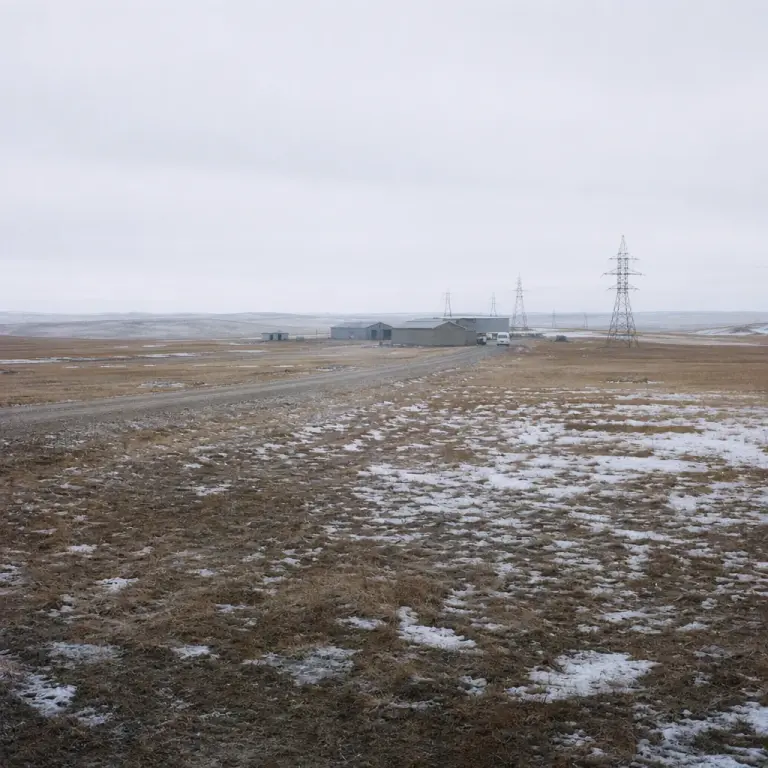
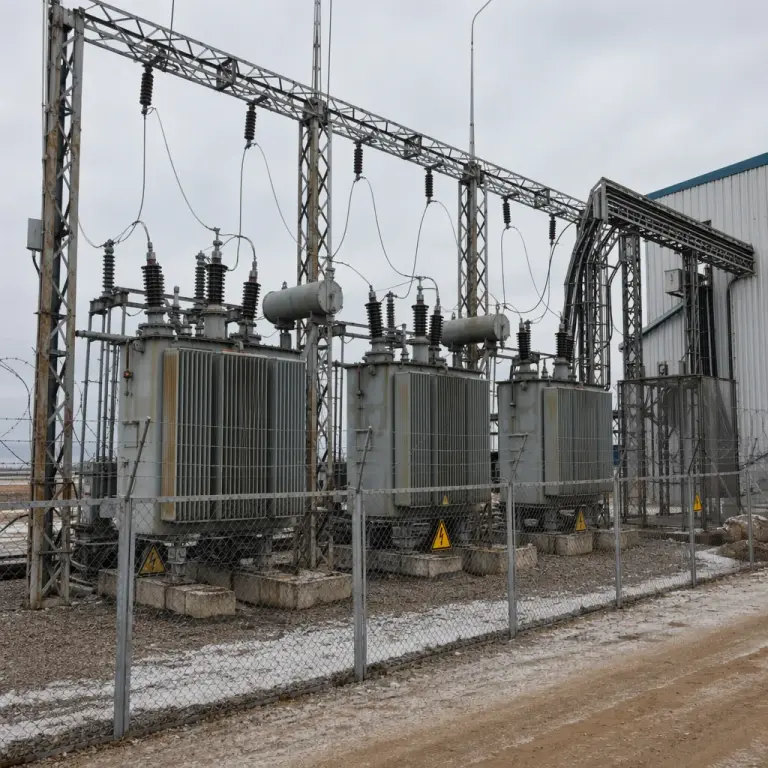
We want to be direct about this because the "green mining" label gets tossed around loosely. NoxHash does not claim to be a green miner. Our facility is in Kazakhstan, and Kazakhstan's grid is dominated by coal and natural gas. A significant fraction of the electricity powering our machines comes from those sources. Pretending otherwise would be dishonest, and the renewable-share math would not hold up to scrutiny.
What we can say honestly is that the energy-per-BTC-mined side of the equation is where our operational choices matter, and we take that seriously.
Current-gen fleet, 12–17.5 J/TH
Antminer S21, S21 Pro, S21 XP Hyd and WhatsMiner M60/M66 series — roughly half the energy per BTC of 2021-era hardware still running in many operations.
Natural-air cooling
Winter temperatures of -15°C to -30°C mean most cooling is free. HVAC load is a small fraction of what a facility in a hot climate would spend on chillers.
Transparency over marketing
We publish the grid mix, efficiency numbers, and location honestly. You can decide whether that tradeoff fits your values — rather than trusting a green sticker.
Operational efficiency and honest disclosure do not make a coal-heavy grid into hydro. They do mean that every BTC mined at NoxHash uses less electricity than it would at a less efficient operator — which matters regardless of where the electrons came from. We would rather be honest about the tradeoff than put a leaf icon on a coal plant.
Pick operators who tell you where the power comes from
We publish our grid mix, hardware efficiency (12–17.5 J/TH), and cooling approach honestly — not because it is perfect, but because you deserve enough information to decide. Open a free account and see exactly what you are renting, without the greenwashing.
Frequently asked questions
How much does Bitcoin mining emit compared to banking?
Estimates vary widely, but the traditional banking system — branches, ATMs, card networks, and associated data centers — is generally assessed at roughly 250–300 TWh per year, noticeably more than Bitcoin's ~150–180 TWh. Emissions depend on which grids power each, so it is not a clean one-to-one comparison.
Is Bitcoin mining worse than AI compute for the environment?
Global data centers overall — including AI training and inference — consume around 460 TWh per year and are growing fast. Bitcoin mining is a subset of industrial electricity demand that happens to be more flexible (can curtail instantly), while AI training loads are much harder to switch off mid-job.
Why not just ban Bitcoin mining to solve the problem?
Bans in one jurisdiction (China 2021, partial bans elsewhere) have mostly redistributed mining rather than reduced it. The network still runs, just on different grids — sometimes dirtier ones. Policy that rewards transparency and grid efficiency tends to produce better outcomes than outright prohibition.
Does renting cloud hashrate "fuel" coal use?
Renting hashrate supports whichever grid your chosen operator plugs into. On a coal-heavy grid, your contract does contribute to that demand. That is why operator location and hardware efficiency matter — your choice at the margin moves money toward or away from cleaner operations.
Will Bitcoin ever run entirely on renewables?
Probably not 100%, but the renewable share has trended upward as miners chase cheap power — which increasingly means surplus wind, flared gas, and hydro. Expect continued movement toward cleaner grids as coal becomes uneconomic relative to renewables, not because of mining-specific policy.
What about ASIC e-waste?
Some analyses estimate ~30,000 tonnes of ASIC e-waste per year, though industry critics dispute the methodology since many "retired" machines get resold to lower-cost regions rather than scrapped. Either way, the volume is small compared with consumer electronics e-waste (tens of millions of tonnes annually).
For the underlying figures in this article, the most reliable public sources are the Cambridge Bitcoin Electricity Consumption Index (network TWh and sustainable-share estimates) and industry coverage from Reuters for context on data-center and banking comparisons.
Informational only — not investment or environmental-policy advice
This article summarizes publicly available estimates as of 2026. Energy figures for the Bitcoin network, data centers, and other industries are approximate and depend heavily on methodology and source. Cryptocurrency investing carries market, technical, and regulatory risk. Do your own research — including on environmental questions — before making any financial decision.