Inside NoxHash — Our Data Center in Kazakhstan
A transparent look inside NoxHash: Kazakhstan data center, $0.035/kWh power, dual-ISP fiber, diesel backup, 99.9% uptime, and why your rented hashrate is real.
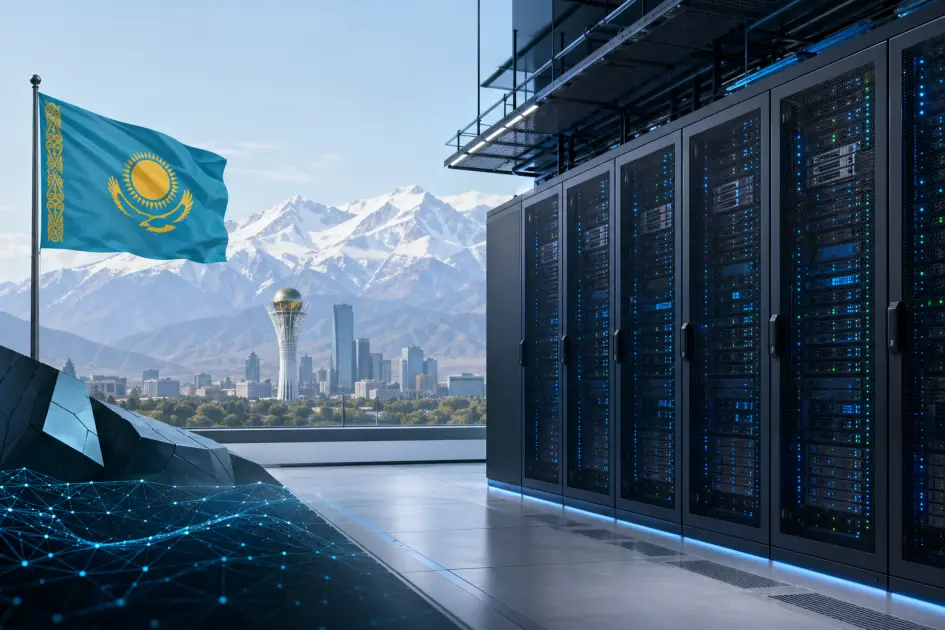
When you rent hashrate on NoxHash, it comes from a real facility in Kazakhstan — one of the world's top three Bitcoin mining hubs. Industrial power at $0.03–0.04/kWh, natural winter cooling down to -30°C, UPS plus diesel backup, dual-ISP fiber, 24/7 on-site security, and a 99.9% uptime commitment.
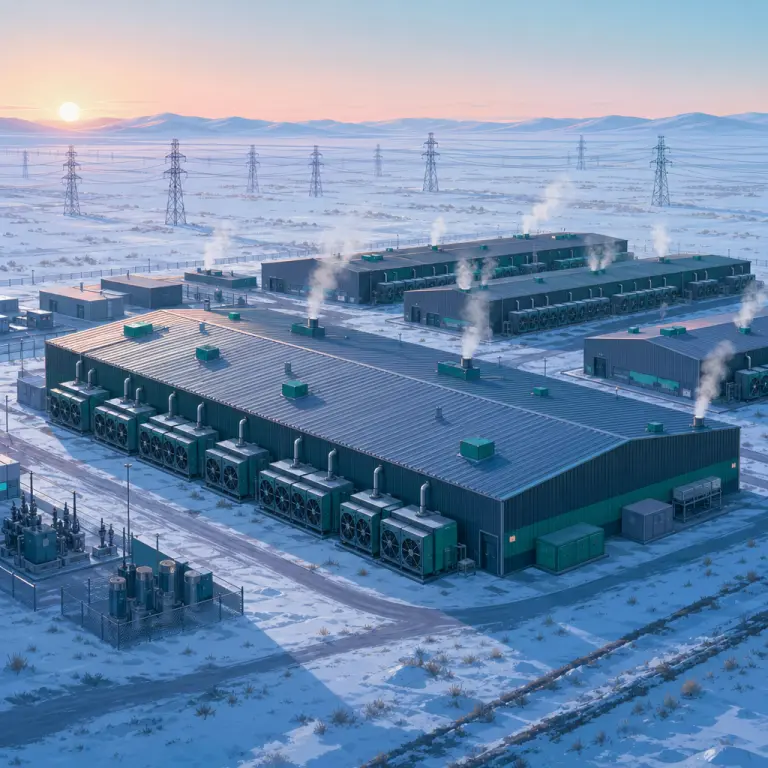
Why We Built in Kazakhstan
Cloud mining is only as trustworthy as the facility behind it. After China banned mining in 2021, Kazakhstan absorbed a huge share of the migrating hashrate and became, alongside the United States and Russia, one of the three largest contributors to Bitcoin's global hashrate — a pattern confirmed by the Cambridge CBECI mining country data.
We chose Kazakhstan for four reasons that translate directly into the cost and reliability of your rented hashrate:
Cheap industrial power
Long-term contracts at $0.03–0.04/kWh — 3 to 5x lower than the $0.10–0.20 global residential average. This alone decides whether a miner is profitable.
Free cooling from the climate
Continental winters average -15°C to -30°C. We pull that cold air through the halls and let physics do the work — no expensive HVAC chillers.
Mature mining regulation
Kazakhstan has a legal framework for registered miners — clear rules on taxes, reporting, and grid participation, with infrastructure built to serve the industry.
We do not publicly disclose the specific street or city of the site. Large-scale crypto infrastructure attracts both legitimate curiosity and unwanted attention; keeping the exact address private is a standard security control we share with most major mining operators.
The Facility at a Glance
Here's what sits behind the dashboard when your miner shows "Running." Every number below is a real operational spec, not a marketing target:
| System | NoxHash spec |
|---|---|
| Location | Kazakhstan (exact site not disclosed) |
| Electricity price | $0.03–0.04 / kWh (industrial contract) |
| Energy source | Coal and natural gas grid mix |
| Cooling | Natural air (winter -15 to -30°C) + industrial fans |
| Backup power | UPS + diesel generators, automatic failover |
| Network | Dedicated fiber, redundant dual-ISP |
| Physical security | 24/7 cameras, access control, on-site guards |
| Uptime commitment | 99.9% |
| Hardware fleet | Antminer S21 series + WhatsMiner M60S/M66S, 12–18.5 J/TH |
The Four Pillars of a Real Mining Facility
"We have a data center" is a claim almost any cloud-mining brand can print on a homepage. What actually separates a reliable operation from a reshuffled illustration is boring infrastructure work across four pillars:
1. Power & redundancy
Industrial grid feed under long-term contract, an uninterruptible power supply (UPS) that rides through brownouts, and diesel generators that take over automatically if the grid drops. Your miners never experience a cold shutdown.
2. Cooling that matches the hardware
Modern ASICs dissipate 3–5 kW of heat each. We use cold outside air as the primary cooling medium and industrial fans for airflow, with temperature sensors per row triggering throttling before anything melts.
3. Physical security
Fenced perimeter, 24/7 camera coverage, access-controlled doors, and on-site guards rotating through every shift. Mining equipment is portable and valuable — the threat model is theft, and we take it seriously.
4. Network resilience
Two independent fiber ISPs, automatic failover at the router level, and mining-pool failover at the software level. If one pool or one link goes down, hashrate keeps earning on the backup inside seconds.
What's Running in the Halls
The fleet is built around the newest generation of SHA-256 ASICs from Bitmain and MicroBT — the two manufacturers that together produce roughly 90% of the world's Bitcoin miners. We choose models by energy efficiency (J/TH), not just raw hashrate, because a lower J/TH means more BTC per kWh — and that efficiency flows through to the profitability of what you rent.
| Model | Hashrate | Efficiency |
|---|---|---|
| Antminer S21 XP Hyd | 473 TH/s | 12.0 J/TH |
| Antminer S21 Pro | 234 TH/s | 15.0 J/TH |
| Antminer S21 Hyd | 335 TH/s | 16.0 J/TH |
| WhatsMiner M66S | 298 TH/s | 17.0 J/TH |
| Antminer S21 | 200 TH/s | 17.5 J/TH |
| WhatsMiner M60S | 186 TH/s | 18.5 J/TH |
For context, a typical 2021-era miner runs around 30 J/TH. Our worst machine is 38% more efficient than that; our best is two and a half times more efficient. Same kilowatt-hour of Kazakh electricity, far more BTC produced.
The People and Systems Running It
Hardware is half the story. A mining facility is a 24/7 operation — machines fail, chips degrade, fans clog with dust, and grid events ripple through the racks at 3am on a Sunday. Our on-site technicians rotate through every shift and respond to faults in real time.
Alongside them, an automated monitoring stack tracks every miner individually: hashrate drift, chip temperatures, pool connectivity, and power draw. A sudden dip triggers an alert before you'd notice it on your dashboard. When a unit does fail, our policy is to replace it within 4–8 hours, so you don't lose a meaningful window of earnings.
What Happens If the Grid Drops — Second by Second
One of the most useful ways to evaluate a data center is to ask: "What happens the moment the outside power cuts?" Here's the exact sequence for our site:
t = 0s — grid feed drops
An external fault, scheduled maintenance, or weather event cuts the incoming utility line. At this instant, the only thing standing between your miners and a hard shutdown is the UPS layer.
t < 20ms — UPS takes over
The uninterruptible power supply switches to battery within milliseconds — faster than any ASIC's protection circuit can notice. Miners keep hashing. Monitoring flags the transition and notifies the on-call engineer.
t < 30s — diesel generator spools up
Diesel gensets start automatically and take over the load before UPS capacity is exhausted. The facility is now running on generator, with fuel reserves sized for multi-hour outages.
t = grid restore — clean handover
When utility power returns and stabilises, the automatic transfer switch moves the load back to the grid and generators ramp down. Your dashboard sees a small dip at worst — usually nothing at all.
Rent hashrate from the facility you just toured
Now that you've seen the power, cooling, security, and network behind it, put it to work. Open a free account and you'll land on a dashboard with a 2-day Basic Miner trial running from the Kazakh halls described above.

Why This Matters for What You Rent
A lot of cloud-mining pitches come down to a single line: "we have a farm somewhere cheap." That sentence is doing a huge amount of work, and it almost never survives a second question. A facility you can describe — location, power cost, cooling method, backup power, network topology, security — is a facility that exists and can be held to a service-level commitment.
When your hashrate is tied to a real data center with industrial electricity contracts and modern hardware, two things follow. First, the operator has a structural cost advantage that translates into better rental economics. Second, when difficulty rises or BTC dips, that cost advantage is the cushion between your miner earning and your miner losing money.
Frequently Asked Questions
Where exactly is the NoxHash data center located?
Our facility is located in Kazakhstan, one of the top three countries by Bitcoin hashrate. For physical-security reasons we do not publish the exact city or street address, a practice shared by most large-scale mining operators. The specs, contracts, and uptime commitment are public.
How do I know my rented hashrate is real and not simulated?
Each rented miner exposes a View Desktop button that opens the real Windows Server session of the machine. You can watch the live CGMiner terminal, inspect system stats, and see hashrate being submitted to the pool in real time — not a pre-recorded animation.
What is your uptime commitment, and what does 99.9% actually mean?
We commit to 99.9% uptime across the fleet. In practical terms that is around 8.7 hours of cumulative downtime per machine per year, and any single hardware fault is replaced within 4–8 hours. Scheduled maintenance windows are planned for low-impact periods.
How is the data center powered, and is it renewable?
We draw from the Kazakh industrial grid, which today blends coal and natural gas. We do not claim to be 100% renewable. What we can honestly claim is that the combination of cheap power and free winter cooling produces one of the lowest operating costs per terahash in the market.
What happens to my miner if a machine physically breaks?
Hardware risk sits with NoxHash, not with you. Our monitoring detects the fault, the on-site technician swaps the unit for a working machine of the same tier within 4–8 hours, and your rental simply continues. You rent a hashrate tier, not a specific serial number.
Can I visit the site?
We do not offer public on-site tours. Active mining halls are restricted-access environments for safety and security reasons. For customers, the remote Windows Server view on every miner — with live CGMiner output — is the transparent, verifiable window into the facility.
Not financial advice
This article describes operational infrastructure. Renting mining hashrate is an investment in a volatile asset — actual earnings depend on Bitcoin price, network difficulty, and market conditions, all of which can change quickly and sit outside our control. Past performance does not guarantee future results. Only commit funds you can afford to lose, and consider consulting a local tax advisor about crypto earnings in your jurisdiction.