How NoxHash Upgrades Hardware to Stay Competitive
See how NoxHash refreshes its ASIC fleet — 12-18.5 J/TH Antminer S21 and WhatsMiner units, dual-supplier strategy, and why renters benefit.
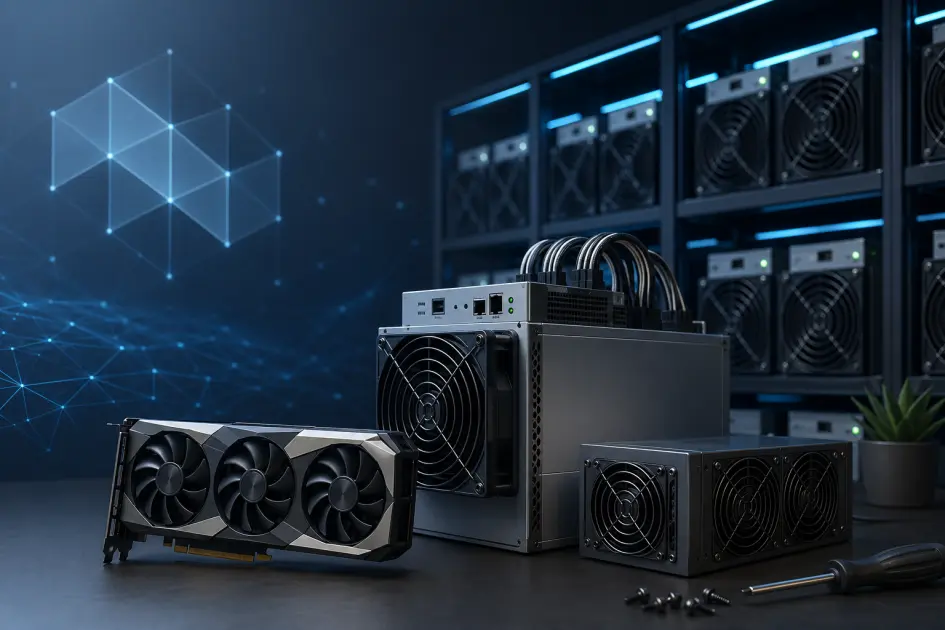
NoxHash keeps its Bitcoin mining fleet at the 12-18.5 J/TH efficiency band by continuously retiring older ASICs and deploying the latest Antminer S21 and WhatsMiner M-series units. Because you rent hashrate instead of owning hardware, every upgrade cycle lands in your dashboard — no capital expense, no resale loss.
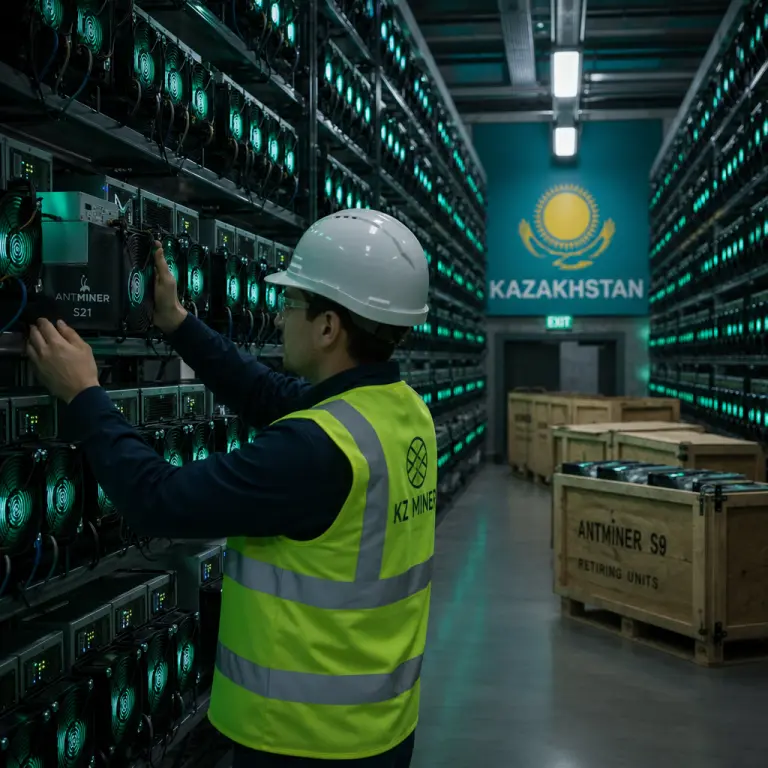
Why Continuous Hardware Upgrades Matter in Bitcoin Mining
In Bitcoin mining, the difference between profit and loss is measured in joules per terahash (J/TH) — how much electricity a miner burns to produce 1 TH/s of hashrate. A 2021-generation Antminer S19 Pro runs at roughly 30 J/TH. A 2024-2025 Antminer S21 XP Hyd runs at 12 J/TH. That is a 2.5x improvement in energy efficiency in four years.
For an operator, this is existential. Network difficulty only goes up, block rewards halve every four years (the April 2024 halving cut the reward to 3.125 BTC), and electricity prices never trend down meaningfully. Running old machines means paying the same power bill for less BTC every month. The only defence is a fleet that never stops getting more efficient.
Lower J/TH = higher margin
Halving electricity per terahash directly doubles the BTC earned per kWh — the single biggest lever in mining economics.
Difficulty keeps rising
Bitcoin network difficulty hovers around 110-120 T in 2025. Every difficulty bump shrinks the BTC each TH/s earns — efficiency offsets the hit.
Halvings cut reward
Block reward dropped from 6.25 to 3.125 BTC in April 2024. Older hardware rarely survives past two halvings — new gear is the only way forward.
The 4-Pillar Upgrade Strategy Behind Our Fleet
Keeping hardware modern at scale is not a matter of buying whatever is newest. We follow a four-pillar playbook that balances performance, supply security, and cost — so the efficiency gains we see translate into stable rental pricing for you.
Pillar 1 — The 15% efficiency rule
We only retire a working miner when a new generation is at least 15% more efficient in J/TH. Below that threshold, the upgrade cost outpaces the electricity savings, so the older unit keeps earning.
Pillar 2 — Dual-supplier diversification
Our fleet runs both Bitmain Antminer and MicroBT WhatsMiner units. Between them they control roughly 90% of the ASIC market, and sourcing from both avoids a single-vendor bottleneck when one supplier has a production delay.
Pillar 3 — Bulk purchasing power
Ordering hundreds of units at once secures unit pricing 15-25% below retail. That discount is the reason we can offer a 50 TH/s Basic Miner rental for $20/month instead of $40+.
Pillar 4 — Structured retirement
Retired units aren't scrapped. We either resell on the secondary ASIC market while they hold residual value, or redeploy them internally on cheaper off-peak power for our own mining pool — recouping capital before the next buy.
Fleet Efficiency Over Time — The Numbers
The cleanest way to show the upgrade curve is to compare generations side by side. Every row below represents an ASIC class that has been in production in the last five years, with published specs you can cross-check on manufacturer datasheets or independent ASIC Miner Value listings.
| Generation | Representative model | Efficiency (J/TH) | vs NoxHash fleet |
|---|---|---|---|
| 2020-2021 | Antminer S19 Pro | ~30 J/TH | NoxHash uses ~2x less energy |
| 2022-2023 | Antminer S19 XP | ~21 J/TH | NoxHash uses ~25-40% less |
| 2024-2025 (current fleet) | S21 XP Hyd · S21 Pro · S21 Hyd · S21 · WhatsMiner M66S · M60S | 12.0 - 18.5 J/TH | Baseline — what you rent today |
That 12-18.5 J/TH band is not cherry-picked: it is the working range of every active unit in our Kazakhstan data center. The flagship Antminer S21 XP Hyd sits at 12.0 J/TH, the workhorse S21 at 17.5 J/TH, and the MicroBT WhatsMiner M60S at 18.5 J/TH. When Bitmain or MicroBT ships a generation that beats these by 15% or more, the retirement clock starts ticking.
You can verify every spec on the manufacturer side at ASIC Miner Value, which aggregates release dates, hashrate, and power draw for the current and historical ASIC catalogue.

The Upgrade Timeline — What Happens When a New Generation Ships
From the moment Bitmain or MicroBT announces a new flagship to the day it starts earning BTC on your dashboard, there's a structured pipeline. Here is how a fleet refresh actually moves:
Spec review & pre-order
When a new model is announced, we run its published J/TH against our fleet baseline. If the gap is at least 15% and supply is deliverable, we place a bulk pre-order to lock in factory pricing before retail markup.
Burn-in & validation
Every batch runs a 72-hour burn-in at the data center to flag early chip failures, verify advertised hashrate, and confirm thermal behaviour in Kazakhstan's winter and summer loads before it joins the production pool.
Staged deployment
New units take over racks previously filled by retiring gear. We never run a hard cutover — hashrate allocated to existing rentals is preserved through the swap, so your dashboard numbers stay stable during the transition.
Retirement & recovery
Retired ASICs are resold on the secondary market while they still hold value, or redeployed internally against cheaper off-peak power. Either path recovers capital that funds the next generation of bulk purchases.
Why This Matters for You as a Renter
If you owned a mining rig yourself, every upgrade cycle above would be your problem. You'd have to find $4,500-$6,000 per new machine, resell the old unit at a loss, ship, configure, cool it, and absorb any batch defects. Renting flips that burden.
| Upgrade cost | If you own hardware | If you rent with NoxHash |
|---|---|---|
| Capital outlay per upgrade | $4,500-$6,000 per unit | $0 — included in rental |
| Depreciation risk | 30-60% value loss per generation | Absorbed by NoxHash |
| Time to access latest gear | Weeks of shipping + setup | Immediate on next rental cycle |
| Resale of old gear | Your responsibility, discounted | Handled internally |
The practical takeaway: your $20-$250 monthly rental already includes the cost of staying on the newest generation of hardware. You don't reshuffle anything — we do the hard work of keeping the fleet at 12-18.5 J/TH, and your dashboard keeps earning on whatever is most efficient at the moment.
Rent from the upgraded fleet — no hardware risk
Everything you read above is already running in Kazakhstan right now. Create an account and you'll land on a dashboard with a free 2-day Basic Miner trial — see the current-generation hashrate in action before spending a cent.
Frequently Asked Questions
How often does NoxHash upgrade its mining hardware?
There's no fixed calendar. We upgrade whenever a new generation is at least 15% more efficient in J/TH than the model it replaces. In practice that has meant a major refresh roughly every 12-18 months, aligned with Bitmain and MicroBT flagship releases.
Which miner models are currently deployed?
The active fleet consists of Bitmain Antminer S21 XP Hyd, S21 Pro, S21 Hyd, and S21, plus MicroBT WhatsMiner M66S and M60S units. Efficiency across the fleet sits in the 12.0-18.5 J/TH range, which is the current state-of-the-art band for SHA-256 ASICs.
Will my rental price go up when the fleet is upgraded?
Active rental contracts are locked at the price you signed up for — an upgrade mid-term does not change your monthly fee. Future plans may be re-priced when market conditions shift, but any active plan you hold runs to its full term on the terms you agreed to.
What happens to the old miners when they're retired?
Retired ASICs follow one of two paths. Units with residual market value are resold on the secondary ASIC market. Units that still mine profitably on cheaper power are redeployed internally against off-peak electricity contracts, contributing to our own mining pool rather than rental hashrate.
Why use two suppliers instead of just Bitmain?
Single-vendor dependency is a supply-chain risk. If Bitmain faces a production delay or export issue, a fleet built solely on Antminer stops expanding. Running MicroBT WhatsMiner units alongside Antminer keeps our order book flexible and lets us always pick whichever generation is most efficient per dollar.
Does an upgrade interrupt my mining earnings?
No. Upgrades are staged so that your contracted hashrate stays online throughout. New racks are validated and warmed up before old ones are retired, so BTC continues accruing to your wallet every minute without a visible gap on your dashboard.
Not financial advice
Hardware efficiency is only one of several factors that determine Bitcoin mining profitability. Actual earnings depend on BTC price, network difficulty, and market conditions — all of which can move sharply and are outside our control. Spec figures cited in this article are from Bitmain, MicroBT, and ASIC Miner Value listings as of April 2026 and may change with firmware updates or new product revisions. Past performance does not guarantee future results; invest only what you can afford to lose and consider consulting a local tax or financial advisor.