Free Trial vs Paid Plan: What's Different on NoxHash?
Compare the NoxHash 2-day free trial with the $20/mo Basic Miner plan: hashrate, earnings, withdrawals, and when to transition from test drive to real mining.
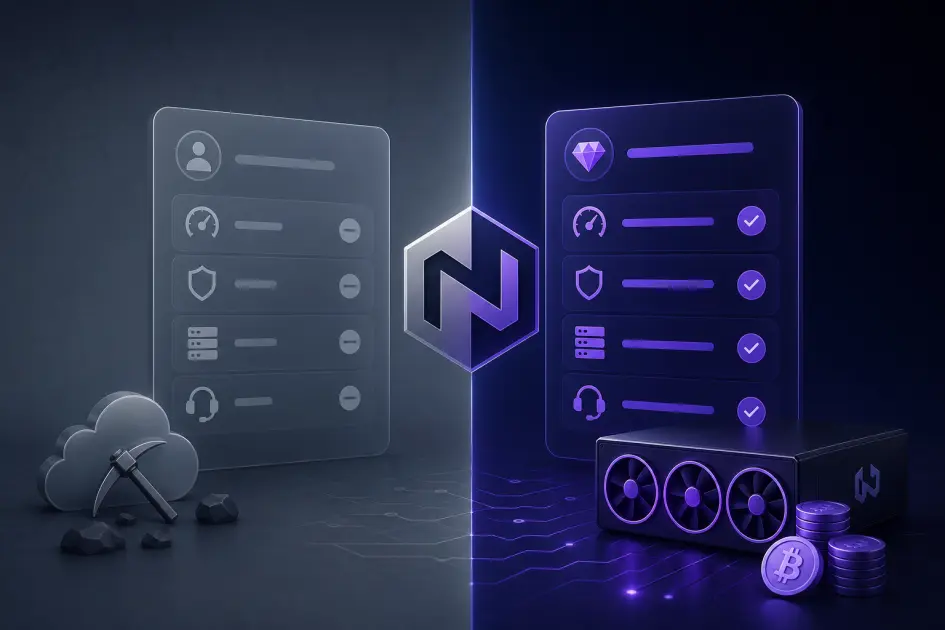
The NoxHash free trial and the paid Basic Miner plan use the same 50 TH/s hardware in the same Kazakhstan data center. The only real differences are duration, cost, and whether earnings credit your wallet. The trial is a 48-hour test drive; the paid plan is real mining with withdrawable BTC.
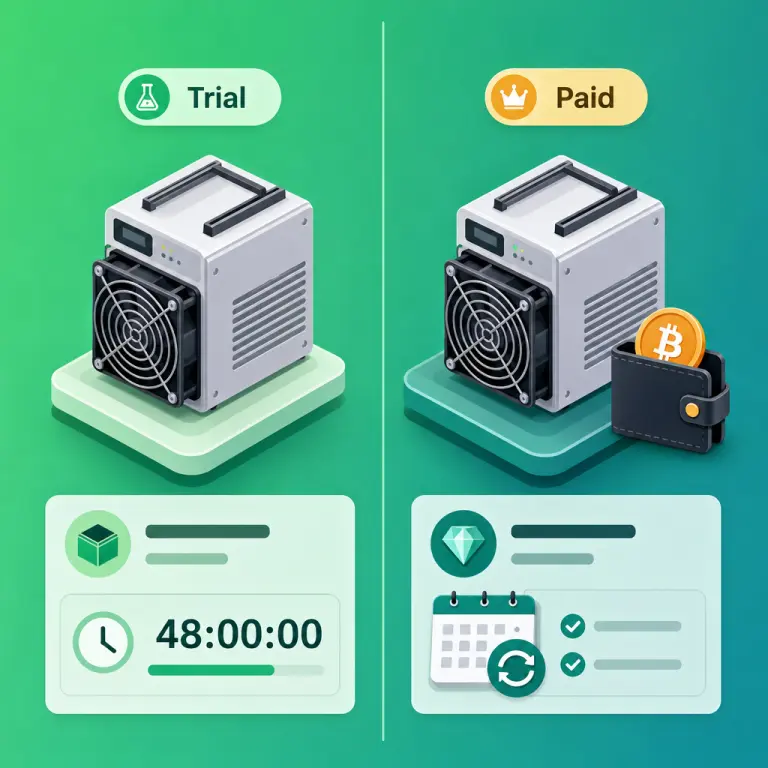
Same Machine, Different Promise
Both products provision the exact same Basic Miner tier — 50 TH/s of SHA-256 hashrate, 1,200W class ASIC hardware, routed to our Kazakhstan facility with its $0.03–0.04/kWh industrial power contract. The dashboard widgets, mining desktop, Start/Stop controls, and CGMiner output are identical.
The difference sits in a single design choice: trial earnings are display-only, while paid earnings credit your withdrawable BTC wallet every minute. Everything you learn during the trial — how hashrate feels, how accrual ticks, how the miner looks when it's running — transfers 1:1 to the paid plan.
Identical hashrate
50 TH/s on a real Antminer-class ASIC — the trial is not a throttled or simulated number.
Earnings behavior
Trial shows accrual on-screen but never credits the wallet. Paid credits real BTC every minute.
Commitment window
Trial is a one-time 48-hour slot. Paid runs 1, 3, 6, 12, or 24 months with tiered discounts.
Free Trial vs Basic Miner Paid — Every Difference, Line by Line
This is the single table most new users need. It lays out exactly what changes between the two products and — just as importantly — what stays the same. Cells in emerald highlight where the paid plan adds real value; gray cells are where both products behave identically.
| Factor | Free trial | Basic Miner paid |
|---|---|---|
| Duration | 2 days (48 hours, fixed) | 1, 3, 6, 12, or 24 months |
| Cost | $0 — no deposit, no card | $20/month — up to 20% off on 24-month terms |
| Hashrate | 50 TH/s | 50 TH/s (identical) |
| Earnings credited to wallet | No — display only | Yes — real BTC every minute |
| Withdraw BTC | Not possible | Yes — once balance clears 0.00001 BTC minimum (1.5% fee) |
| Mining Desktop access | Full access | Full access |
| Dashboard widgets | Full | Full |
| Activation | Instant after email verified | Instant after USDT deposit confirmed |
| Limit per account | One, ever | Unlimited concurrent rentals |
Read the table twice. Notice how five of the nine rows are functionally identical — hardware, hashrate, dashboards, desktop access, and responsiveness don't change. The paid plan adds time, withdrawable earnings, and freedom to scale. That's the whole upgrade.
What You Learn From the Trial That Transfers to Paid
Even though trial BTC stays on screen, the 48 hours are genuinely useful. Every operational detail you pick up applies directly once you rent a paid miner — which is why we recommend running the trial first, not last.
The cadence of accrual
You see exactly how BTC ticks up every minute on a 50 TH/s slot. A paid miner behaves identically — only the wallet column now increments too.
The mining desktop workflow
Clicking View Desktop to watch live CGMiner output looks and works identically on trial and paid miners. Learning it costs nothing now.
Start/Stop behavior
Pause and resume the trial to see how quickly accrual reacts. Same buttons, same latency on paid — useful before committing to 12 or 24 months.
Expectation management
48 hours of watching accrual sets a realistic mental baseline — you see how small an hour of 50 TH/s actually earns, which beats reading any ROI claim.
When Should You Transition From Trial to Paid?
There's no universal rule, but most users hit the same three checkpoints. Walk through this simple decision tree before your 48-hour clock runs out — it's designed to make the next step obvious rather than rushed.
Did the trial miner actually run for you?
Check My Machines and confirm the status was Running for most of the 48 hours. You opened View Desktop at least once and saw CGMiner scrolling real hash output. If yes, proceed. If anything felt off, contact support before depositing.
Are you comfortable with the BTC accrual you saw?
Look at your Total BTC Mined after the trial and translate it to USD at the current spot price (for reference, you can pull it from CoinGecko's Bitcoin page). If the pace feels reasonable for $20/month, move on. If not, don't force the upgrade.
Is the BTC market a reasonable entry point?
Rental cost is fixed in USD; earnings are paid in BTC. If Bitcoin is trading near a local low and you're unsure about direction, start with a 1-month Basic Miner rather than a 12- or 24-month commitment. You can always extend later.
Pick a term and deposit — all three checks green
If the trial ran cleanly, the accrual felt fair, and the market looks workable, head to the Marketplace. Deposit USDT (minimum $10 via TRC-20 or BEP-20), rent your chosen term, and your paid Basic Miner starts earning withdrawable BTC the moment the deposit confirms.
Three Gotchas Worth Knowing Before You Upgrade
These aren't bugs — they're design choices most new users misread on first contact. Understanding them saves frustration when you move from trial to paid.
- Trial BTC feels real, but it isn't withdrawable. The counter ticks, the chart grows, the number looks just like a paid miner's. It's the same engine rendering the same data — only the wallet credit step is skipped. Treat trial BTC as a simulation of pace, never as savings.
- The withdrawal minimum matters early on. A single Basic Miner needs time before the wallet clears the 0.00001 BTC minimum — roughly the size at which a withdrawal fee (1.5%) doesn't dominate the payout. If you expect an instant first withdrawal, plan a longer rental term or a larger tier.
- The paid plan is non-refundable once the miner starts. USDT is converted to BTC-denominated rental at order time. If BTC moves against you mid-rental, your earnings in USD terms can swing. This is why the three-step decision tree above exists — pick a term you're comfortable sitting through.
Run the trial first, then decide on the paid plan
The comparison table above is cleaner once you've actually watched your own 50 TH/s accrue for two days. Create your account, activate the trial, and the upgrade decision becomes a question of math, not faith.
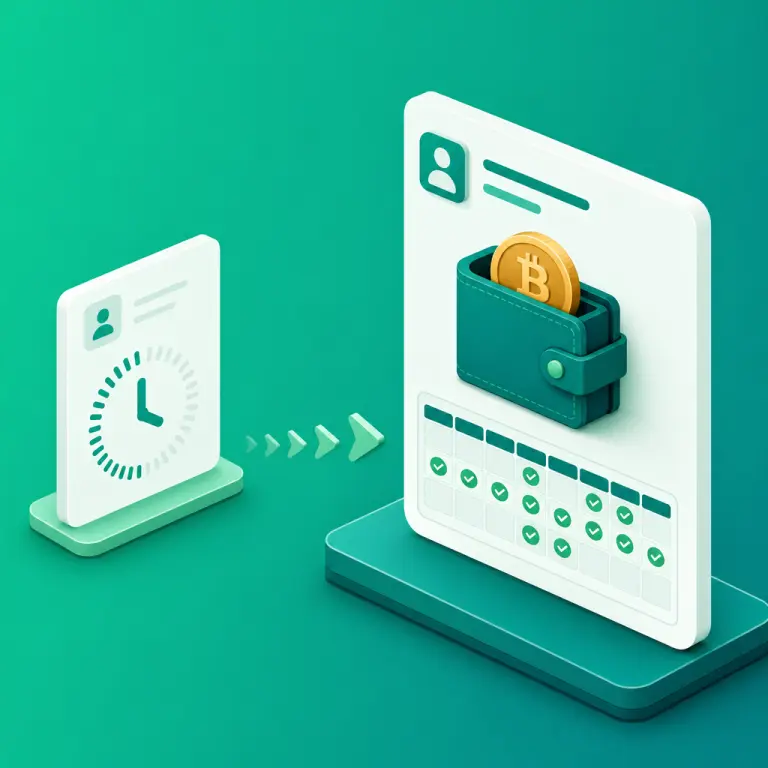
Frequently Asked Questions
Is the trial miner the same hardware as the paid Basic Miner?
Yes. Both provision a 50 TH/s SHA-256 slot on the same Antminer-class fleet in our Kazakhstan data center. Dashboard widgets, the mining desktop, and CGMiner output are identical. The only meaningful differences are duration, cost, and whether earnings credit your withdrawable wallet.
Why can't I withdraw the BTC my trial shows?
Trial earnings are display-only by design — they show accrual in real time but never post to your wallet. This keeps the trial genuinely free and abuse-resistant. Only paid rentals produce withdrawable BTC, which is how NoxHash funds the two-day experience for every new account.
Can I run the trial and a paid miner at the same time?
Yes. If you upgrade while the trial clock still has time on it, both miners appear on My Machines and run side by side. Trial earnings remain display-only, paid earnings credit your wallet. When the 48-hour clock ends the trial expires cleanly; the paid miner keeps running.
How much does the paid Basic Miner actually cost?
The list price is $20/month for 1 month. Longer terms unlock tiered discounts — 5% at 3 months, 10% at 6 months, 15% at 12 months, and 20% at 24 months. A 12-month rental works out to $17/month, for example. You pay in USDT (TRC-20 or BEP-20) with a $10 deposit minimum.
What's the fastest way to decide if the paid plan is right for me?
Run the trial first. Treat it as a 48-hour audit of the platform, not a way to earn free BTC. If the miner runs cleanly, the accrual pace feels reasonable for $20, and the BTC market looks stable enough for a 1-month commitment, upgrade to paid. Otherwise, wait.
Not financial advice
The free trial is a zero-cost experience, but a paid miner is a real investment in a volatile asset. Bitcoin earnings depend on BTC price, network difficulty, and market conditions — all of which can change quickly and are outside anyone's control. Past accrual during the trial does not guarantee future performance of a paid rental. Only commit funds you can afford to lose, and consult a local tax advisor for questions about crypto earnings in your country.