How Energy Prices and Natural Gas Shape Bitcoin Mining Costs
Electricity is 30-60% of a Bitcoin miner's opex. See how natural gas sets wholesale power prices, which regions are exposed, and how locked-in rates protect miners.

Electricity is 30-60% of a Bitcoin miner's operating cost, and in most large grids natural gas is the fuel that sets the price. When Henry Hub or European TTF moves, wholesale power follows — and so does every miner's break-even. This article explains why, who is exposed, and how locked-in industrial contracts insulate cloud-mining renters from short-term gas swings.
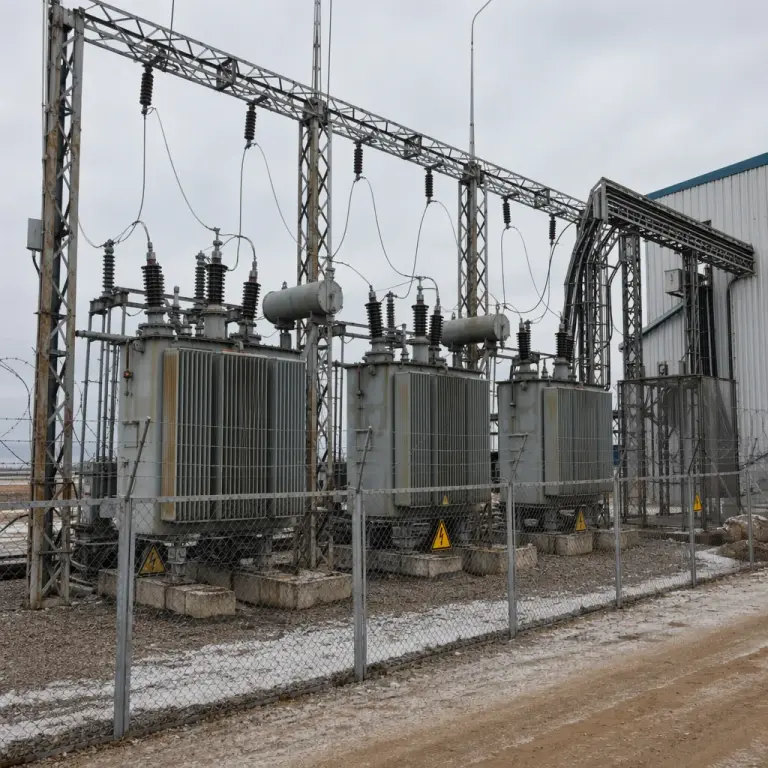
Why Electricity Is the Decision Variable for Miners
Bitcoin mining has two big costs: the ASIC (a one-time capex you amortise over 3-4 years) and the electricity that ASIC drinks 24/7 for its entire service life. Once a rig is on the floor, the only knob that still moves profit is the kWh price — hashrate and efficiency are baked in by the manufacturer, BTC revenue is set by the market, and a miner can only control what they pay the grid.
The math is easy to carry in your head. A modern efficient rig runs at roughly 15 J/TH. Over 24 hours that works out to about 0.36 kWh per TH per day. Multiply by your electricity rate and you get the daily cost to produce one TH of hashrate — which you can compare directly to "hash price" (how much BTC revenue a TH earns per day) to see if the rig is in the money.
A TH-day at $0.035/kWh costs about 1.3 cents. The same TH-day at $0.12/kWh costs 4.3 cents — more than triple. When hash price falls under $0.05/TH/day, every miner above $0.07/kWh starts losing money on every share. That is why industry analysts at CoinDesk tracking mining margins put the global average miner electricity cost around $0.045-0.05/kWh — anything higher is a structural disadvantage.
How Natural Gas Sets the Wholesale Electricity Price
Most deregulated power markets clear on a marginal pricing model: the grid stacks up generators from cheapest to most expensive, and the price paid to every winning generator is the cost of the last (most expensive) unit dispatched to meet demand. In grids with meaningful gas capacity — the United States, United Kingdom, most of continental Europe, Japan, Korea, and Kazakhstan's dispatchable layer — that marginal unit is almost always a gas turbine.
Consequence: when Henry Hub (the US gas benchmark) or TTF (the European benchmark) moves, wholesale electricity prices move with it, even for kilowatt-hours that never came out of a gas plant. Per the EIA Short-Term Energy Outlook, Henry Hub was projected at roughly $4.30/MMBtu for 2026 — a level that flows directly into US wholesale power curves. Europe's 2022-23 TTF crisis pushed industrial electricity past €300/MWh for months and sent several hosted-mining operators into insolvency.
The rule of thumb miners use: a $1/MMBtu rise in gas adds roughly $7-10/MWh (0.7-1 cent/kWh) to wholesale power in a gas-dominated grid. That sounds small until you multiply by 8,760 hours and thousands of TH of hashrate — then it rewrites your annual P&L.
Gas-Exposed vs Gas-Insulated Mining Regions
Not every grid reacts the same way to gas prices. Hydro-heavy grids shrug off a TTF shock; gas-heavy grids absorb it in full. Here is how the major mining jurisdictions stack up in 2026:
| Region | Grid mix | Typical rate | Gas sensitivity |
|---|---|---|---|
| Texas, USA | Gas + wind + some coal | $0.04-0.06/kWh | High (Henry Hub-linked) |
| United Kingdom | Gas + nuclear + wind | $0.15-0.25/kWh | Very high (TTF-linked) |
| Kazakhstan | Coal + natural gas | $0.03-0.04/kWh | Medium (domestic gas, coal baseload) |
| Paraguay | ~100% hydro (Itaipu) | $0.03-0.05/kWh | Very low (no gas) |
| Iceland | Geothermal + hydro | $0.05-0.08/kWh | None |
| Quebec, Canada | ~95% hydro | $0.04-0.06/kWh | Very low |
Hydro and geothermal jurisdictions are cheap and stable, but they are hashrate-saturated — every good megawatt is already booked. Gas-exposed grids have more capacity available, but anyone hosting there is effectively running an implicit short position on natural gas.
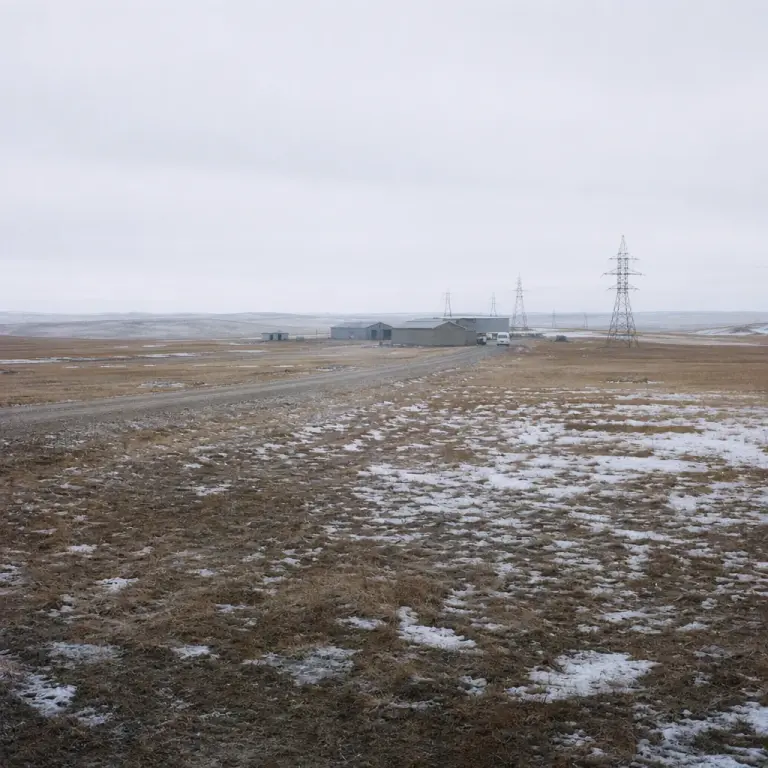
What Miners Actually Do About Gas Exposure
Nobody who survives in this business pays a retail spot rate. The professional playbook has four moves — typically stacked rather than chosen:
Long-term PPAs
A Power Purchase Agreement locks a fixed $/MWh rate with a generator for 3-10 years. When gas spikes, the miner still pays the contract rate. This is how every surviving public miner weathered the 2022 TTF crisis.
Behind-the-meter deals
Co-locate at a power plant, wind farm, or flared-gas wellhead and buy electrons before they ever touch the grid. Skips transmission fees and often runs below $0.03/kWh, at the cost of heavy capex and siting risk.
Demand response
Agree to curtail — turn machines off when the grid is stressed and gas peakers are firing. In ERCOT (Texas), miners receive payments for being curtailable, turning a cost line into a credit during the hours they would be least profitable anyway.
Jurisdiction arbitrage
Pick a grid where gas is not the marginal fuel. Paraguay, Bhutan, Ethiopia and the Nordics run on hydro or geothermal — insulated from Henry Hub and TTF entirely. The catch: thinner capacity and more political risk.
The NoxHash Position — Kazakh Grid, Industrial Contract
We should be direct about this: NoxHash is not a green-energy mining company. The Kazakh grid we draw from is fossil-heavy — roughly coal plus natural gas, with coal providing the baseload and gas filling peak demand. If you came to this article hoping to hear we run on geothermal, we do not.
What we do have is the other half of the playbook: a long-term industrial power contract at $0.03-0.04/kWh, combined with a fleet of ASICs running at 12-18.5 J/TH. That contract — not the fuel mix — is what actually protects your rental economics. When global gas prices spiked in 2022-23, Kazakh industrial tariffs barely moved, because domestic Central Asian gas and coal do not trade on TTF.
The practical outcome for a retail cloud-mining user: your monthly rental price is set by our contract, not by yesterday's Henry Hub close. A Pro Miner at $100/month stays $100/month whether gas goes to $2/MMBtu or $8/MMBtu. The only variables you still face are BTC price and network difficulty — both of which a home miner on a spot-rate grid faces on top of a volatile power bill.
That is the margin cushion cloud mining actually delivers: not a green-energy story, but a pricing-risk story. You swap a fossil-heavy grid you cannot control for a fixed USD cost line that matches how your household budget already works.
Get the Kazakh industrial rate without signing the PPA yourself
You just read why locked-in power contracts separate the survivors from the casualties. NoxHash renters inherit that same $0.03-0.04/kWh contract — your rental price stays flat whether Henry Hub or TTF doubles next quarter. Start with the 2-day Basic Miner trial, no deposit.
Frequently Asked Questions
Why does natural gas affect my Bitcoin mining payout?
Because gas usually sets the wholesale electricity price in gas-exposed grids like the US, UK, and most of Europe. When gas rises, every miner on spot power pays more per kWh, mining margins compress, and weaker miners capitulate — which shifts network difficulty and changes what each TH/s earns in BTC.
Is coal-fired electricity cheaper than gas-fired?
Usually yes, once coal plants are already built. Coal's fuel cost per MWh is typically lower and less volatile than gas, which is why coal-heavy grids in places like Kazakhstan and parts of China historically produce some of the cheapest power in the world — though environmental externalities are a separate conversation.
Can my NoxHash rental price change if gas prices spike?
No. Your monthly rental is a fixed USD figure set by your plan and term length. We absorb spot power risk through our long-term industrial contract, so short-term gas moves — whether on Henry Hub, TTF, or Asian LNG — do not flow through to your monthly invoice.
Why don't miners just go fully renewable?
Good hydro and geothermal capacity is already fully booked, solar and wind need firm backup (which usually means gas), and large storage is expensive. Mining follows whichever electrons are cheapest and reliable 24/7 — that is often stranded gas, curtailed renewables, or fossil baseload, not new-build green.
Is the Kazakh grid a sustainable long-term home for mining?
Commercially, yes — Kazakhstan has cheap domestic fuel, cold-climate cooling, and a licensed regulatory framework for miners. Environmentally, the grid is coal and gas dominated, and that carbon intensity is a real consideration. We state the mix plainly rather than greenwash it.
How do I check my own break-even electricity rate?
Take your rig's J/TH, multiply by 24 hours to get kWh-per-TH-per-day, multiply by your rate to get daily TH cost, then compare to the current hash price (BTC revenue per TH per day). If your cost is above hash price, you are losing money on every hour the rig runs.
Not financial or energy-market advice
This article explains how energy markets interact with Bitcoin mining economics for educational purposes only. Energy prices, BTC price, and network difficulty are all volatile and outside our control. Past trends do not predict future outcomes. Research thoroughly and only commit funds you can afford to lose.