Bitcoin Mining and Renewable Energy: The Current State
How much of Bitcoin mining really runs on renewables in 2026? An honest look at the data, regional split, flared-gas mining, and where NoxHash stands.

Roughly half of Bitcoin mining is estimated to run on sustainable energy — but the headline hides more than it reveals. The real picture in 2026 is a patchwork of hydro in Paraguay, geothermal in Iceland, wind in Texas, and coal plus gas in Kazakhstan. Here is an honest look at where the industry stands, including where NoxHash fits.
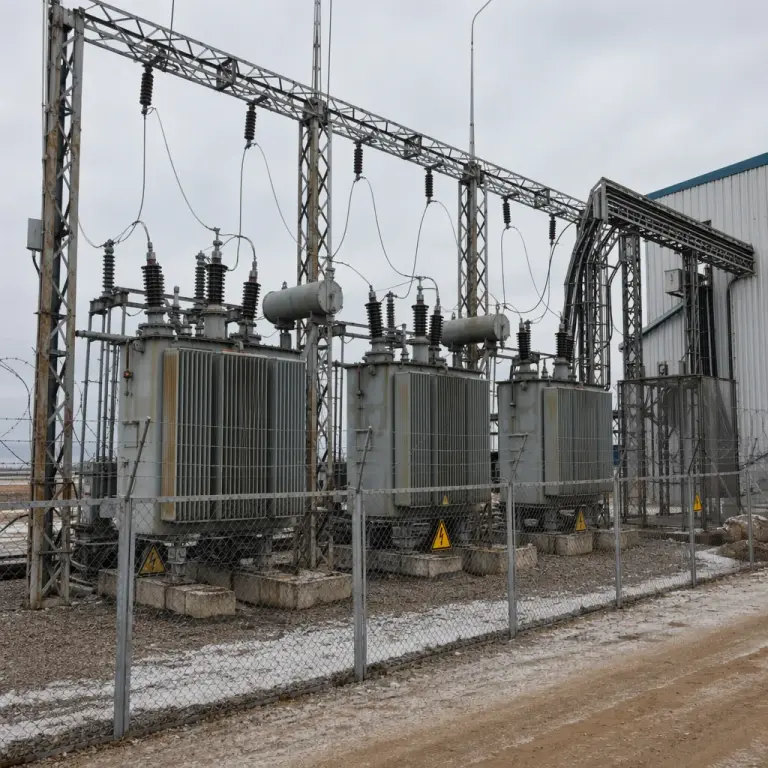
The "50% Renewable" Headline, Unpacked
The number you'll see quoted most often — that roughly half of Bitcoin's electricity comes from sustainable sources — originates mainly from industry self-reporting via groups like the Bitcoin Mining Council, cross-checked against academic work at the Cambridge Centre for Alternative Finance. It is not wrong, but it is soft, and three caveats matter:
First, "sustainable" is not the same as "renewable." Most high-profile estimates lump hydro, wind, solar, geothermal and nuclear into a single bucket. If you strip nuclear out, the renewable-only figure drops meaningfully. Second, survey-based estimates cover only miners who respond, so the sample skews toward public companies that already market themselves as green. Third, Cambridge's own research has warned that the fossil-fuel share of mining may have risen since China's 2021 ban, which pushed hashrate out of hydro-rich Sichuan into regions running coal and gas (see the Cambridge Blockchain Network Sustainability Index for current methodology).
So the honest answer to "is Bitcoin mining green?" in 2026 is: a significant share of the network is low-carbon, a significant share is not, and the exact ratio depends on definitions and who is counting.
The Regional Story: Where Hashrate Meets the Grid
Bitcoin mining is a globally mobile workload that follows cheap electricity. After China's 2021 ban, hashrate scattered across several jurisdictions with very different energy mixes. The table below summarises the dominant generation source for mining regions in 2026 — no region is 100% one thing, but the headline fuel matters.
| Region | Dominant grid mix | Role in the global network |
|---|---|---|
| United States (Texas) | Mixed: wind, solar, gas, some coal | Largest single hashrate share; grid-balancer role |
| Paraguay | Almost entirely hydro (Itaipu) | Surplus hydro exporter, fast-growing miner base |
| Nordics (Sweden, Norway, Finland) | Hydro + nuclear + wind | Small share, very low carbon intensity |
| Iceland | Geothermal + hydro | Small but essentially carbon-free |
| Canada (Quebec, Alberta) | Hydro (Quebec) / gas (Alberta) | Stable, low-carbon in Quebec |
| Russia (Siberia) | Gas + hydro + coal | Large, opaque, hard to audit |
| Kazakhstan | Coal + natural gas (fossil-heavy) | Top-three global hub; cheap industrial power |
| Bhutan / Ethiopia | Hydro | Small but fast-rising, state-backed |
The takeaway: the global average hides enormous local variance. A terahash in Quebec is not the same carbon footprint as a terahash in Kazakhstan, even though both are priced against the same BTC block reward.
Flared Gas: The Negative-Emissions Corner
The single most interesting sustainability story in mining is flared-gas and stranded-methane mining. When oil wells produce associated natural gas without a pipeline to move it, operators often flare it — burning it off at the wellhead. Globally, around 142 billion cubic metres of gas was flared in 2020, a standing figure cited by industry and NGO sources alike, releasing CO2, methane slip, and black soot into the atmosphere.
Methane → CO2
Routing stranded gas into an on-site generator burns it more completely than open flares. Methane is ~80× worse than CO2 over 20 years, so converting it reduces radiative forcing.
Where it happens
Operators like Crusoe Energy, Giga, and Marathon run flared-gas and landfill-methane sites in Texas, North Dakota, and Oman — turning a waste stream into useful computation.
The honest caveat
Critics — including Greenpeace — argue flared-gas mining extends fossil-fuel economics rather than replacing them. The emissions math is better than flaring, but worse than leaving the well capped.
It is one of the few use-cases where Bitcoin mining can claim a genuine net-negative emissions outcome on a per-site basis, and it is also the most politically contested part of the sustainability story.
The Grid-Balancer Role: Texas as the Case Study
Beyond the generation mix, miners play a second sustainability-adjacent role: demand response. Because ASIC fleets can power down in seconds with no product inventory to protect, they behave as an almost perfect flexible load for grid operators — and ERCOT in Texas has become the defining example.
Miners register as Large Flexible Loads
ERCOT created a voluntary curtailment programme for “Large Flexible Loads” — large consumers that can shed load at short notice. Most Texas mining sites above 10 MW participate.
Grid stress triggers curtailment
During a December 2022 winter weather event, ERCOT reported that roughly 96% of large flexible load — nearly 2,000 MW of mining — came off the grid within minutes, freeing power for homes.
Curtailment pays, and it underwrites renewables
Riot Platforms disclosed ~$27 million in 2022 revenue from demand-response credits. More importantly, willing off-taker buyers like miners improve project economics for new wind and solar farms that would otherwise be curtailed themselves.
The counter-argument
Critics — and ERCOT's own leadership — have warned that combined mining and AI load growth is now outpacing planned generation expansion, meaning the balancing benefit only holds if supply keeps up.

Where NoxHash Stands: Honest Accounting, No Greenwashing
Given all of the above, it would be easy to paint NoxHash as a “green miner.” We are not going to. Our data center runs in Kazakhstan, on an industrial grid dominated by coal and natural gas. That is the same grid our neighbours use, the same grid that powers Kazakh industry, and the same grid that the Cambridge Centre for Alternative Finance flags as fossil-heavy in its country-level data.
What we do claim is a narrower, more defensible advantage: energy efficiency per hash. Our fleet runs Antminer S21 XP Hyd, S21 Pro, S21, WhatsMiner M66S and M60S units with an efficiency window of 12–18.5 J/TH — roughly twice as efficient as 2021-era S19 Pro rigs (~30 J/TH), and 25–40% more efficient than the 2023 S19 XP generation (~21 J/TH).
Same kWh, twice the BTC
A fleet at 12–18.5 J/TH extracts roughly twice as much BTC from each kilowatt-hour as 2021-era hardware. The grid is fossil; the hardware minimises how much of it we burn per unit of work.
Free cooling from −30°C winters
Continental Kazakh winters drop outside air to −15 to −30°C, so we route ambient cold through the halls with industrial fans instead of running year-round HVAC. That trims PUE overhead without carbon offsets.
What we do not claim
We are not a hydro site, a geothermal site, or a flared-gas site. We will not buy unbundled renewable energy certificates just to slap a “100% green” label on a coal-backed kilowatt-hour.
What we do claim
Next-generation ASICs, continuous fleet upgrades when a new model is >15% more efficient, and a remote-desktop view so customers can verify the hardware actually exists and is working.
If and when Kazakhstan's grid mix shifts — wind capacity is being built out across the steppe — our footprint will shift with it, without us having to change any claim. That is how an honest energy story ages well.
Rent from a platform that tells you what grid it is actually on
You just read the uncomfortable version of Bitcoin's energy story. If transparent, efficiency-first mining matches how you want to allocate hashrate, open a free NoxHash account and explore the fleet behind every rented plan.
Frequently Asked Questions
Is Bitcoin mining green or dirty in 2026?
Neither label fits cleanly. Roughly half of network hashrate runs on low-carbon or renewable energy, while the other half runs on fossil fuels. The share varies sharply by region, depends on whether you count nuclear as sustainable, and relies partly on miner self-reporting that academic researchers treat with caution.
Why isn't all Bitcoin mining on renewables already?
Miners follow the cheapest reliable electricity on Earth. Renewables lead in some regions (Paraguay hydro, Iceland geothermal, Texas wind) but not everywhere. In fossil-heavy grids like Kazakhstan or parts of Russia, coal and gas remain cheaper than building dedicated renewables, so hashrate concentrates there.
Does flared-gas mining actually help the climate?
Compared to open flaring, yes. A generator burns methane more completely, reducing methane slip and soot. Compared to not drilling in the first place, no. The method is a meaningful improvement on a specific waste stream, not a substitute for cutting fossil-fuel extraction.
Why doesn't NoxHash claim to be renewable?
Because we are not. Our Kazakhstan facility draws from a grid dominated by coal and natural gas, and we decline to buy unbundled renewable energy certificates as a workaround. Our actual advantage is efficiency: 12–18.5 J/TH hardware means each kWh produces far more BTC than older fleets.
Does cloud mining make the network cleaner or dirtier?
Neither automatically. Cloud mining concentrates workloads in industrial sites that are almost always more efficient than home rigs, which is a modest improvement. The overall mix still depends on which grid the specific operator runs on, which is why regional transparency matters more than a “cloud mining is green” headline.
Can I rent hashrate only from renewable sites somewhere?
A few hydro- and geothermal-based operators exist, but verification is hard without on-site audits, and prices are typically higher per TH/s. If carbon mix is a hard constraint, check the provider's country, ask which specific site hosts the fleet, and be cautious of “green” labels backed only by purchased certificates.
Not financial or environmental advice
This article is a general overview of Bitcoin mining's energy picture as of April 2026. Regional mixes, flared-gas economics, and demand-response policy all change frequently. Mining profitability depends on BTC price, network difficulty, and market conditions, all of which can move sharply. Only commit funds you can afford to lose, and consult qualified advisors on tax and sustainability reporting in your own jurisdiction.