Bitcoin Mining in 2026: Industry Trends and Outlook
A 2026 Bitcoin mining snapshot: ~1 ZH/s hashrate, a 3.125 BTC reward, record-low hashprice, and miners pivoting to AI. Here's where the industry stands.

Bitcoin mining in 2026 is a margin business. As of April 2026, network hashrate sits around 1 ZH/s (1,000 EH/s) with difficulty near 135 T and a post-halving reward of 3.125 BTC. Hashprice recently printed a post-halving low near $30 per PH/s/day, pushing older fleets offline and forcing public miners to pivot hard toward AI hosting.

The Network, by the Numbers (April 2026)
Two years after the April 2024 halving, the Bitcoin network looks very different from its 2024 self. Hashrate crossed 1 zettahash per second for the first time this year, difficulty is hovering in the 130s, and the hashprice — what a miner earns per unit of hashrate per day — has compressed to a level where only the newest ASICs on the cheapest power contracts are comfortably profitable.
These four numbers are the ones every operator tracks daily. They shape every other decision in this industry — which miners to run, which to unplug, whether to sign a new power contract, whether to pivot megawatts to AI.
| Metric | Value (April 2026) | What it means for miners |
|---|---|---|
| Network hashrate | ~1,000 EH/s | More total competition for the same block reward. |
| Difficulty | ~135 T | Each TH/s digs up less BTC than in any prior cycle. |
| Block reward | 3.125 BTC | Half of the pre-April-2024 reward; fees now matter more. |
| Hashprice | ~$30 / PH/s / day | A post-halving low; sub-15 J/TH hardware required to survive. |
| Next halving | ~Spring 2028 | Reward drops to 1.5625 BTC; transaction fees expected to close the gap. |
Data points referenced against Cambridge CBECI network statistics and hashprice indices as of April 2026. Numbers fluctuate daily.
What the 2024 Halving Really Did to Miners
The April 2024 halving cut block rewards from 6.25 BTC to 3.125 BTC. Everyone expected that. What was less obvious at the time is how fast it would separate the fleet into two groups: efficient rigs on cheap power, and everything else.
By early 2026, industry research shows the weighted average cash cost to produce one BTC among publicly listed miners rose to roughly $80,000, while Bitcoin has spent stretches trading in the $68,000–$70,000 band. Analysis from Q1 2026 suggests miners running hardware above ~25 J/TH have been operating at a loss in most electricity markets — a level that a 2021-era Antminer S19 comfortably fails.
The result is a quiet, ongoing fleet shutdown. Older S19s and M30s have been unplugged or shipped to jurisdictions with sub-$0.03/kWh power. What remains online is newer, more efficient, and more concentrated — which sets the stage for every other trend below.
Five Trends Shaping Bitcoin Mining in 2026
If you only track five stories in mining this year, make it these. They are the ones that actually shift where hashrate lives, who owns it, and how much a rented TH/s is worth.
1. Efficiency floor is now 12–15 J/TH
The current generation — Antminer S21 XP Hyd (12 J/TH), S21 Pro (15 J/TH), WhatsMiner M66S (17 J/TH) — has become the survival bar. Older machines at 25+ J/TH are economically obsolete except at sub-$0.03/kWh power.
2. Institutional miners rule the top pools
Publicly listed miners dominate global hashrate and the top pools now account for over 38% of the network. M&A has accelerated as smaller operators fold into larger, vertically integrated firms with power purchase agreements and treasury reserves.
3. Ordinals & Runes smooth out revenue
Transaction-fee spikes driven by Ordinals inscriptions and Runes issuance have repeatedly added 10–40% to miner revenue during peak weeks since 2024. After a halving, fee revenue is no longer a rounding error — it is a structural part of the business model.
4. The AI pivot is no longer theoretical
By early 2026, public miners have reportedly signed over $70 billion in AI and HPC colocation contracts. Core Scientific, TeraWulf, and IREN now earn double-digit percentages of their revenue from AI hosting — a trend that is redrawing the map of who even counts as a "Bitcoin miner".
A fifth trend worth calling out on its own, because it is the one that quietly sets the ceiling on everything else:
5. Power, not chips, is the binding constraint
ASIC supply is fine. What is scarce in 2026 is interconnect-ready electricity — megawatts with a grid tie, substation, and permits ready to energise. That scarcity is what AI hyperscalers are buying from miners, and what pushes new mining capacity toward Kazakhstan, Paraguay, Ethiopia, and remote North American sites.
Energy, AI, and the Fight for Cheap Electricity
For a decade, Bitcoin miners were the biggest buyers of the worst-located, cheapest megawatts on earth — stranded hydro, flared gas, curtailed wind. In 2026 they have a new competitor for exactly the same electrons: hyperscale AI training and inference.
The economics explain the pivot. AI workloads can generate 3–10x the revenue per megawatt-hour of Bitcoin mining, and in high-end inference clusters up to 25x. Operating margins for AI hosting frequently reach 80–90%. For a listed miner under pressure on every quarterly earnings call, that is an existential arbitrage.
The consequence for the Bitcoin network is nuanced. Hashrate growth slows as some megawatts divert to GPUs. But mining does not disappear — it concentrates into operators who either (a) have the best power economics in the world and cannot be outbid even by AI, or (b) run mining as a flexible load that fills the gaps in an AI-dominated power budget.

Where Cloud Mining Fits in This Environment
If you are an individual in 2026, direct ASIC ownership is harder than it has ever been. The margin-of-error has shrunk: you need the latest-generation hardware, sub-$0.05/kWh power, and the patience to operate through quarters when hashprice dips below cash cost. Home mining at residential rates of $0.12–0.20/kWh has become, in most cases, a hobby expense rather than an investment.
Cloud mining covers the same economics from the other side: an operator buys the ASICs, signs the industrial power contract, and rents you a slice of the output. The question is not whether cloud mining "works" — it always worked when the underlying farm's numbers work — but whether the provider's economics are real.
That is where NoxHash tries to be boringly transparent. Our fleet runs new-generation Antminer S21 and WhatsMiner units at 12–18.5 J/TH, on a Kazakh industrial contract at $0.03–0.04/kWh, with natural winter cooling and 24/7 on-site technicians. Plans start at $20 per month for 50 TH/s of SHA-256 hashrate, and every paid rental exposes a live Mining Desktop — you can open the actual Windows Server session of your assigned miner and watch CGMiner submit shares in real time. After the 2024 halving, that kind of verifiable, industrial-scale economics is what makes renting hashrate work at all.
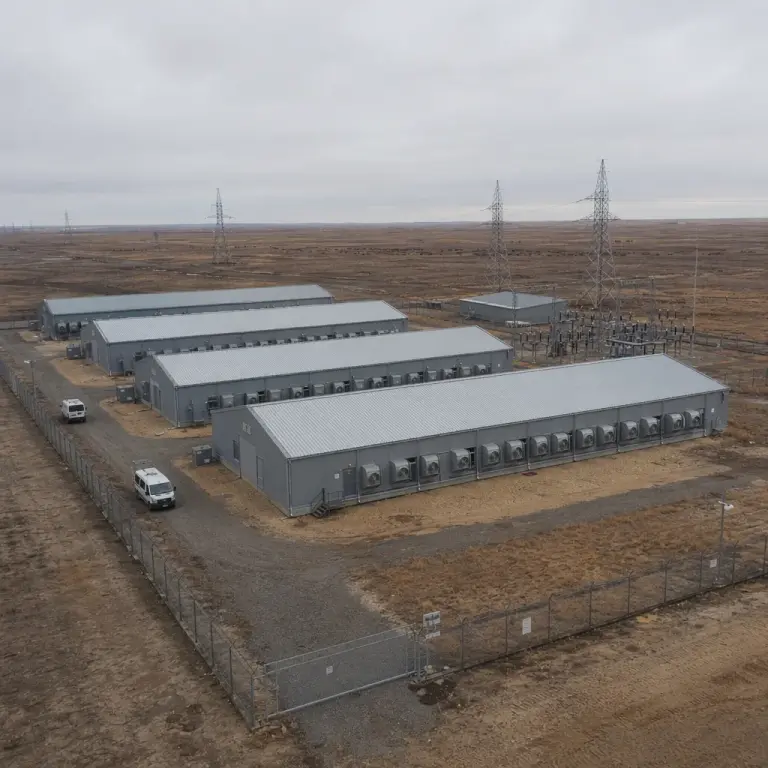
See the 2026-grade fleet you just read about — live
Create a free account, claim the 2-day Basic Miner trial, and open the Mining Desktop to watch a real Antminer S21 submit hashes to the pool from our Kazakhstan facility. No deposit required to look.
Frequently Asked Questions
Is Bitcoin mining still profitable in 2026?
It depends entirely on power cost and hardware efficiency. In early 2026, new-generation ASICs at 12–18 J/TH on industrial power below $0.05/kWh remain profitable. Older rigs above ~25 J/TH, or any machine running on residential electricity, are generally operating at a loss.
What is the current Bitcoin block reward?
The block reward has been 3.125 BTC per block since the April 2024 halving. The next halving is projected for around spring 2028, when it will drop to 1.5625 BTC. Transaction fees from Ordinals and Runes have grown in importance to offset reward reductions.
Why is hashrate still growing if margins are tight?
Growth comes from the efficiency upgrade cycle, not fleet expansion. Operators are replacing 30 J/TH machines with 12–15 J/TH units — total hashrate rises while total power draw grows much more slowly. The inefficient tail of the fleet keeps getting quietly unplugged.
What are the biggest risks for miners in 2026?
Three stand out: a prolonged BTC drawdown pushing spot below cash-cost; energy price shocks in key jurisdictions; and losing power-contract slots to AI hyperscalers willing to pay 3–10x per MWh. Regulation and pool centralisation are secondary but rising concerns.
Will AI replace Bitcoin mining at the data-center level?
Partially, not entirely. Public miners are converting a share of capacity to AI colocation, but sites with the very cheapest power — Kazakhstan, Paraguay, some US hydro zones — remain better at mining than AI. Mining also serves as a flexible load that AI training cannot replicate.
Is cloud mining a reasonable way to participate in 2026?
Yes, provided the provider's economics are verifiable. Given that individual ASIC ownership now requires sub-$0.05/kWh power and 12–18 J/TH hardware to work, renting from an industrial operator can be more rational than home mining. Insist on live transparency — a real desktop view, not just a dashboard chart.
Not financial advice
This article describes the state of Bitcoin mining as of April 2026 and the direction of current trends. All figures — hashrate, difficulty, hashprice, J/TH thresholds, and market share estimates — fluctuate daily and are drawn from publicly reported data. Past performance does not guarantee future results. Mining profitability depends on BTC price, network difficulty, electricity cost, and hardware efficiency, all of which can move sharply. Only commit funds you can afford to lose, and consider consulting a local tax and financial advisor about crypto activity in your jurisdiction.