How a Beginner Started Mining Bitcoin with Just $20
A first-time cloud miner shares how $20 on NoxHash turned into a 30-day Bitcoin mining experiment — what I earned, learned, and would do differently.
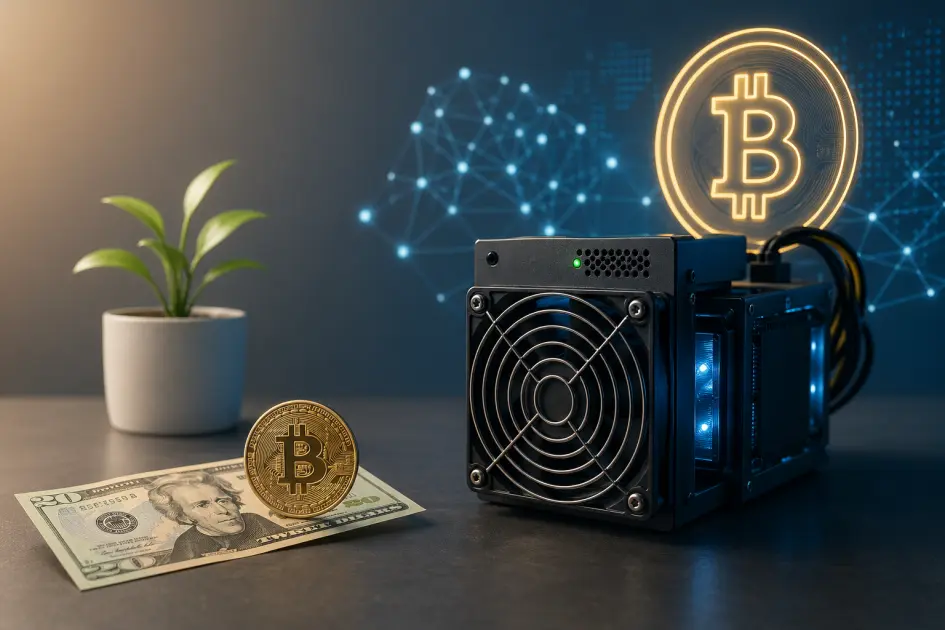
I'm not a crypto whale. I had $20 to spare, a vague curiosity about Bitcoin, and zero interest in buying a loud ASIC for my apartment. This is the honest story of how I started cloud mining on NoxHash with one Basic Miner, what my first 30 days actually looked like, and the lessons I wish I'd known on day one.
Why I Even Considered Cloud Mining
I'd been reading about Bitcoin for months before I ever touched it. Everyone online seemed to either be a diamond-handed maximalist or convinced the whole thing was a scam. I landed somewhere in the middle: curious, skeptical, and broke. I didn't want to buy BTC at the top of a cycle, and I definitely didn't want to trade on leverage.
Mining felt different. Instead of betting on price, you earn a small slice of newly minted BTC over time. So I did the math on home mining. A single Antminer S21 runs around $4,500 upfront and pulls 3,500W. At my apartment's electricity rate — roughly $0.14/kWh — that's about $350/month in power alone, plus the noise of a jet engine in my living room. Not happening.
That's when I found cloud mining. You rent hashrate from an industrial data center and skip the hardware entirely. NoxHash in particular caught my eye because they run from Kazakhstan — industrial electricity at around $0.035/kWh and free natural cooling — and because they showed their actual machines and specs, not just marketing fluff.
The Research Phase (Or: Me, Staring at Spreadsheets for a Week)
I wanted to understand what I was actually paying for before spending even $20. Here's what I cross-checked during my research week:
The BTC price context
I pulled historical price charts from CoinGecko to understand how volatile mining revenue can be — BTC can swing 30% in weeks.
The infrastructure claim
Kazakhstan really is one of the top 3 Bitcoin mining hubs globally. Cold climate plus cheap industrial power isn't marketing — it's a real cost advantage I could verify independently.
The transparency factor
NoxHash publishes the specific miner models they use — Antminer S21 and WhatsMiner M-series — with their exact J/TH efficiency. That level of detail is rare in this industry.
I'm not saying everyone should research for a full week. I probably over-did it. But the Bitcoin whitepaper on Bitcoin.org is short and free, and I'd rather understand what I'm buying than chase a 14-day "guaranteed return" promise from some anonymous Telegram group.
Signup, the Free Trial, and My First $20 Deposit
Signup took about 90 seconds. Name, email, password, a six-digit CAPTCHA, and an email verification click. No credit card, no ID scan. The moment I confirmed my email, a banner on my dashboard offered a free 2-day Basic Miner trial — 50 TH/s, no deposit required.
Important thing I had to read carefully: the trial's earnings are display-only. They show you what hashrate and mining output look like, but nothing credits your BTC wallet. I think this is fair — it's an honest "look around before you pay" demo, not a hook that makes you think you earned something you didn't.
Day 0 — Activated the free trial
One click. Watched the hashrate graph come alive at 50 TH/s. Felt like a tutorial level in a video game — nothing at stake, just exploring the UI.
Day 2 — Deposited $20 in USDT
Used BEP-20 (Binance Smart Chain) because the gas fee was around $0.15 — cheaper than the $1–2 on TRC-20 for this size. The platform generated a unique amount (like $20.04) so the deposit auto-matched within minutes.
Day 2 — Rented a Basic Miner
One Basic Miner (50 TH/s, 1,200W) for 1 month, $20. I stuck with the 1-month term even though longer terms unlock discounts — I wanted this to be a low-risk experiment, not a commitment.
Day 2 — Miner went live
Status flipped to Running. A tiny amount of BTC started accumulating in my wallet every minute. Very small, very real.
Want to run your own $20 experiment?
Start the same way I did — sign up free, activate the 2-day Basic Miner trial, and only deposit if the dashboard makes sense to you. No pressure, no commitment.
30 Days Later — What Actually Happened
Here's the honest breakdown. I want to be upfront: these numbers are what one Basic tier contract roughly pointed to during my run — they are not a promise for your 30 days. BTC price moved, difficulty nudged up once, and the outcome will look different whenever you try it.
| Metric | My 30-day result | Note |
|---|---|---|
| Rental cost | $20.00 | 1 × Basic Miner, 50 TH/s, 1 month |
| Estimated BTC earned | ~$23–$25 worth of BTC | Illustrative range per NoxHash's Basic tier model; real BTC, micro amounts |
| Withdraw fee (if I cashed out) | 1.5% of amount | I chose to leave it as BTC |
| Hours of my time | ~10 minutes total | Mostly checking the dashboard out of curiosity |
| Electricity bill from my apartment | $0 | The whole point of cloud mining |
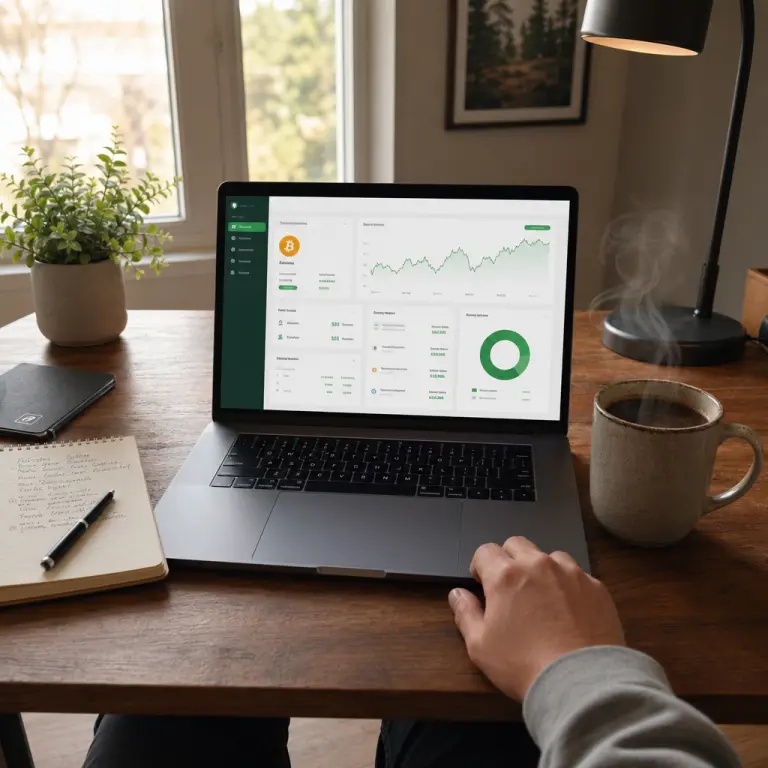
The most surprising part wasn't the number — it was the texture of watching it. The dashboard visualizes your hashrate as a live line chart, and micro-payouts tick in every minute. I opened View Desktop on my rented miner a couple of times and saw the actual Windows Server session and CGMiner terminal output. That was the moment "cloud mining" stopped feeling like a web form and started feeling like a real machine somewhere in a cold warehouse doing work for me.

What I Actually Learned (The Honest Part)
A $20 experiment won't make you rich — and that's the whole point. What it did do was teach me things I couldn't learn from reading threads. Four lessons I'd pass to anyone doing the same thing:
Manage your expectations upfront
A Basic Miner is a learning device, not a paycheck. If BTC price drops 20% during your month, your USD-equivalent earnings drop with it. Accept that going in.
Don't YOLO your savings
I specifically used money I could afford to lose entirely. Cloud mining is still a crypto investment — which means market risk, difficulty risk, and halving risk all apply. Budget accordingly.
Time the market, at least a little
The rental fee is locked in USD but my earnings are in BTC. Starting when BTC looks crushed makes the break-even harder. I'm not saying time it perfectly — just don't rent into an obvious downtrend.
Experiments beat speculation
$20 taught me more about mining economics than 30 hours of YouTube videos. If you're curious, a small, bounded experiment is almost always worth more than watching from the sidelines.
Would I Do It Again?
Yes — but I'm still keeping it small and experimental. After my 30 days ended, I didn't YOLO my savings into an Enterprise tier. I topped up another $20 and ran the Basic Miner for another month, partly out of curiosity, partly because I'd rather accumulate micro amounts of BTC passively than stare at candlestick charts hoping for a quick flip.
The honest framing I settled on: treat cloud mining like a small recurring position, not a side hustle. If you'd be OK losing the rental fee entirely in a bad BTC month, you can probably sleep through the volatility. If $20/month would hurt your budget — don't. There's no shame in just sitting on the free trial for a week and walking away.
Frequently Asked Questions
Is $20 really enough to start mining Bitcoin?
Yes, with cloud mining. A Basic Miner on NoxHash rents for $20/month and earns real BTC in micro-amounts. It's not a path to quick riches — it's a low-stakes way to learn mining economics and accumulate small BTC exposure without hardware. Results vary with BTC price and network difficulty.
Did the free trial actually give me Bitcoin?
No. The 2-day Basic Miner trial is display-only — it shows simulated earnings so you can explore the dashboard, hashrate chart, and View Desktop feature. Nothing credits to your wallet. It's explicitly a demo, not a promotion that gives away real BTC.
What happens if Bitcoin's price crashes during my rental?
Your miner keeps running and still earns BTC, but each BTC fragment is worth less in USD terms. Your $20 rental fee doesn't change. In a steep downturn it's possible your USD-equivalent earnings drop below the rental cost — that's the market risk you accept as a miner.
How long did it take to withdraw my BTC?
I didn't withdraw in my first 30 days — I let the BTC accumulate. Withdrawals go through an admin review then on-chain transfer. Minimum is 0.00001 BTC, fee is 1.5% of the amount. Supports Segwit (bc1…), P2PKH (1…), and P2SH (3…) addresses.
Should I have rented a bigger miner to "maximize" profit?
Not as a beginner. A $250 Enterprise Miner scales both your potential upside and your market-risk exposure. Starting with Basic is the right way to learn the system without putting meaningful money at stake — you can always scale later once you understand how BTC and difficulty swings feel in practice.
Is this story a guarantee I'll earn the same?
Absolutely not. This is a composite narrative based on NoxHash's Basic tier value proposition — a typical illustrative range, not a promise. Your actual 30 days will differ based on BTC price, network difficulty, and when you start. Past results never guarantee future returns.
Important: this is a composite story, not financial advice
The 30-day numbers above are a composite narrative written to illustrate how a beginner might approach NoxHash's Basic tier — they reflect the platform's general value proposition, not a specific personal account, and they are not a guarantee. Actual Bitcoin mining results depend on BTC price, network difficulty, halving cycles, and market conditions — all of which can move sharply and unpredictably. A rental period can result in earnings below the rental fee, especially in a falling BTC market. Past performance does not indicate future results. Only commit funds you can afford to lose entirely, and consult a qualified local tax or financial advisor for questions about crypto earnings in your jurisdiction. Nothing in this article constitutes investment, legal, or tax advice.