Africa's Rising Role in Bitcoin Mining — Cheap Energy, New Frontier
Africa now mines roughly 2% of Bitcoin's hashrate, led by Ethiopia's hydro surge. A 2026 look at the continent's cheap-energy mining frontier.
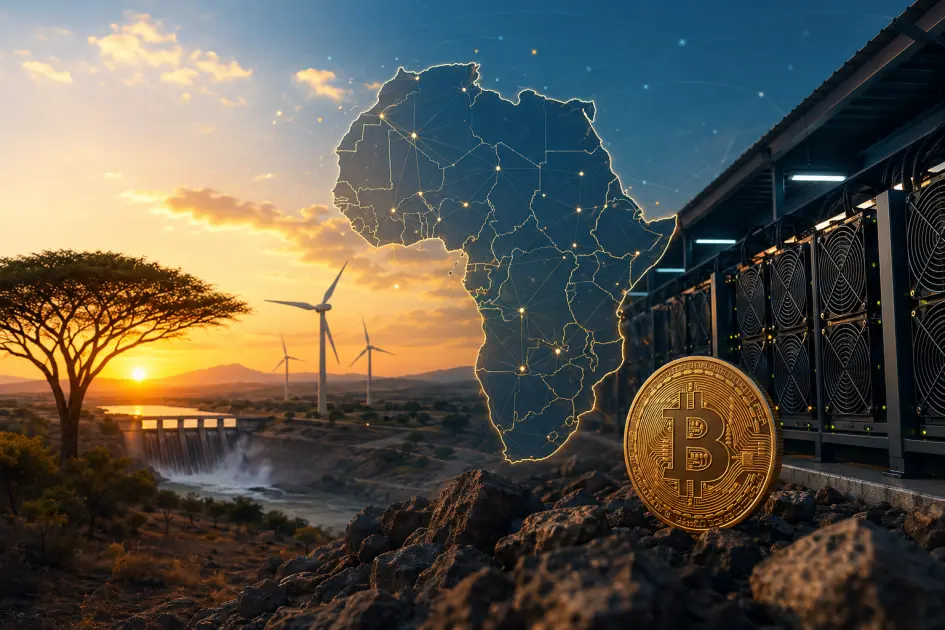
Africa now mines roughly 2% of the world's Bitcoin hashrate — a small slice, but one that has roughly doubled in a year. Ethiopia alone holds about 1.5%, powered by surplus hydro from the Grand Ethiopian Renaissance Dam. Kenya and Nigeria follow the same logic: stranded energy, cheap kilowatts, and a regulatory vacuum miners can still work inside.

Why Africa Became the Next Mining Frontier
For most of Bitcoin's history the mining map was short: China, then the United States, Kazakhstan, and Russia. Africa barely registered. The shift that started after the 2021 China ban, accelerated by the 2024 halving squeezing margins, has pushed operators to hunt for power that no-one else wants to buy. That's where the continent comes in.
Africa's advantage isn't one thing — it's the combination of under-used hydro, high-quality geothermal in the Rift Valley, flared natural gas at oil wells, and a population where roughly 600 million people still lack reliable grid electricity. Where energy can't be shipped out easily, miners can show up, plug in, and turn surplus kilowatts into BTC.
Stranded cheap energy
Hydro dams running below capacity, geothermal wells in remote volcanic zones, and gas flared off at oil fields — all power with no one to sell it to locally. Miners become the anchor buyer.
Mining as flexible load
Bitcoin miners can throttle in minutes — in countries still building out grid infrastructure, that makes them genuinely useful to utilities as a balancing load, not just a parasite on scarce power.
Regulatory grey zones
Most African governments haven't written dedicated mining law. That's an opportunity for first movers — and a risk, because rules can arrive suddenly, as Egypt, Morocco, and Algeria have shown.
Ethiopia — The Breakout Market
Ethiopia is the clearest story on the continent. The country holds about 1.5% of global Bitcoin hashrate, putting it in the same bracket as Norway and ahead of most of Europe, according to Hashrate Index data cited by CoinDesk's reporting on Ethiopian mining operations. Most of that hashrate sits inside the orbit of Ethiopian Electric Power, the state utility, and behind the concrete of the Grand Ethiopian Renaissance Dam.
The GERD is the largest hydro project in Africa — rated above 5,000 MW at full output. Ethiopia's own grid can't absorb all of it yet, so the government has been willing to route surplus capacity to industrial buyers. Chinese mining operators, including listed companies like BIT Mining (which picked up 51 MW and around 18,000 rigs in late 2024), have been the fastest to sign deals. Power prices at these sites are low enough that operators are profitably running older-generation ASICs that would be scrap anywhere else.
The flipside: Ethiopia has been in active state-building mode for a decade, with internal conflict, FX shortages, and a currency that devalued sharply in 2024. Miners there are betting that the state's appetite for mining revenue outlasts the turbulence. It's a real bet, not a sure thing.
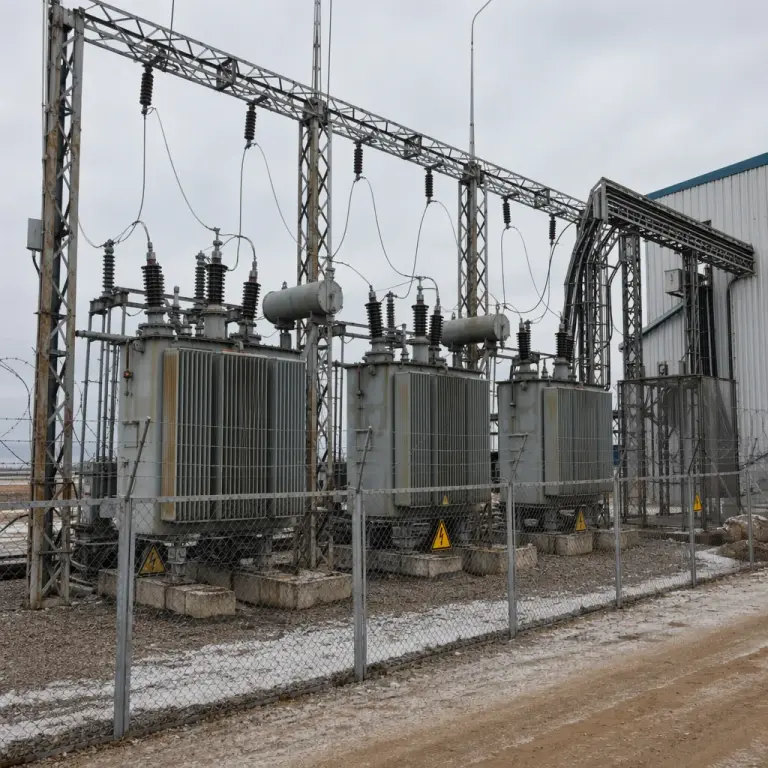
The Broader African Mining Map
Outside Ethiopia, the picture is patchier. A few markets are actively building mining capacity, a few are testing pilots, and several have banned crypto outright. The table below is a snapshot as of early 2026 — fluid, not permanent.
| Country | Main energy source | Mining status | Notable operator / project |
|---|---|---|---|
| Ethiopia | Hydro (GERD) | Active, ~1.5% global | BIT Mining; multiple Chinese partners |
| Kenya | Geothermal, micro-hydro | Growing, pilot scale | Gridless; Marathon Digital MoU |
| Nigeria | Flared natural gas | Early, contested rules | Small gas-to-grid mining pilots |
| Malawi | Rural hydro | Micro-scale, community | Gridless rural electrification |
| South Africa | Mostly coal | Small retail-miner scene | No dominant industrial operator |
| Egypt, Morocco, Algeria | Mixed (gas, solar) | Banned or restricted | Effectively closed to legal mining |
| Angola, DRC | Hydro (large potential) | Potential, high instability | No at-scale industrial miners yet |
Kenya is the most interesting non-Ethiopia story. The Rift Valley hosts some of the best geothermal resources on the planet, and the startup Gridless has built a playbook around co-locating miners with small rural hydro and geothermal operators — turning wasted kilowatts into both BTC revenue and electricity for nearby villages, according to CoinDesk's coverage of Gridless's rural electrification model. Marathon Digital signed a green-energy MoU with the Kenyan government in 2024 to explore similar projects at scale.
You just read the African frontier map — want to mine from a more established one?
Ethiopia and Kenya are exciting, but still early and politically volatile. NoxHash runs on the other side of the frontier — a mature Kazakhstan mining hub with a 99.9% uptime commitment. Open a free account, claim the 2-day Basic Miner trial, and rent SHA-256 hashrate without writing a single line about dams or geothermal wells.
The Development-Economics Debate
African Bitcoin mining is not a clean success story. There is a genuine development case — and a genuine critique. Both deserve airtime. The cleanest way to read the continent right now is as a set of pilots that will either mature into real infrastructure or get walled off by policy. The four corners below map the arguments honestly.
Real financial inflows
Hard-currency revenue from miners hits utilities and governments in USD-denominated terms. For state-owned power companies operating below full capacity, that is real money — not a white paper projection.
Rural electrification tie-ins
Models like Gridless in Kenya and Malawi use miners as anchor customers so a mini-hydro plant becomes economically viable, with surplus power then feeding a village grid. The causality here is unusually clean.
Political and currency risk
Ethiopia's birr devalued sharply in 2024. Nigeria has flipped between banning and licensing crypto firms multiple times. Miners get their revenue in BTC — but their costs (land, labour, taxes) are often in volatile local currency.
Neo-colonial concerns
Several large Ethiopian sites are run by non-African, largely Chinese operators using state-allocated power. Critics argue this looks structurally similar to earlier extractive industries — value flowing out, not staying local.
How This Fits With Kazakhstan and Other Frontier Hubs
Africa's rise is part of a wider pattern — Bitcoin mining moving out of the original Chinese concentration into multiple frontier grids, each with their own energy advantage. Cambridge CBECI country data shows the United States, Russia, China (still), and Kazakhstan sitting at the top, with Paraguay, the UAE, and Ethiopia now holding real slices as well.
NoxHash sits in Kazakhstan — a more mature frontier: stable industrial power contracts at $0.03–0.04/kWh, a cold continental climate that carries most of the cooling load for free, and a legal framework for mining that was formalised years ago. The African hub is, in a sense, where Kazakhstan was around 2020–2021: large energy surplus, clear interest from operators, regulation still being written. Both belong on the same map. Network-wide, more jurisdictional diversity is healthier — it makes Bitcoin less dependent on any single government's mood.

Frequently Asked Questions
Is Bitcoin mining legal in Ethiopia, Kenya, and Nigeria?
Ethiopia tolerates and routes power to mining but has not issued a full retail framework. Kenya allows mining with corporate tax exposure. Nigeria has oscillated between restriction and licensing. Rules can change quickly, so any operator or investor tracks policy month by month, not year by year.
Do African miners sell to Western mining pools?
Yes. African operators connect to the same global mining pools — Foundry, AntPool, F2Pool, ViaBTC, and others — as miners in North America or Kazakhstan. The block rewards and fees are settled in BTC regardless of where the rig is physically located, so pool geography barely matters.
Can cloud-mining users rent African hashrate directly?
Rarely. Most African mining capacity is wholesale — large industrial partnerships, not retail cloud products. Some pilots (Gridless, for example) are community-scale. End users looking for cloud mining today usually rent hashrate from operators based in more mature jurisdictions such as Kazakhstan, the US, or Canada.
Is African mining safe in the long run?
It is promising but not proven. Political change, FX controls, and retroactive tariff hikes are real possibilities across most jurisdictions. Operators manage this by keeping hardware depreciated quickly, diversifying sites across countries, and not assuming any single contract lasts a full machine lifetime.
Why is Kazakhstan seen as more stable than Africa's mining frontier?
Kazakhstan formalised its mining rules several years ago, has mature industrial power contracts at $0.03–0.04/kWh, and a cold climate that cuts cooling costs year-round. Africa offers similar power economics in spots, but most of its markets still lack the legal certainty and grid depth that Kazakh operators take for granted.
Does African mining actually help with rural electrification?
Sometimes — specifically in the Gridless-style model where mining is the anchor tenant that makes a mini-grid economically viable. In the large Ethiopian sites, the development impact is mostly indirect: state revenue from surplus power, not new village connections. The two stories get conflated more often than they should.
Not financial or geopolitical advice
This article surveys an emerging mining region as of April 2026. Country-level data (hashrate share, regulation status, operator activity) changes quickly, and political events can invalidate any of it in a single quarter. Bitcoin mining earnings also depend on BTC price, network difficulty, and market conditions outside any operator's control. Past performance does not guarantee future results. Only commit funds you can afford to lose, and consult local advisors about tax and legal exposure in your jurisdiction.