5 Things to Do During Your NoxHash Free Trial to Learn Cloud Mining
Turn your 2-day free Basic Miner trial into a crash course in cloud mining. 5 hands-on actions that teach hashrate, hardware, pricing, and security.

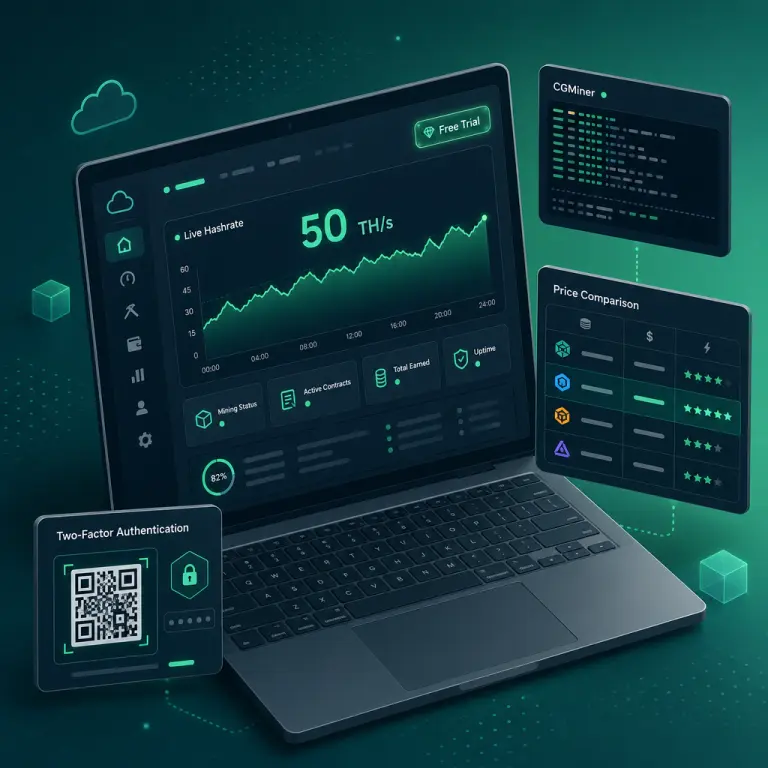
Your NoxHash free trial gives you a real Basic Miner (50 TH/s) for 48 hours with no deposit. Used well, it is also a crash course in cloud mining. These 5 hands-on actions teach you what hashrate feels like, how real mining hardware looks, what a paid plan actually costs, and how to secure your account before you ever fund it.
Why the Free Trial Is Your Best Learning Tool
The NoxHash free trial is a real Basic Miner — 50 TH/s, 1,200W, SHA-256 — running in our Kazakhstan data center for 48 hours. It is display-only: trial earnings show on your dashboard but do not credit your wallet. That is actually the point. You get to touch a production mining rig with zero financial risk, which makes it the perfect environment to learn.
Most new users log in, stare at the hashrate number for a minute, then wait for the 48 hours to expire. You can do much better. The five actions below turn the trial into a structured lesson covering the four pillars of cloud mining literacy: performance, infrastructure, pricing, and security.
Real hashrate, real hardware
The 50 TH/s on your screen comes from an actual ASIC miner running in Kazakhstan, not a simulator.
Zero financial risk
Trial earnings are display-only, so you can break things, click around, and ask dumb questions safely.
48-hour window
Enough time to see difficulty shifts and daily earning variance, not so long that you lose focus.
The 5 Actions That Turn a Trial Into a Lesson
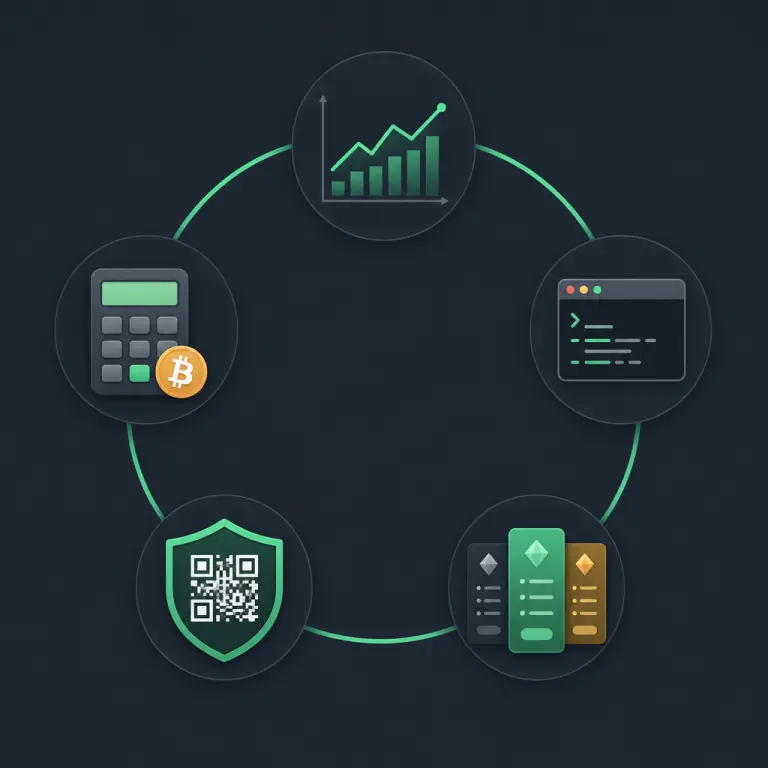
Do them in order if you want a guided path. The first two focus on the what of mining (hashrate and hardware), the third on commercial reality (pricing tiers), the fourth on security hygiene, and the fifth on math literacy so future claims you read online stop feeling like magic.
Watch the hashrate update on your dashboard (~5 min)
What to do: Open the dashboard, find the Basic Miner card, and just watch. Your hashrate will hover near 50 TH/s with small fluctuations. Track the "earnings today" counter tick up minute by minute.
Why it teaches you: Reading "50 TH/s" in an ad means nothing. Watching it move in real time anchors the number in reality — you learn that hashrate is not a fixed value, it is a stream of work being delivered every second. You also see that BTC accrues in tiny increments, not in dramatic jumps. That calibrates expectations before you ever spend money.
Open "View Desktop" and watch CGMiner scroll (~5 min)
What to do: On your Basic Miner card, click View Desktop. A Windows Server session opens in your browser showing the live CGMiner terminal output — shares accepted, temperature readings, pool connection. Let it scroll for a minute.
Why it teaches you: This is the single best way to prove to yourself that cloud mining is not a Ponzi or a dashboard illusion. You are looking at the actual OS of a rented ASIC miner. Every accepted share on that terminal is a cryptographic solution submitted to the pool. You learn what mining software does (hash, submit, repeat) and that your hashrate is backed by a real machine in a real rack.
Compare the 4 marketplace tiers side by side (~10 min)
What to do: Open the marketplace and read the four tiers — Basic ($20 / 50 TH/s), Standard ($50 / 150 TH/s), Pro ($100 / 350 TH/s), Enterprise ($250 / 1,000 TH/s). Switch between 1, 3, 6, 12, and 24 month rental terms and watch the price per TH/s drop as the discount grows (5% to 20%).
Why it teaches you: By the end of this, you will know which tier you would actually pick if you upgraded — and that is a far more useful outcome than any review article. You also internalize how term length changes economics. A Pro Miner on a 12-month term costs $85/month instead of $100 — that $180/year savings is real, but it assumes BTC conditions stay reasonable, which is the honest trade-off behind every longer lock-in.
Enable 2FA and save your recovery codes (~5 min)
What to do: Go to Profile → Security, scan the QR in Google Authenticator or Authy, confirm a 6-digit code, and save the 8 single-use recovery codes somewhere safe — a password manager is ideal, a printed copy in a drawer works too. The US CISA agency recommends multi-factor authentication for any account that holds money, and a mining account qualifies.
Why it teaches you: You build the habit of securing crypto accounts before they hold anything valuable. Do this during the trial and security is already handled the moment you decide to deposit. Lose your phone without recovery codes and you lose the account — so saving them correctly is the real skill here, not just flipping the toggle.
Run the trial specs through a profitability calculator (~5 min)
What to do: Open any reputable online mining profitability calculator. Plug in the Basic Miner specs: 50 TH/s hashrate, 1,200W power, SHA-256 algorithm, and an electricity cost around $0.035/kWh (our Kazakhstan industrial rate). Then play with the BTC price and network difficulty inputs — drop BTC 30%, raise difficulty 20%, see the output flip from profit to loss.
Why it teaches you: This is the single most important skill in mining: understanding that gross revenue is just BTC price times hashrate share, and net is gross minus electricity and rental cost. Once you feel how sensitive the output is to BTC price swings, you stop being impressed by "X% monthly returns" ads and start asking "at what BTC price and difficulty?" That skepticism is exactly what keeps new users out of trouble.
Start the trial and run through all 5 today
You have the full playbook above. Create your account, activate the 48-hour Basic Miner trial, and walk through the five actions at your own pace — the learning compounds as the hours tick.
What You Will Actually Know by Hour 48
Each of the five actions pays off as a specific, named skill. Here is what you will be able to do by the time the trial clock hits zero:
Read a hashrate chart
You know what 50 TH/s looks like in motion, why it jitters slightly, and why a flat line for too long is actually a warning sign.
Recognize real mining software
Having seen CGMiner scroll, you can spot the difference between a working miner and a dashboard-only scam.
Price a rental like an operator
You understand tier vs. term length, know which plan matches your budget, and can spot a badly priced offer when you see one elsewhere.
Harden a crypto account
2FA is on, recovery codes are stored, and the habit carries over to every other exchange and wallet you ever open.
Frequently Asked Questions
Do the earnings on my trial dashboard get paid out?
No. Trial earnings are display-only so you can see what the flow looks like, but they do not credit your wallet. You cannot withdraw them. The trial is designed purely as a learning environment — real earnings start only when you rent a paid plan with your own funds.
How long does the free trial last, and can I restart it?
The trial runs for 48 hours from the moment you activate it, and you get one trial per account. Creating additional accounts to stack trials violates platform rules. If 48 hours is not enough, finish the 5 actions in your first hour — the remaining time just adds context.
Why does the hashrate in "View Desktop" sometimes dip?
Real ASIC miners fluctuate a few percent around their rated hashrate because of network latency, temperature, and pool share variance. A momentary dip is normal. Sustained drops would trigger our 24/7 monitoring team, who swap faulty machines within 4 to 8 hours.
Which profitability calculator should I use?
Any widely used SHA-256 mining calculator works. Pick one that lets you edit BTC price, network difficulty, and electricity cost directly. The goal is not a perfect forecast — it is feeling how the output changes when inputs move, so later marketing claims stop sounding like fixed promises.
Should I upgrade to a paid plan as soon as the trial ends?
Only if the calculator math and current BTC conditions genuinely make sense for your budget. It is usually unwise to rent during a sharp BTC downtrend — rental cost is fixed in USD, but earnings are BTC. Waiting for a calmer market is a valid choice and costs you nothing.
Is 2FA really necessary during a free trial?
Yes. The trial account is the same account you will eventually deposit into. Enabling 2FA during the trial — while the stakes are zero — builds the habit and removes a step you might otherwise skip later. It takes under five minutes and is the cheapest insurance you will ever buy.
Not financial advice
This guide describes how to learn cloud mining using the NoxHash free trial. Any paid plan involves a volatile asset — Bitcoin earnings depend on BTC price, network difficulty, and market conditions, all of which can change quickly and may result in losses. Past performance does not guarantee future results. Only commit funds you can afford to lose, and consider consulting a licensed tax or financial advisor for your jurisdiction before investing.