Natural Gas Flaring and Bitcoin Mining — A Surprising Partnership
Oil producers flared 151 bcm of natural gas in 2024. Here's how Bitcoin miners turn that waste into hashrate, the emissions math, and the fair critiques.
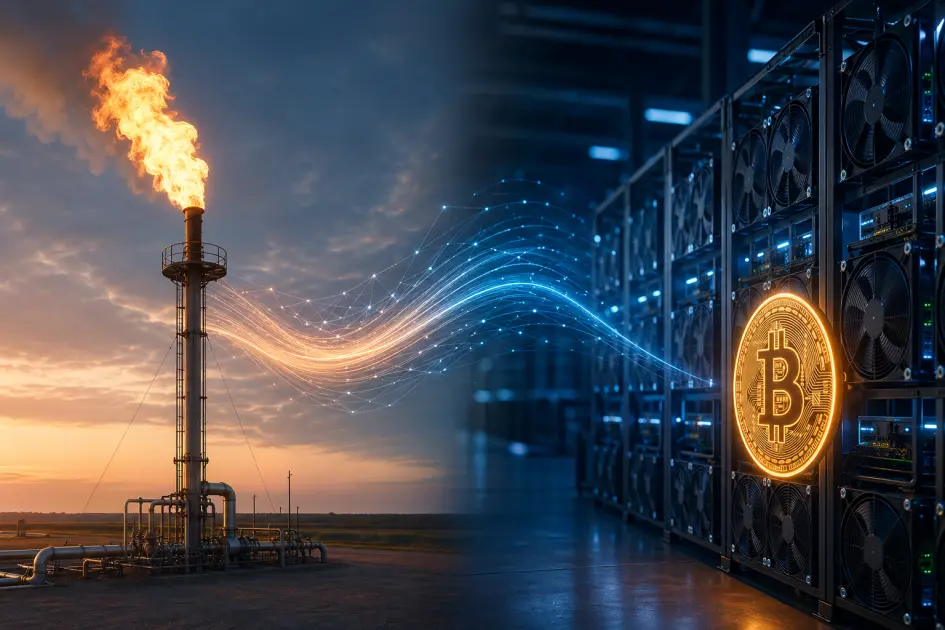
Each year, oil producers burn off roughly 151 billion cubic metres of natural gas because no pipeline reaches the wellhead — about $63 billion of wasted energy. Since 2019, Bitcoin miners have turned a slice of that waste into hashrate, and it is either a genuine emissions win or a fossil-fuel subsidy, depending on who you ask.
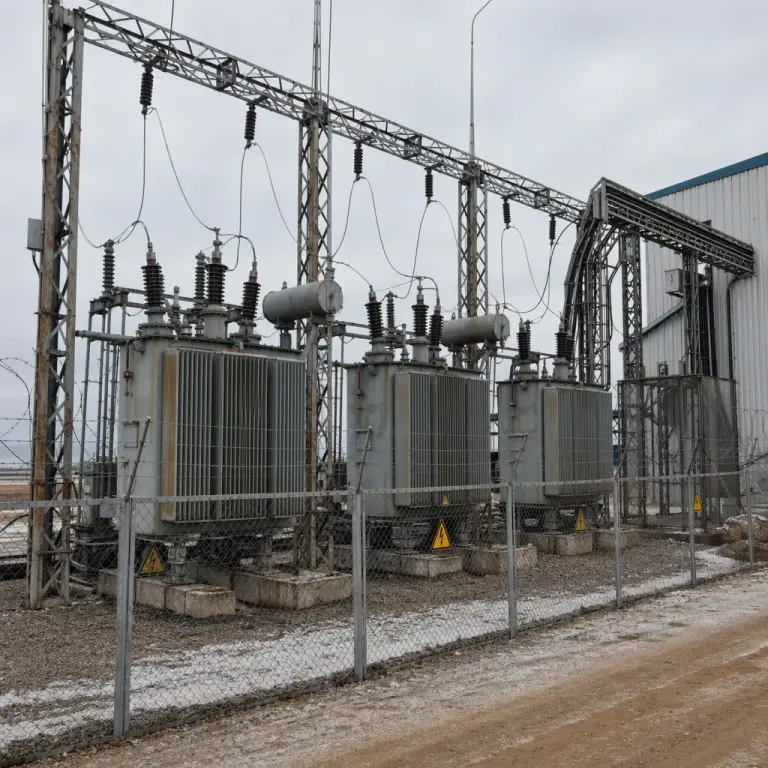
What Flared Gas Actually Is
Flared gas is natural gas that comes up alongside crude oil at a well, with nowhere to go. Every oil field produces some volume of "associated gas" — mostly methane — dissolved in the crude. If there is a pipeline nearby, operators capture it and sell it. If there isn't, they have three options: reinject it underground, vent it into the air, or set it on fire.
Flaring is the default. Venting raw methane is worse for the climate than burning it, reinjection is expensive, and pipelines in remote fields can cost hundreds of millions of dollars to build. So the flame stays lit. The World Bank separates three categories: routine flaring (economic, not technical), safety flaring (pressure relief during upsets), and non-routine flaring (maintenance). Routine flaring is the one the industry has committed to eliminate by 2030.
The scale is the surprising part. According to the World Bank Global Gas Flaring Tracker, global flaring hit 151 billion cubic metres in 2024 — the highest level since 2007, representing around $63 billion of wasted energy. Nine countries (Russia, Iran, Iraq, the United States, Venezuela, Algeria, Nigeria, Libya, Mexico) account for three-quarters of the total.
The Emissions Math: Methane vs CO2 vs Captured
This is where the Bitcoin-mining argument gets interesting. Methane is a far more potent greenhouse gas than CO2 — roughly 80 times stronger over a 20-year horizon — which means what you do with stranded gas matters more than you'd think. There are three possible fates for a cubic foot of associated gas, and they sit on very different points of the emissions curve.
| Fate of associated gas | What hits the atmosphere | Relative climate impact |
|---|---|---|
| Vented (released raw) | Methane (CH4) | Worst — ~80x CO2 over 20 years |
| Flared (burned on site) | Mostly CO2 + slip of unburnt methane | Better — but open flares are only 90–95% efficient |
| Captured + combusted in generator | CO2 at ~99% combustion efficiency | Best of the three — electricity as a by-product |
Bitcoin miners sit in the third row. A containerised generator combusts the gas at much higher efficiency than an open flare, converts it to electricity, and runs ASICs. The marginal climate impact is lower than flaring and dramatically lower than venting — with the caveat that the oil the gas came from still gets burned somewhere else. The miner didn't reduce oil production, it just cleaned up the tail-end methane.
How Miners Actually Plug Into a Well
The operation is mechanical, not magical. A flared-gas mining unit is a shipping container with three things inside: a reciprocating gas engine (or turbine), a switchgear cabinet, and racks of ASIC miners. It parks on a well pad, hooks into the gas line that would otherwise feed the flare, and starts producing hashrate within days. When the well's gas flow changes, the miner's load follows it.
Tap the flare line
Instead of piping associated gas to the stack, the operator diverts it to a skid-mounted generator. Typical deployments range from 1 MW to 20 MW of gas-to-power capacity per site.
Burn cleanly, make electricity
The engine or turbine burns the methane at 98–99% efficiency versus ~90–95% for an open flare. Output is raw AC power at roughly $0.01–0.03 per kWh — among the cheapest industrial electricity anywhere.
Run ASICs on interruptible load
Bitcoin miners are the ideal flare-gas load: they tolerate power interruptions, they can throttle with gas flow, and they can be moved when the well depletes. Same container, new well.
Share revenue with the operator
Most deals pay the oil operator a cut of BTC revenue or a fixed fee per Mcf of gas consumed. For the operator, stranded gas becomes a second income stream; for the miner, power costs are a fraction of grid rates.
Crusoe Energy pioneered this model in the Bakken and Permian basins around 2018–2019 and has since expanded with funding from Mubadala and the Oman Investment Authority, raising $350M in 2022. ExxonMobil, ConocoPhillips, and Equinor have all run pilots. The pattern is the same: a supermajor with idle gas, a mining company with generators and ASICs, a revenue-share contract.
Where It's Happening in 2026
Flared-gas mining is concentrated in four regions where associated gas is abundant and pipelines are sparse. The geography tends to follow the oil-price map more than the crypto-regulation map.
US Permian & Bakken
North Dakota and West Texas are the heart of the US flared-gas mining fleet. Tight oil wells produce gas faster than pipelines can absorb it. Crusoe, Marathon Digital partnerships, and dozens of smaller operators run containerised rigs here.
Oman & the Gulf
Sovereign wealth money — Mubadala in Abu Dhabi, the Oman Investment Authority — has backed flared-gas mining as an energy-diversification play. The arid geography suits ASICs; the stranded gas volumes are enormous.
Latin America
Argentina's Vaca Muerta shale and Paraguay's cross-border gas have both hosted small flared-gas mining pilots. Paraguay in particular combines cheap hydro with pockets of stranded hydrocarbons.
Africa (emerging)
Nigeria, one of the top-nine flarers globally, is an obvious next frontier; small pilots have launched around Niger Delta fields. Infrastructure and political risk keep the deployment curve slow.
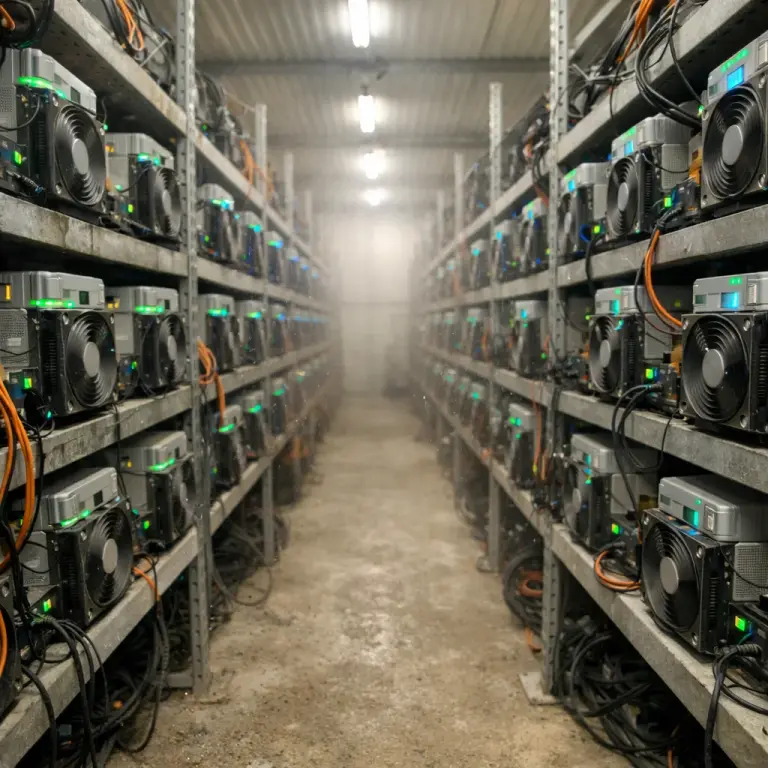
Now you've seen where flared-gas mining happens — see where NoxHash runs instead
The map above covers wellhead miners in Texas, Oman, and beyond. NoxHash runs on the Kazakh industrial grid — not flared gas. Same BTC output, different energy story. Claim a 2-day Basic Miner trial to see our facility's real Windows desktop and live CGMiner output.
The Fair Critiques
The flared-gas narrative is attractive: a waste stream meets a flexible buyer and methane drops out of the sky. But the people who dislike it are not cranks. There are three arguments worth taking seriously before you accept the "green Bitcoin" framing on its own terms.
Does it prolong oil production?
When Bitcoin revenue makes an otherwise marginal well profitable, the well stays pumping longer. The gas emissions go down; the oil emissions may go up. Net climate impact depends on which effect dominates — and that's site-specific.
Is it a fossil-fuel subsidy?
A new buyer for waste gas is extra revenue to the oil industry. Critics argue this dulls the economic pressure to build pipelines, electrify well pads, or cap unprofitable wells — all of which might otherwise cut emissions further and faster.
Claimed vs actual emissions
"Negative emissions" headlines rely on choosing the right baseline. A generator that replaces venting is a large win; one that replaces flaring is a modest win. Audits are still rare, and independent measurement of methane slip at well pads is the frontier problem.
Our take: the emissions math is real but narrower than the marketing suggests. Flared-gas Bitcoin mining is better than flaring at any given well pad, but it doesn't displace coal, doesn't replace grid gas, and doesn't reduce oil output. It's a targeted fix for one specific waste stream — valuable, but not a silver bullet for the industry's overall footprint.
How This Compares to What NoxHash Does
We want to be honest here: NoxHash is not a flared-gas miner. Our data centre sits on the Kazakh industrial grid at around $0.03–0.04 per kWh, with power drawn from a mix of coal and natural gas via the national system. We picked Kazakhstan for its electricity prices, its cold winters (-15°C to -30°C drops HVAC costs by a lot), and its mature mining regulation, not for stranded hydrocarbons.
| Attribute | Flared-gas mining | NoxHash (Kazakhstan) |
|---|---|---|
| Power source | Stranded associated gas, combusted on site | Industrial grid (mixed coal + gas) |
| Typical $/kWh | $0.01–0.03 | $0.03–0.04 |
| Uptime profile | Interruptible, follows gas flow | 24/7, 99.9% uptime, UPS + diesel backup |
| Location | Well pad (mobile container) | Fixed data centre, on-site technicians |
| Sustainability thesis | Methane reduction on existing wells | Efficiency (12–18.5 J/TH fleet) + natural cooling |
The two models are parallel, not substitutes. Flared-gas mining is a sustainability thesis: soak up a waste stream, reduce methane. Grid-based industrial mining is an efficiency thesis: pick the cheapest reliable power on the planet, run the most efficient ASICs on the market, minimise watts per terahash. Both end up producing BTC; they just take different routes to get there.
Frequently Asked Questions
Is flared-gas Bitcoin mining actually green?
It's greener than flaring or venting the same gas, because generators combust methane more completely than open flares. But it doesn't displace fossil electricity elsewhere and doesn't reduce oil output, so "carbon-negative" headlines usually overstate the case. Reading the specific baseline matters.
Does Bitcoin mining prolong oil production?
On a marginal well, yes — a BTC revenue stream can tip a shutting candidate into continued production. The size of that effect is debated. At most sites the oil economics dwarf the gas economics, so flared-gas mining changes the emissions per barrel more than the barrel count.
Why don't oil companies just build pipelines?
Gas pipelines cost $1–5 million per mile, need long-term permits, and require predictable gas volumes — which shale wells don't have, because associated-gas output falls sharply after the first two years. By the time a pipeline gets built, the well may be tapering off. Mobile miners fit that production curve better.
Can cloud-mining users access flared-gas hashrate directly?
Almost never. Most flared-gas operators run as private hashrate producers or hosted-mining partners for institutions, not retail cloud-mining platforms. Uptime is also interruptible, which doesn't match what retail renters expect. For retail, grid-based data centres remain the dominant cloud-mining model.
Does NoxHash use flared gas?
No. The NoxHash fleet runs on the Kazakh industrial grid at roughly $0.03–0.04 per kWh, not on associated gas at the wellhead. Our sustainability story is efficiency — new-generation ASICs at 12–18.5 J/TH and natural winter cooling — rather than methane capture. We covered flared gas here because it's a genuinely interesting parallel model.
Will flared-gas mining scale to offset most flaring?
Unlikely. Bitcoin mining absorbs a tiny slice of the 151 bcm flared annually — probably under 1% at current deployment levels. It's a meaningful tool in a toolkit, not a replacement for pipelines, gas capture mandates, or the World Bank's Zero Routine Flaring 2030 target.
Not financial or environmental advice
This article is industry analysis, not an investment recommendation or a sustainability certification. Bitcoin mining economics depend on BTC price, network difficulty, and market conditions — all outside any operator's control. Emissions claims around flared-gas mining vary by site and baseline, and independent verification remains limited. Only commit funds you can afford to lose, and consult qualified advisors on tax, regulatory, and environmental questions in your jurisdiction.