How Bitcoin Ordinals and Runes Boost Miner Revenue
How Ordinals and Runes turned Bitcoin transaction fees into a second revenue engine for miners, the 2024-2026 fee trend, and what it means for cloud mining.
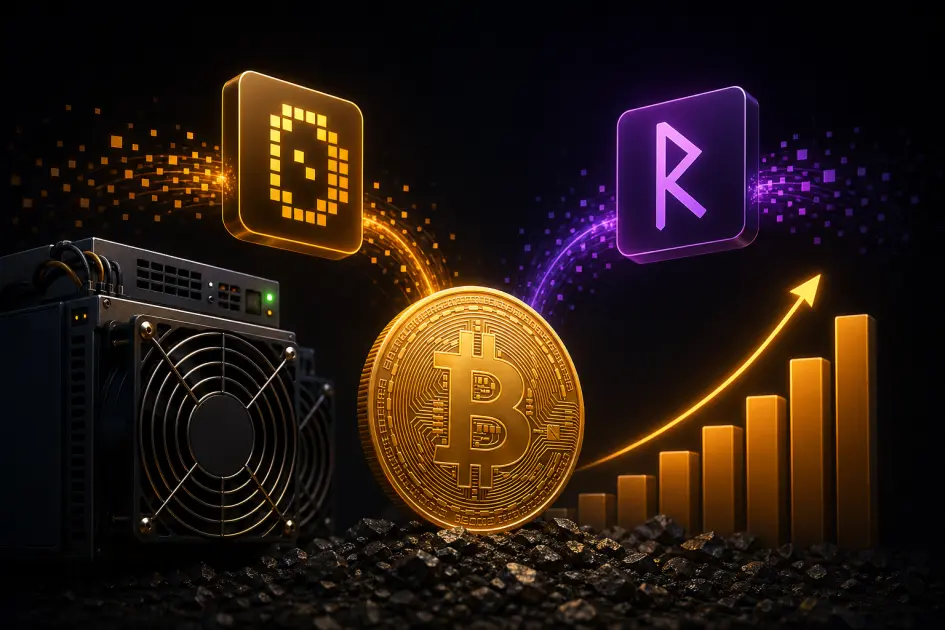
Ordinals and Runes turned Bitcoin fees into a second revenue engine for miners. Since April 2023 these protocols have pushed fee share from a 2–5% baseline to spikes above 70% on mint days. With the block subsidy now 3.125 BTC after the 2024 halving, those windows matter more than ever — even as 2025 pulled the average back near 1%.
Why Transaction Fees Suddenly Matter More
Bitcoin miners earn from two streams: the block subsidy (newly minted BTC per block) and the transaction fees users pay to include their transactions. For most of the network's history the subsidy dwarfed the fees — 90–98% subsidy, 2–10% fees was typical. That ratio changed with two things: the April 2024 halving and a new breed of on-chain activity.
The fourth halving cut the subsidy from 6.25 to 3.125 BTC per block on 20 April 2024. Every future halving continues the same geometric drop — the next one (around 2028) takes it to 1.5625 BTC. Fees do not halve. So a fee environment that contributed 5% of revenue pre-halving contributes an effectively doubled share of the remaining dollars. This is the structural shift: even without more fee volume, every dollar of fee revenue now buys twice the proportional impact it did in 2023.
What Ordinals Did to Miner Revenue
The Ordinals protocol went live in January 2023 and its BRC-20 token standard followed in March 2023. The mechanic was simple: inscribe arbitrary data (images, text, token identifiers) onto individual satoshis. The consequence was anything but: a sustained fee-bidding war for block space as users raced to inscribe before blocks filled up.
The first real shock hit in May 2023. BRC-20 mints pushed average transaction fees above $30, and fee revenue per block briefly exceeded the subsidy — the first time since 2017, per reporting from Decrypt. Mempool backlog ballooned past 400,000 unconfirmed transactions. Smaller, independent miners suddenly looked at a revenue curve they had never planned for.
Throughout 2023 and early 2024, fee share of total miner revenue averaged around 7%, versus the 2–5% baseline of prior years. That sounds small on paper but it was the difference between rigs with 25–30 J/TH efficiency being marginally unprofitable versus quietly cash-flow positive during weak BTC price weeks.
What Runes Added in April 2024
Runes launched on 20 April 2024 — the exact day of the halving, at block 840,000. Designed by Ordinals author Casey Rodarmor, Runes is a UTXO-native fungible token protocol built to be far more efficient than BRC-20. Where BRC-20 bloats Bitcoin's UTXO set with inscription overhead, Runes slots fungible tokens into the existing UTXO model.
78.6 BTC in first 9 blocks
Runes minters paid roughly 78.6 BTC (~$4.95M at the time) in fees within the first nine blocks post-halving, per CoinDesk. That is almost $550K per block of pure fee revenue above subsidy.
~50% of daily transactions
By mid-2025 Runes-related transactions accounted for roughly half of all Bitcoin transactions on some days, according to The Block. Volume stayed high — fees per transaction did not.
Mint-cycle driven
Revenue impact is concentrated in mint days — new Runes launches and Ordinals drops. Outside those windows, fee share quickly normalises back to single digits.
The Real Revenue Impact, by the Numbers
Here is the honest picture of how fees have contributed to miner revenue, pulled from reporting by CoinDesk and The Block. The pattern is a clear arc: quiet baseline, Ordinals shock, Runes spike, post-hype cooldown.
| Period | Headline driver | Fee share of miner revenue |
|---|---|---|
| 2019–2022 (pre-Ordinals) | Normal payments, periodic NFT mints | ~2–5% average |
| May 2023 (BRC-20 peak) | Ordinals + BRC-20 mint mania | Fees briefly > subsidy per block |
| 20 April 2024 (Runes launch + halving) | Runes etching + rare-sat hunting | Up to ~75% of revenue on launch day |
| Full-year 2024 average | Runes + residual Ordinals demand | ~7% |
| 2025 (cooldown) | On-chain frenzy unwinding | ~1% |
| Early 2026 | Low blockspace demand, sporadic mints | ~1–2%, 12-month lows |
Read the table as a lesson in volatility, not steady income. The spikes are real and meaningful — a single mint day can add tens of millions of USD to global miner revenue — but the quiet months are back to the pre-Ordinals baseline. Runes did not permanently re-price block space; it added a fat tail of revenue-boosting events on top of an otherwise normal fee market.
Why Fee Revenue Is So Volatile
Three forces drive the volatility, and all three are beyond any single miner's control:
Mint cycles are event-driven, not linear
A new Runes etching or a meme-Ordinals drop can push fee revenue from $300K/day to $10M+/day for 24–48 hours, then back down. Miners cannot plan around these — they simply capture them when they happen.
Secondary-market trading uses less blockspace
Once tokens are minted, they trade mostly off-chain or on efficient batch systems. That keeps the protocol popular (half of all Bitcoin transactions in some 2025 months) while the fee contribution thins out.
The on-chain narrative can leave as fast as it arrived
The 2023–2024 boom was driven by speculative attention. When attention moved to other chains or ETF flows, fees collapsed. Future boomlets will almost certainly appear; their timing and magnitude are unforecastable.
What This Means for Cloud Mining Economics
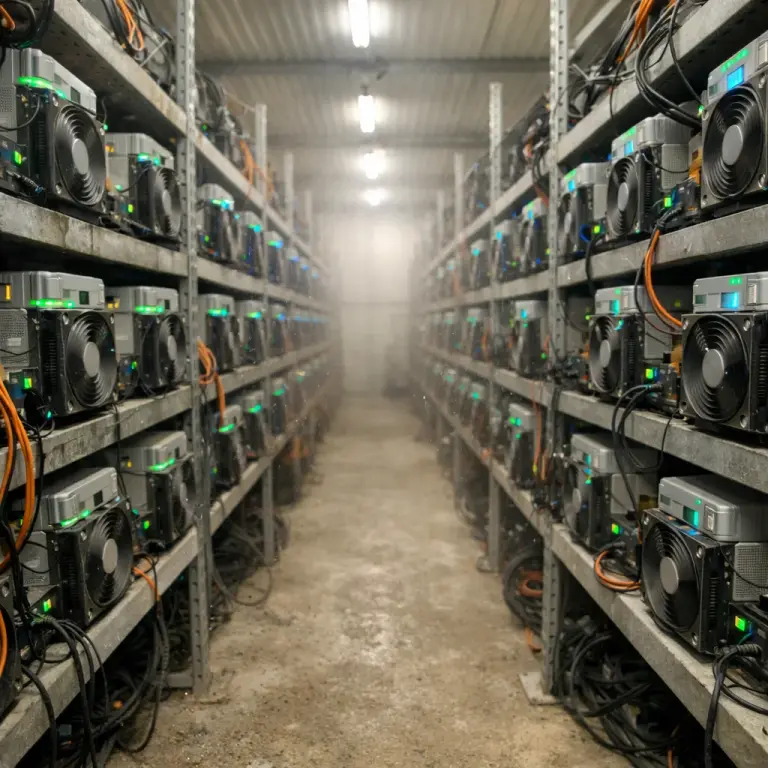
Cloud mining platforms like NoxHash pass through the real underlying revenue, not just the block subsidy. Our fleet in Kazakhstan (a mix of Antminer S21, S21 Pro, S21 XP Hyd, WhatsMiner M60S and M66S at 12–18.5 J/TH) submits shares to FPPS (Full Pay Per Share) pools — which means miners are paid for every share they submit based on total block revenue, including transaction fees. When a Runes etching day lifts fees, that lift flows through to user earnings the same day.
The key operator insight: efficient rigs benefit disproportionately on fee-spike days. A 12 J/TH machine keeps the same electricity bill whether fees are 1% or 40% of revenue. The extra dollars are pure margin expansion. This is why NoxHash prioritises J/TH over raw hashrate when upgrading fleet — a lower-J/TH machine earns more on a mint day and survives longer during the quiet weeks when block subsidy does most of the work.
Capture fee spikes without buying an ASIC
You just saw how a single Ordinals or Runes mint day can push fee share above 70% of miner revenue. NoxHash users share that upside through FPPS pool payouts — start with a 2-day Basic Miner trial and see real hashrate earning from both subsidy and fees.
Key Takeaways for Miners and Users
Fees are upside, not baseline
Plan every mining investment around the block subsidy first. Treat fee revenue as a bonus that shows up unpredictably — not as income you can budget against.
Halving magnifies fee impact
With subsidy at 3.125 BTC and dropping again in ~2028, the same fee dollar counts for a larger share of revenue every cycle. Post-halving fee windows are the most valuable ones miners will ever see.
Efficiency is the lever
Low J/TH rigs expand margin on spike days and shrink losses on quiet ones. That is why the NoxHash fleet targets 12–18.5 J/TH — twice as efficient as 2021 hardware at the same kWh.
FPPS shares the bonus
Full Pay Per Share pools pay out total block revenue per share submitted — subsidy plus fees. Cloud mining users on FPPS pools (including NoxHash) see fee-spike days reflected directly in daily BTC credits.
Frequently Asked Questions
Is extra fee revenue priced into cloud mining rentals?
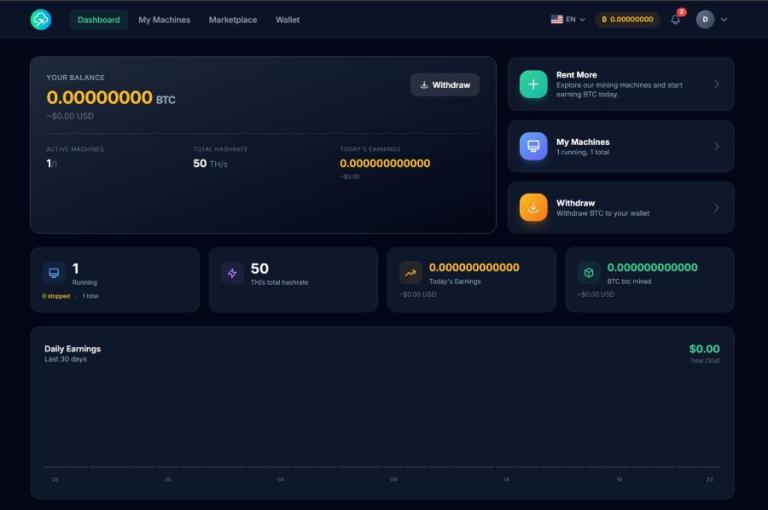
Not priced into the rental fee itself. NoxHash charges a flat monthly USD plan price; the BTC your miner earns is whatever the FPPS pool pays, which includes both block subsidy and transaction fees. A fee-spike day shows up directly in your daily dashboard credit, not as a separate bonus.
Will Bitcoin fees always be this high during mints?
Not reliably. Fee spikes depend on speculative attention to new on-chain protocols. The 2023–2024 boom cooled in 2025, dragging fee share from ~7% to ~1%. Future boomlets are likely but their timing and size cannot be forecast — treat them as upside windows, not steady income.
What could come next after Runes?
Candidates include BitVM rollups, Alkanes-style smart-contract protocols, and new metaprotocols layered on UTXOs. Each would drive fresh blockspace demand. Historically, every year since 2023 has produced at least one new fee-consuming protocol; 2026 is likely to continue the pattern.
Do pool miners actually share in the fee bonanza?
Yes, under FPPS (Full Pay Per Share). FPPS pools pay miners for each share submitted based on the pool's total expected block revenue — subsidy and fees combined. NoxHash connects to FPPS pools, so fee-spike days flow through to every miner regardless of whether their hashrate actually found the block.
Could Ordinals and Runes one day replace the block subsidy?
Not alone. The subsidy fully ends around 2140. For fees to fully replace it, Bitcoin would need sustained average fee revenue many times today's levels. Ordinals and Runes are the first credible demonstration that non-payment demand for blockspace can exist — but the scale today is still far from sufficient.
How does this affect NoxHash plan pricing?
It does not. Plan prices (Basic $20, Standard $50, Pro $100, Enterprise $250 per month) are flat USD charges for hashrate access. Users keep the BTC produced minus the 1.5% withdrawal fee. Fee-revenue upside accrues to the user, not the platform, because the pool payout reflects total block revenue.
Not financial advice
This article describes historical and current trends in Bitcoin transaction-fee revenue. The fee-share figures cited (~2–5% baseline, ~7% in 2024, ~1% in 2025, ~75% peak on mint days) reflect reporting from CoinDesk and The Block at the dates noted and will continue to change. Cloud mining earnings depend on BTC price, network difficulty, and market conditions — all outside our control. Past performance does not guarantee future results. Only commit funds you can afford to lose.