What Is Cloud Mining? The Complete Guide for Beginners (2026)
Cloud mining lets you earn Bitcoin by renting hashrate from a data center — no hardware, no setup. Here's how it works, costs, and who it's for in 2026.
Cloud mining is a way to earn cryptocurrency — most commonly Bitcoin — by renting hashrate from a professional data center instead of buying, hosting, and maintaining your own mining hardware. You pay a fixed monthly fee, a remote ASIC miner hashes on your behalf, and the BTC it earns accrues to your wallet. No fans in your bedroom, no $0.20/kWh electricity bill, no firmware to flash.
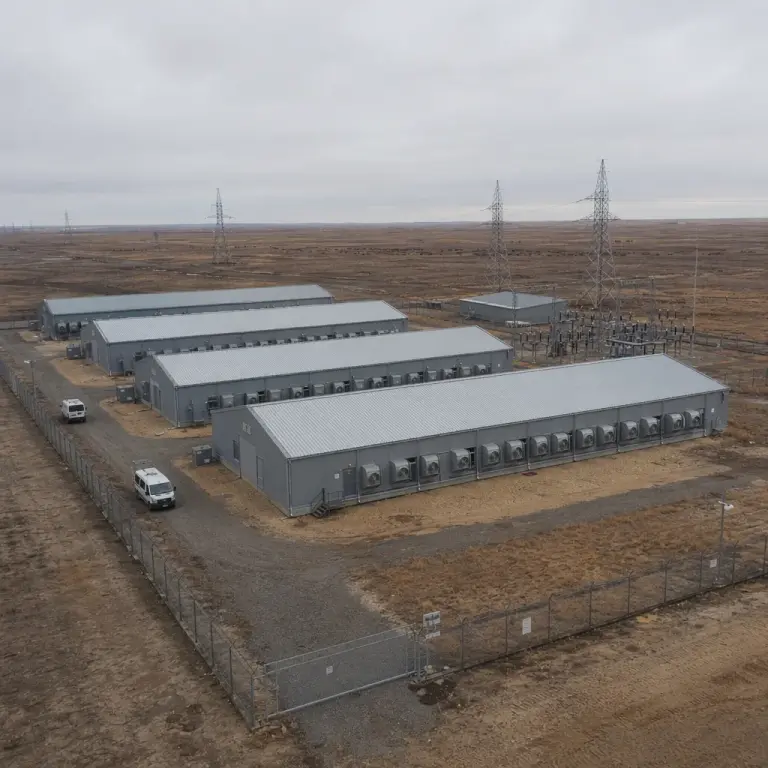
What Is Cloud Mining? The Short Answer
Cloud mining is a service model where an operator runs a fleet of Bitcoin ASIC miners in an industrial data center and lets you rent a share of that hashrate on a monthly contract. Instead of buying a $4,500 Antminer and paying your home utility bill, you pay a flat fee — and the Bitcoin produced by "your" portion of the fleet is credited to your account.
You never touch the physical machine. The operator handles the heavy parts — power contracts, cooling, hardware replacement, mining pool connection, firmware. You handle the decision most individuals actually care about: how much hashrate to rent, and for how long.
You rent hashrate
Hashrate — measured in TH/s — is the computational work needed to find a Bitcoin block. More rented TH/s means a larger share of the reward pool.
The operator does the work
Power, cooling, technician rotation, pool fees, hardware swaps — all included in the rental price. You do not need to know how to flash firmware.
BTC accrues automatically
Most platforms credit your wallet every minute or every hour, in real BTC. You can withdraw to your own Bitcoin address once you hit the minimum threshold.
How Cloud Mining Actually Works — The Five Steps
Stripping away the marketing, the flow is almost always the same across reputable platforms. Understanding the sequence is the fastest way to spot one that's missing a step — that's often where the trouble hides.
Create an account and verify
Email, password, 2FA. Reputable platforms confirm your email and offer TOTP-based two-factor authentication. If a "cloud mining" site lets you withdraw with nothing but an email, that's a red flag, not a feature.
Choose a plan and term
Plans are usually tiered by hashrate and power draw — for example on NoxHash: Basic (50 TH/s, $20/month), Standard (150 TH/s, $50), Pro (350 TH/s, $100), Enterprise (1,000 TH/s, $250). Longer terms (6, 12, 24 months) typically come with 5–20% discounts.
Fund the rental
Most platforms accept USDT on low-fee chains — TRC-20 (~$1 fee) or BEP-20 (~$0.05–0.30 fee). A unique deposit amount (e.g. $100.03) lets the system auto-match your transaction without KYC overhead for small deposits.
Mining begins — BTC accrues
The operator assigns your rented TH/s to a Bitcoin mining pool (usually on an FPPS payout model) and credits your account in BTC on a short, predictable cadence. You can watch the hashrate ticking on a dashboard in real time.
Withdraw BTC to your wallet
Once you clear the minimum (0.00001 BTC on NoxHash), you request a withdrawal to your own Bitcoin address — Segwit, P2PKH, or P2SH — minus a small network fee (around 1.5% on NoxHash). From there, your BTC lives in a wallet you control, not the platform.
Cloud Mining vs Buying Your Own ASIC — The Honest Comparison
The most common question from a newcomer is "why not just buy a miner and run it at home?" For a few people that still works. For most, the math below is why they end up renting instead.
| Factor | Home mining (1× Antminer S21) | Cloud mining |
|---|---|---|
| Upfront cost | $4,500–6,000 per unit | From $20/month, no hardware |
| Electricity | $100–500/month depending on region | Included (industrial ~$0.035/kWh) |
| Noise & heat | ~75 dB, needs dedicated room | None — machine is 3,000 km away |
| Hardware failure | Your problem and your bill | Operator replaces within 4–8 hours |
| Setup time | Days to weeks | Minutes after payment confirms |
| Obsolescence risk | You own the depreciating unit | Operator upgrades the fleet over time |
| What you control | Firmware, pool, tuning | Term length and how much to rent |
Home mining only makes sense when you have sub-$0.06/kWh electricity and a dedicated space to host an industrial-grade appliance that sounds like a vacuum cleaner running 24/7. If either piece is missing, cloud mining typically wins on pure cost-per-TH — not to mention sanity.
Rather than read more — run the 5 steps yourself
You've seen what cloud mining is and how the flow works. The fastest way to confirm it's real is NoxHash's 2-day Basic Miner trial: 50 TH/s, no card, no USDT. You'll see the actual CGMiner terminal and a live hashrate within minutes.

Realistic Earnings — The Honest Math
Cloud mining returns are not magic, and anyone who promises a fixed daily percentage is either careless or lying. Your BTC payout is a function of three moving numbers: the rented hashrate, the Bitcoin network difficulty, and the BTC price. As of April 2026, global network hashrate sits above 1 ZH/s with difficulty around 135 T — about 20× higher than five years ago — according to public data from the CoinWarz Bitcoin difficulty chart.
To make this concrete, here's how a single Standard Miner ($50/month, 150 TH/s) maps to BTC output under typical 2026 network conditions. These figures are illustrative — not a guarantee — because difficulty and BTC price change weekly.
| Line item | Standard Miner (150 TH/s) |
|---|---|
| Monthly rental (1-month term) | $50 |
| Estimated BTC output (illustrative) | Target range ~115–125% of rental in BTC value |
| Payout cadence | Every minute, BTC-denominated |
| Withdrawal fee | 1.5% of withdrawn BTC |
| 6-month term discount | 10% ($45/month) |
The key insight: your cost is fixed in USD, but your revenue is denominated in BTC. When BTC price rises, the same mined BTC is worth more dollars — your USD yield goes up without you doing anything. When BTC drops sharply, the same BTC earns fewer dollars — and your rental fee doesn't adjust downward. This is why seasoned miners tend to evaluate cloud mining on a multi-month BTC-stacking basis rather than a month-by-month USD PnL.
Who Cloud Mining Is — and Isn't — For
Cloud mining is not a universal yes or a universal no. It's a sharp fit for a few specific profiles, a poor fit for others. Be honest about which group you're in before committing capital.
Good fit — BTC accumulators
If your goal is to stack more sats over a multi-year horizon and you want a non-trading way to do it, a steady rental on a long term contract behaves like a BTC-denominated DCA with yield attached.
Good fit — the hardware-hesitant
Apartment dwellers, users in high-electricity regions, anyone without a soundproofed utility room. The hurdle to physical mining isn't curiosity — it's noise, heat, and a $0.18/kWh electricity meter.
Poor fit — guaranteed-return seekers
If you need a fixed, bankable monthly return, cloud mining is the wrong product. Your USD yield fluctuates with BTC price and network difficulty. A savings account is the better choice.
Poor fit — tinkerers who want full control
If you enjoy flashing BraiinsOS, tuning clock frequency, and picking your own mining pool, cloud mining removes the fun. Buy your own ASIC and host it — that's a different hobby entirely.
The Risks Every Beginner Must Understand
Any article that makes cloud mining sound risk-free is advertising, not educating. There are four risks that matter, and you should weigh each one before committing more than lunch money.
Bitcoin price risk is the biggest. Your rental fee is fixed in USD; your output is BTC. If BTC drops 40%, the USD value of the BTC you mine during that period drops with it — and your contract keeps billing. Do not start a long rental during an obvious BTC downtrend.
Network difficulty risk is the quiet one. As more global hashrate comes online, the same rented TH/s earns proportionally less BTC. Difficulty has risen roughly 20× over the past five years. Factor future adjustments into any ROI estimate you read.
Operator counterparty risk is the one you can actually diligence. Is the data center location disclosed? Does the site show real hardware? Does it let you withdraw in small amounts before you go big? Transparent operators say yes to all three. Scams dodge the question.
Regulatory risk varies by country. Mining revenue is taxable in most jurisdictions and rules on crypto rental services are still evolving. Consult a local tax professional before scaling up — especially if you're planning multi-thousand-dollar allocations.

How to Spot a Legitimate Cloud Mining Platform
The cloud mining industry has been plagued by Ponzi schemes dressed in mining clothing — which makes a short due-diligence checklist essential. Before sending a single USDT, walk through the green flags below. Any one missing is a reason to slow down; two missing is a reason to walk away.
Discloses the data center location
Region, power source, electricity rate, cooling strategy. NoxHash operates out of Kazakhstan on industrial $0.035/kWh power with natural-air cooling — the kind of specifics a Ponzi cannot invent.
Names the hardware
Real operators tell you what they run — e.g. Antminer S21 series at 17.5 J/TH, S21 Pro at 15 J/TH. Vague phrases like "next-gen ASICs" with no model names usually mean no real hardware.
Offers a real free trial
A short no-deposit trial where you see a live CGMiner terminal lets you verify the infrastructure without risk. If the only way in is a paid deposit, you're trusting marketing copy.
Small test withdrawals succeed
Before scaling up, withdraw once at a low amount (e.g. 0.0001 BTC). Ponzi schemes nearly always allow one small cash-out to build confidence — but many fail outright on the second. Test early.
Equally important are the red flags: any platform promising a fixed daily percentage (e.g. "earn 1.5% per day!") is structurally a Ponzi — real mining returns cannot be fixed because difficulty and price are not fixed. Walk away from those without exception.
Run the checklist on a real operator
You now have a four-point diligence filter. NoxHash openly meets every item — disclosed Kazakhstan data center, named Antminer S21 fleet, 2-day free trial, and withdrawals from 0.00001 BTC. Kick the tires before you commit anything meaningful.
Frequently Asked Questions
Is cloud mining profitable in 2026?
It can be, but profitability depends on BTC price, network difficulty, and your contract terms. When BTC is trending up or flat, most reputable fixed-rental platforms produce BTC value above the monthly fee. In a deep BTC drawdown, returns can turn negative in USD terms. Size accordingly.
Is cloud mining just a Ponzi scheme?
Many historical platforms were. Legitimate cloud mining is not — it's simply a data center rental service. The difference is verifiable: real operators disclose their location, name their hardware, let you see a live miner terminal, and allow small test withdrawals. Any "guaranteed daily return" is a structural red flag.
How much money do I need to start cloud mining?
Entry-level plans start around $20/month (NoxHash Basic Miner, 50 TH/s). Add a small USDT cushion for withdrawal-fee buffer and you can get meaningful exposure for under $25. Many platforms also offer a free trial so you can test the system before depositing anything.
Do I need technical knowledge to cloud mine?
No. The operator handles firmware, pool selection, cooling, and hardware maintenance. You need only basic crypto literacy: sending USDT on TRC-20 or BEP-20, understanding a Bitcoin address, and keeping your login credentials secure with two-factor authentication.
What happens to my contract after Bitcoin's next halving?
The next halving is estimated for 2028 — block reward will drop from 3.125 BTC to 1.5625 BTC. Contracts running across a halving see roughly half the BTC block-reward component overnight. Historically, BTC price has appreciated in the 12–18 months after each halving, but that pattern is not guaranteed.
Can I withdraw my BTC anytime?
On NoxHash, yes — once your balance clears the 0.00001 BTC minimum. Withdrawals go to any Bitcoin address you control (Segwit, P2PKH, P2SH), carry a 1.5% fee, and are reviewed by the operator before broadcast. Once on-chain, the BTC is fully yours in self-custody.
Is cloud mining legal?
In most countries, yes. Renting computing power and receiving BTC payouts is generally treated as taxable income similar to mining revenue. A handful of jurisdictions restrict or ban crypto mining — verify your local rules and consult a qualified tax professional before scaling up.
Educational content — not financial advice
This guide is for education. The earnings figures, network statistics, and platform parameters reflect conditions in April 2026 and will change. Cloud mining returns depend on BTC price, network difficulty, operator reliability, and your tax jurisdiction — all outside your direct control. Past results do not guarantee future performance. Only commit funds you can afford to lose, and verify local legal and tax treatment with a qualified professional before scaling up.