How NoxHash Natural Cooling Works in Sub-Zero Kazakhstan
How NoxHash uses Kazakhstan's sub-zero winters to cool ASIC miners — cutting cooling power 20-30% vs hot-climate farms. Full thermodynamics, specs, and costs.
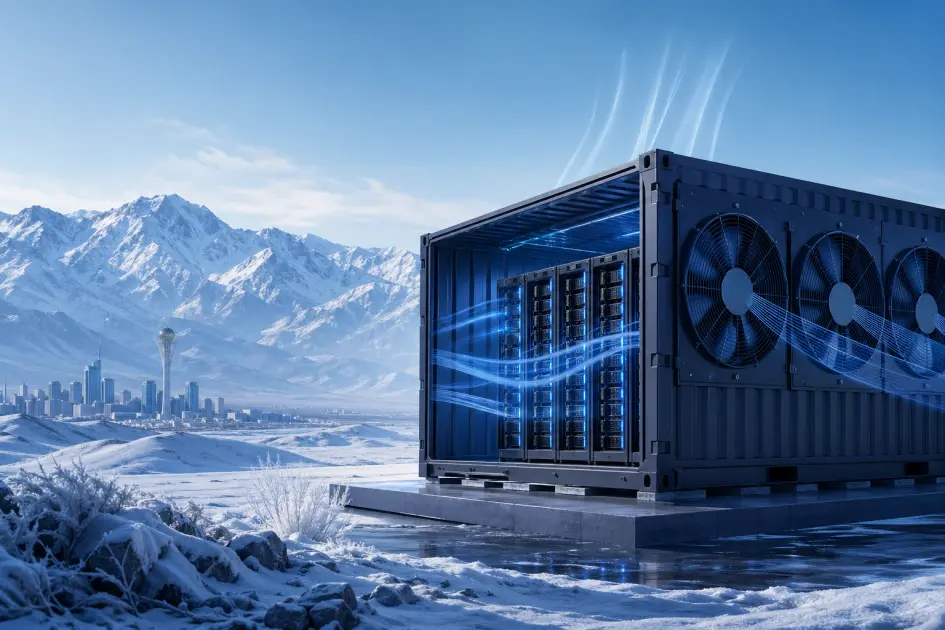
Natural cooling is a data-center strategy that uses cold outside air — not chillers — to remove heat from mining hardware. At NoxHash, Kazakhstan's continental climate averages -15°C to -30°C in winter, so filtered outdoor air flows straight through our ASIC halls. The result: 20-30% less power spent on cooling compared with hot-climate farms.
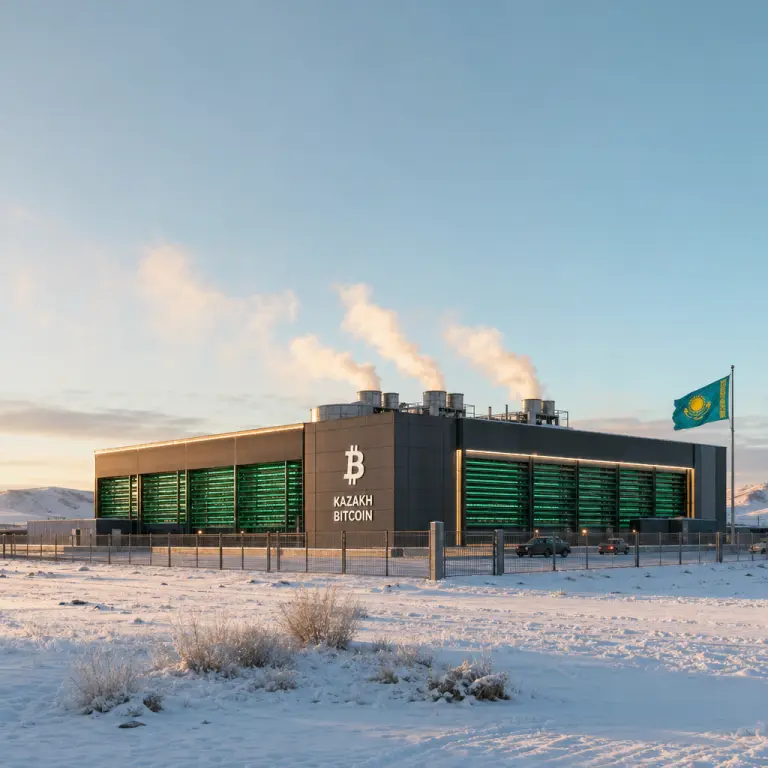
Why Cooling Is the Second-Biggest Cost in Bitcoin Mining
Every ASIC miner turns electricity into two things: hashes and heat. An Antminer S21 pulls 3,500W at the wall and releases nearly all of it as heat in a small metal box. Keep that box cool and it hashes at full speed; let it overheat and it throttles, errors, or shuts down.
Traditional mining farms solve this with industrial HVAC: chillers, cooling towers, and air-conditioning loops that can add 30-40% on top of the miner's own power draw. That extra power comes straight out of profit margins. The cooler the outside air, the less you need to spend pushing heat away — and that is the entire reason NoxHash operates where we do.
Kazakhstan Climate Specs — Built for Cold Mining
Northern Kazakhstan sits on a continental-climate plateau with long, severe winters and short summers. Here is the annual temperature profile relevant to data-center operations, based on government meteorological records from Kazhydromet:
| Season | Temperature | Cooling approach | Months of the year |
|---|---|---|---|
| Deep winter | -15°C to -30°C | 100% free-air (outside air mixed and filtered) | Dec - Feb |
| Shoulder (spring / autumn) | -5°C to +15°C | Free-air + variable-speed fans | Mar - May, Sep - Nov |
| Brief summer peak | +20°C to +35°C | Evaporative / misting support on hottest days | Jun - Aug |
| Annual average | +2°C to +7°C | Free-air dominant year-round | Full year |
For comparison, mining hubs in Texas or Arizona regularly hit +38°C to +45°C in summer with overnight lows that stay above body temperature. Those farms cannot simply pull air from outside — they must actively refrigerate it, which is where most of the cooling bill comes from.
How Our Airflow Works — 4 Stages of Heat Removal
ASIC cooling is subtractive: you do not make chips cold, you move their heat somewhere else. A cold outside reservoir is the ideal sink, so the whole building is designed as a giant one-way air tunnel. Here is the flow, end to end:
Intake
Sub-zero outside air enters through louvered wall panels. Dampers modulate the opening based on indoor temperature targets.
Filter & mix
Dust filters strip particulates. A small fraction of warm return air blends in so the stream reaches the ~10-20°C range ASICs prefer.
Circulate
Industrial fans push conditioned air through cold aisles, across ASIC racks, and into contained hot aisles — no air mixes backward.
Exhaust
Hot air (35-45°C post-ASIC) is vented through roof chimneys. In winter, the visible vapor plume is the only hint the site is there.
The critical design choice is aisle containment: cold air and hot air never share the same space. This lets us run the whole facility with lower fan speeds, because no cool air is wasted cooling air that was already heated.
Kazakhstan vs Texas — What Climate Does to the Cooling Bill
To make the numbers concrete, take a 3,500W ASIC like the Antminer S21 running 24/7 (about 2,520 kWh/month of IT load). Cooling cost is typically expressed as a ratio — kWh of cooling power per kWh of IT power. Here is how that ratio, and the resulting bill, differs by location:
| Location | NoxHash (Kazakhstan) | Texas / Arizona farm |
|---|---|---|
| Cooling strategy | Free-air + industrial fans | Chillers / immersion / evaporative HVAC |
| Cooling overhead (cooling kWh per IT kWh) | ~0.05-0.10 | ~0.25-0.40 |
| Electricity price | $0.03-0.04 / kWh | $0.04-0.06 / kWh |
| Monthly cooling bill (per S21) | ~$4-10 | ~$25-60 |
| Summer risk | Brief peak, no full throttling | Curtailment on grid-heat days |
| Capital cost of cooling system | Low — fans & ducting | High — chiller plant + refrigerant loops |
Put together, the climate advantage compounds: cheaper electricity, smaller cooling overhead, and lower capital costs on the cooling system itself. That is a big part of why Kazakhstan is one of the top three global mining hubs, according to the Cambridge Bitcoin Electricity Consumption Index which tracks mining geography and energy use.
Rent a miner cooled by the Kazakh winter
The 20-30% cooling savings you just read about are already baked into our plan prices. Start with the Basic Miner (50 TH/s, $20/month) — the same rack, airflow, and climate as every other tier.

What About Summer? The Honest Answer
Natural cooling is not magic; it is physics. In June through August, Kazakhstan sees a short hot period where daytime temperatures climb to +30°C or above. During those weeks we shift to a hybrid mode — free-air at night, assisted cooling during the hottest hours of the day.
Because our peak-summer load window is narrow (~60-90 days versus nearly 275 days of free-air operation) and because ASICs tolerate inlet temperatures up to ~35°C before throttling, we never need a full chiller plant. Evaporative cooling and variable-speed fans handle the peaks. The annual cooling bill still lands well below what a Texas or Arizona farm pays on a good day.
Key Takeaways on Natural Cooling
Cold air is the cheapest heat sink
Once outside air is below ~15°C, moving it through a building is cheaper than refrigerating warm air. Fans beat chillers every time.
Geography is infrastructure
Kazakhstan's continental climate is not an accident of siting; it is one of the main reasons the region became a global mining hub.
Savings land in your rate
Lower cooling overhead means lower total operating cost per TH/s — part of why NoxHash rentals start at $20/month instead of the $50+ typical elsewhere.
Uptime is protected, not compromised
Temperature sensors, redundant fans, and automatic damper controls keep inlet air in spec. Free-air cooling does not mean hands-off cooling.
Frequently Asked Questions
What is natural cooling in a mining data center?
Natural cooling uses cold outside air, instead of chillers or refrigerant loops, to remove heat from mining hardware. Filtered air is drawn in, pushed across ASIC racks by industrial fans, and vented out as hot exhaust. It works where the outdoor climate is reliably below indoor target temperatures for most of the year.
Does sub-zero air damage ASIC miners?
No, as long as the air reaching the chips is temperature- and humidity-controlled. We mix a small fraction of warm return air into the intake stream so the inlet sits at roughly +10°C to +20°C, well inside manufacturer specifications. The cold is used as a reservoir, not dumped directly on the hardware.
How much power does natural cooling actually save?
On an annualized basis, our facility uses roughly 20-30% less cooling power than a comparable hot-climate farm running chillers. For a single 3,500W ASIC, that is typically $20-50 per month in avoided electricity — multiplied across thousands of units, it is a major structural cost advantage.
What happens to the heat the miners produce?
Hot exhaust air, typically +35°C to +45°C after passing over the ASICs, is vented through roof chimneys back into the atmosphere. In winter, the temperature difference between exhaust and outside air is so large that visible vapor plumes form above the building — a direct signal that the free-air loop is working.
How do you keep dust and pollution out of the airflow?
Every cubic meter of intake air passes through multi-stage particulate filters before it reaches a single miner. Filters are swapped on a scheduled cycle by the on-site technical team. Dust is the enemy of ASIC longevity, and filtration is the single non-negotiable part of any free-air design.
Could this approach work in a warmer country?
Only partially. A Texas or Arizona facility can use evaporative cooling on dry days and free-air at night, but summer heat forces them onto chillers for many hours a year. Net cooling overhead ends up roughly 3-4x higher than a Kazakh or Siberian site — the climate is simply not on their side.
Not financial advice
This article explains the cooling infrastructure behind NoxHash, not investment returns. Renting a miner remains exposed to BTC price volatility, network difficulty, halving cycles, and regulatory change — infrastructure efficiency helps but does not eliminate market risk. Past performance does not guarantee future results. Only commit funds you can afford to lose, and consult a qualified advisor for questions about crypto investments in your jurisdiction.