Can AI and Bitcoin Mining Coexist? The Energy & Hardware Overlap
AI and Bitcoin mining share power, land, and grid access — but not silicon. See how CoreWeave, Hut 8, IREN, and TeraWulf reshape miner economics in 2026.

AI and Bitcoin mining can coexist, but they do not share the same silicon. They share land, substations, grid interconnects, and operational know-how — the physical backbone of a data center. The hardware is different: Bitcoin ASICs cannot run AI workloads, and GPUs cannot profitably hash SHA-256. Miners pivoting to AI are repurposing sites, not machines.
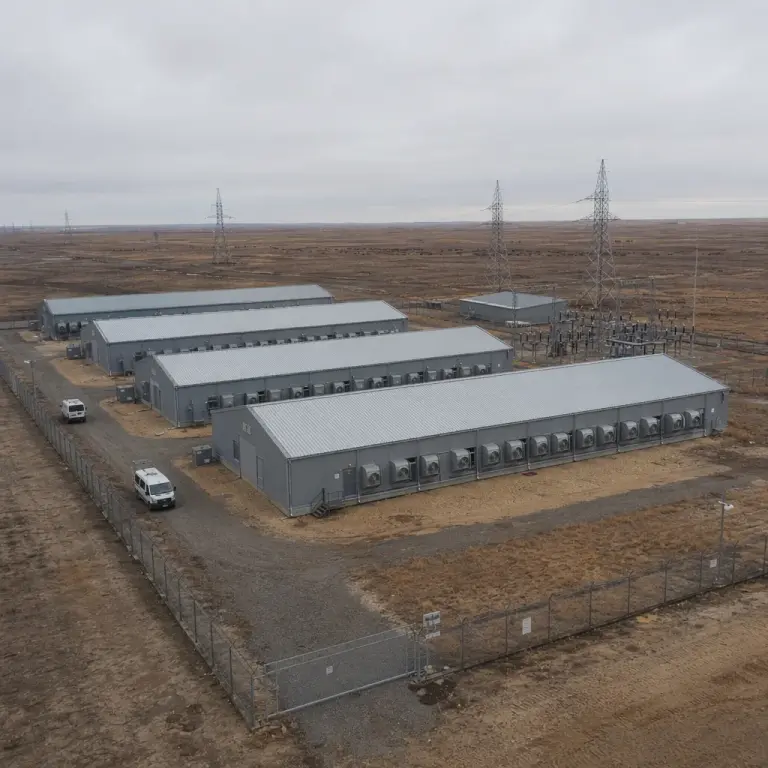
Why people keep asking if AI will replace Bitcoin mining
The question sounds philosophical, but the money is very concrete. By early 2026, listed Bitcoin miners had announced more than $70 billion in AI and high-performance computing (HPC) contracts — a number that dwarfs their combined market cap just two years earlier. Wall Street began labeling companies like IREN, Core Scientific, and Hut 8 "AI plays" rather than mining stocks.
That reframing matters to anyone who cares about Bitcoin. If the biggest industrial miners can earn 3–25× more revenue per megawatt-hour from AI than from hashing, according to CoinDesk's March 2026 reporting, the natural worry is: will hashrate eventually drain away from Bitcoin entirely?
The short answer, as you will see, is no — but not for the reasons people usually assume. The economics of AI and mining are different enough that the two can run side by side on the same campus, and a growing number of operators are doing exactly that.
What actually overlaps between AI and Bitcoin mining
When a miner "pivots to AI," they are almost never moving ASICs into AI workloads. They are repurposing the site. Think of a mining campus as a stack of four things: land, power, cooling, and silicon. AI data centers need the first three; they cannot use mining silicon.
Land & buildings
Mining sites already have industrial zoning, security, fiber, and shell buildings — years of permitting work AI tenants can skip.
Power & substations
100–500 MW grid interconnects with executed power purchase agreements — the scarcest asset in AI infrastructure today.
Cooling & ops teams
24/7 NOC staff, high-density airflow, immersion/hydro experience — transferable to GPU halls with retrofits, not rebuilds.
What does not transfer is the silicon. An Antminer S21 Pro is a SHA-256 machine. A cluster of NVIDIA H100s or GB300s runs AI matmuls. The two architectures are separated by roughly 100,000× in efficiency for their respective tasks, according to Hashrate Index's analysis. You do not "convert" one to the other. You swap them out.
ASIC vs GPU: why the silicon doesn't cross over
The clearest way to see why ASICs cannot do AI (and GPUs cannot profitably mine Bitcoin) is to compare them on the dimensions each task actually cares about.
| Dimension | Bitcoin ASIC (S21 Pro) | AI GPU (NVIDIA H100) |
|---|---|---|
| Designed for | SHA-256 hashing only | General FP/matrix math |
| Flexibility | Zero — 1 algorithm | High — training, inference, graphics, science |
| Unit cost | ~$4,500–6,000 | ~$25,000–40,000 |
| Rack density | ~15–30 kW/rack | ~40–120 kW/rack (liquid-cooled) |
| Networking | Single pool connection | InfiniBand/NVLink fabric, sub-ms latency |
| Revenue per MWh | Baseline (hash price driven) | 3–25× baseline |
| Uptime tolerance | Can curtail freely (demand response) | 99.99%+ required (tier III/IV) |
Two rows in that table tell the whole story. The last one — uptime tolerance — is why Bitcoin miners historically got away with cheap, simple buildings. Curtail the site during a price spike and you save money. An AI tenant cannot do that; interrupting a training run can corrupt days of work. That is also why retrofitting a mining shed for AI costs $8–14 million per MW, versus ~$0.4–0.5 million per MW for fresh Bitcoin build, according to industry estimates.
The second row — revenue per MWh — is why the pivot is happening anyway. At 3–25× the hashing yield, even a 20× higher capex amortizes quickly. And AI tenants sign 10–15 year take-or-pay contracts, which Bitcoin never offers.
The five miners reshaping the AI-mining landscape
Five public operators dominate the pivot narrative. Each chose a different path — some are effectively leaving mining, others are running dual revenue streams. These numbers reflect disclosed contracts and Q4 2025 / Q1 2026 earnings.
Core Scientific → CoreWeave
Signed a $10.2B, 12-year hosting deal with CoreWeave, then agreed to a full $9B acquisition. AI colocation already represents 39% of total revenue. Sold roughly $175M in BTC to fund the conversion.
IREN (formerly Iris Energy)
A $9.7B Microsoft contract for 76,000 NVIDIA GB300 GPUs across 200 MW in Childress, Texas. By Q1 2026, ~90% of IREN's market value is tied to AI/HPC, not mining revenue.
Hut 8 → Fluidstack/Google
A $7B, 15-year deal with Google-backed Fluidstack for a 245 MW AI campus. On its Q4 2025 call, management explicitly said Bitcoin is "no longer a long-term strategic focus."
TeraWulf
About $12.8B in contracted HPC revenue, with 522 MW of AI capacity and a 2.9 GW development pipeline. Roughly 27% of Q4 2025 revenue already came from HPC.
Cipher Mining & Applied Digital
Cipher locked in ~$8.5B in AI lease payments and grew contracted AI capacity from 0 to 544 MW in a single quarter. Applied Digital, an early pivoter, now derives the majority of revenue from HPC hosting.
Zoom out and a pattern appears. As of Q4 2025, AI and HPC made up ~30% of revenue across listed miners on average, and operators with executed contracts expect that share to exceed 70% by the end of 2026. The companies are still called "Bitcoin miners" in old tickers, but that label is becoming historical.
While public miners chase AI contracts, we stay focused on BTC
NoxHash runs Antminer S21 fleets at $0.035/kWh in Kazakhstan — 100% of our hashrate works for renters, not resold to AI hyperscalers. Start with a free 2-day trial on a Basic Miner.
The energy overlap: why both industries chase the same grid
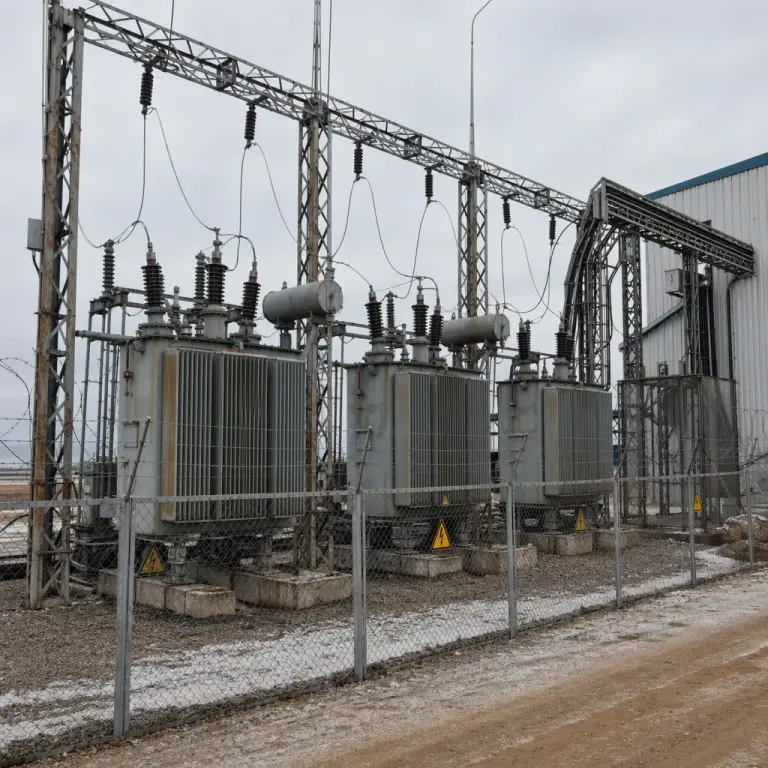
AI and Bitcoin mining are both power-hungry industries racing to secure the same scarce resource: firm grid capacity. In many U.S. markets, utility interconnection queues now stretch 4–7 years. A site with an executed 200 MW substation and signed power purchase agreement is no longer just an operating asset — it is a strategic one.
That is why AI hyperscalers are willing to pay premium rents to miners: they are effectively buying time-to-power. Industry estimates suggest repurposing a mining site cuts AI data-center deployment timelines by up to 75% versus a greenfield build. When Microsoft or Google needs 200 MW live in 18 months, they cannot wait 5 years for a new interconnect.
Where the two industries diverge sharply is energy source preference. Bitcoin miners can chase the cheapest electrons anywhere — Cambridge CBECI data shows hashrate concentrating in regions with stranded hydro, flared gas, and coal surplus. AI workloads prefer reliable, low-latency, well-connected power: dense metro areas, preferably near fiber trunks, often bundled with renewables for ESG disclosures. A remote Kazakh coal-fired mine can host BTC profitably; it is a poor AI site.
That geographic split is the main reason Bitcoin hashrate is not about to collapse. The cheapest-electron sites in Paraguay, Ethiopia, Oman, and Siberia are not competing for Nvidia GPU workloads. They will keep hashing.
The "AI take" thesis: why miners' equity is being re-rated
Analysts began calling the pivot "the AI take" in mid-2025. The thesis is simple: industrial miners own something AI desperately needs (powered shells with grid access), and AI is willing to pay 3–25× more for it than hashing does. Therefore, a miner's fair value is no longer a function of BTC price alone — it is a function of how much of its megawatt capacity gets re-contracted into AI.
For holders of miner equity (MARA, RIOT, CLSK, WULF, CIFR, IREN, HUT), this has two implications:
Revenue stability improves
10–15 year AI leases replace volatile BTC revenue with predictable USD cashflow. Operating margins on AI hosting often hit 80–90%.
Beta to Bitcoin drops
Miner stocks used to trade as leveraged BTC. Post-pivot, correlation weakens. IREN now trades more like a data-center REIT than a crypto proxy.
Execution risk is real
Retrofitting mining sheds to tier-III AI spec is expensive and slow. Delays, cost overruns, or a single lost contract can gap a stock down 30%+.
Capital flywheel
Some operators are selling BTC treasuries to fund the AI conversion. This reduces their BTC beta further and, counter-intuitively, removes miner BTC supply from the market.
What the AI pivot actually means for Bitcoin's hashrate
The nightmare scenario in retail Bitcoin commentary goes like this: miners pivot to AI, hashrate collapses, block times slow, security suffers. The data does not support that story, for three reasons.
First, global hashrate keeps rising. Even as public U.S. miners convert capacity, Bitcoin's total network hashrate continued climbing through 2025 into 2026, hitting new all-time highs in the 800–900 EH/s range. Listed miners represent a minority of global hashrate; private operators in Paraguay, Ethiopia, the UAE, and Russia absorbed the slack and then some.
Second, the pivot is concentrated in high-power-cost regions. A 100 MW site in Texas is far more valuable as an AI campus than a mining farm. A 100 MW site in Kazakhstan, where power runs $0.035/kWh, still prints cash hashing — and is too remote from hyperscale AI demand to make sense as a training site. The pivot is rational; it is not a collapse.
Third, difficulty adjustment handles the rest. If hashrate ever did drop meaningfully, Bitcoin's difficulty adjustment (every 2,016 blocks) would compensate. Remaining miners would earn proportionally more per TH/s, which would restore their margins. The network has survived China's 2021 ban, the 2022 bear market, and the 2024 halving. A gradual AI pivot is well within its design tolerance.
The more interesting question is where the marginal mining hashrate will live in 2028 and 2030. The answer is almost certainly: low-cost-power regions where AI has no interest in paying rent. That is also where NoxHash operates.
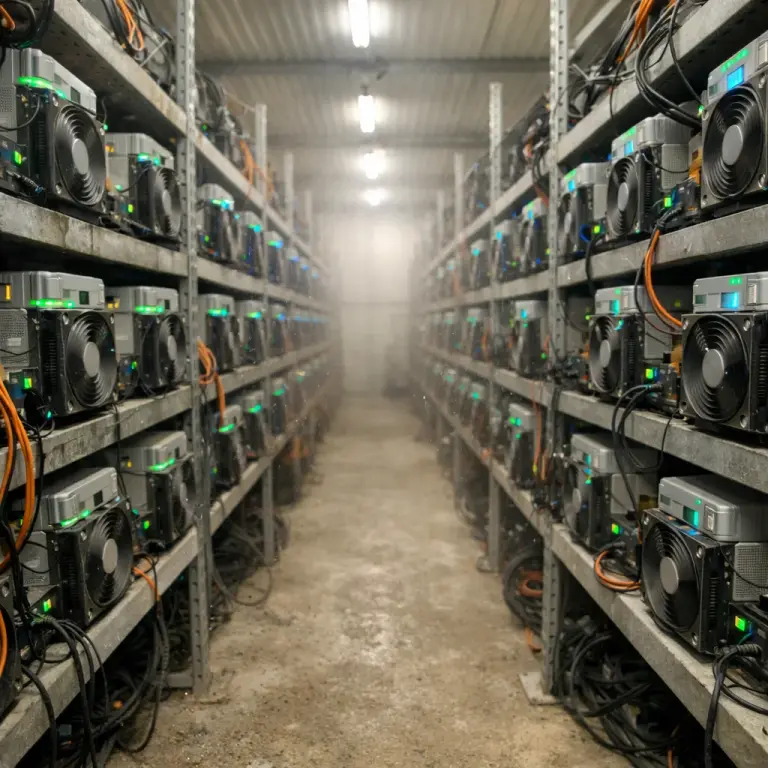
What this means if you're renting cloud mining
If you rent hashrate from a cloud mining platform, the AI pivot is worth understanding because it affects which operators will still exist, and still be mining, in 3–5 years. Three practical takeaways:
1. Ask where the hashrate lives. A platform operating in mid-priced U.S. regions is facing strong economic pressure to sell its MW to AI, not to you. Operators in Kazakhstan, Paraguay, or Ethiopia have no such temptation — AI does not follow cheap coal and hydro into remote geographies.
2. Treat "AI-also" marketing with caution. Some public miners now pitch hybrid exposure to retail investors. That is a legitimate equity story, but it is not the same as cloud mining. If you want BTC accumulation, rent hashrate from a mining-only operator; if you want AI exposure, buy the equity or an ETF.
3. Efficiency matters more than ever. As marginal U.S. hashrate migrates to AI, surviving miners must run state-of-the-art fleets to stay profitable on thinner margins. That is why NoxHash runs Antminer S21 / S21 Pro / S21 XP Hyd — machines at 12–17.5 J/TH, close to the efficiency frontier. Old fleets at 25–30 J/TH will be the first to capitulate.
Mine in a region AI doesn't want to rent
NoxHash's fleet sits in remote Kazakhstan — cheap electrons, cold climate, no hyperscaler competition. That lets us keep passing low rental prices to you while the rest of the industry chases AI dollars.
Frequently asked questions
Can Bitcoin ASIC miners run AI workloads?
No. ASIC miners like the Antminer S21 are hard-wired for SHA-256 hashing and cannot run AI training or inference. They have no general-purpose compute, no high-bandwidth memory, and no InfiniBand-class networking. A "pivot" to AI always means replacing the ASICs with GPUs, not reprogramming them.
Will the AI pivot hurt Bitcoin's network security?
Unlikely. Global hashrate kept climbing through 2025 into 2026 even as listed U.S. miners pivoted. Capacity lost to AI is being absorbed by private miners in lower-cost regions, and Bitcoin's difficulty adjustment compensates for any real drop. The network is designed to remain secure through hashrate rotation.
Why would a miner sell BTC to fund an AI pivot?
Retrofitting a mining shed for AI costs roughly $8–14 million per MW, versus $0.4–0.5 million per MW for fresh Bitcoin build. Even at mid-2020s BTC prices, a miner's treasury may not cover a 200 MW AI conversion. Selling BTC to accelerate the pivot can dramatically increase long-term enterprise value.
Is Kazakhstan better for Bitcoin mining than for AI?
For Bitcoin, yes — $0.035/kWh industrial power and a cold climate make it ideal. For AI, not really. AI tenants want sub-millisecond latency to major metros, tier-III reliability, and ESG-clean power. Remote Kazakh sites are too far from customer regions and often coal-adjacent. That is why these sites remain mining-dedicated.
Should I invest in miner stocks as an AI play?
This is not investment advice. Miner stocks with executed AI contracts trade on a very different thesis than a year ago — more like data-center REITs than Bitcoin proxies. Execution risk is real: conversion costs, contract delays, and hyperscaler counterparty risk all matter. Research each name individually.
Not investment advice
This article is for informational purposes only and is not financial, investment, or tax advice. Public miner equity is volatile; contract pipelines change quarter-over-quarter; Bitcoin mining returns depend on BTC price, network difficulty, and energy markets. Past performance does not guarantee future results. Only commit capital you can afford to lose, and consult a licensed advisor for your jurisdiction. Figures cited reflect public disclosures as of April 2026.