Bitcoin Mining Year in Review — What We Learned in 2026
A running year-in-review of Bitcoin mining in 2026 — Q1 data filled, Q2 to Q4 updated quarterly. Hashrate, hashprice, AI pivot, halving follow-through.

2026 has been defined so far by three forces: an AI energy land-grab pulling hashrate out of Bitcoin, post-halving economics squeezing production costs above spot price, and a difficulty whipsaw unseen since 2021. This is our running year-in-review — Q1 is filled with real data, and Q2 to Q4 are refreshed at the close of each quarter.
Editor's note — template published April 24, 2026
The year 2026 is not over yet. This article is a living template: the Q1 section is filled with real data (the quarter has closed), while Q2, Q3, and Q4 sections are scaffolded and marked [TBD at year end]. The full year-in-review publishes after the Q4 close in late December 2026.
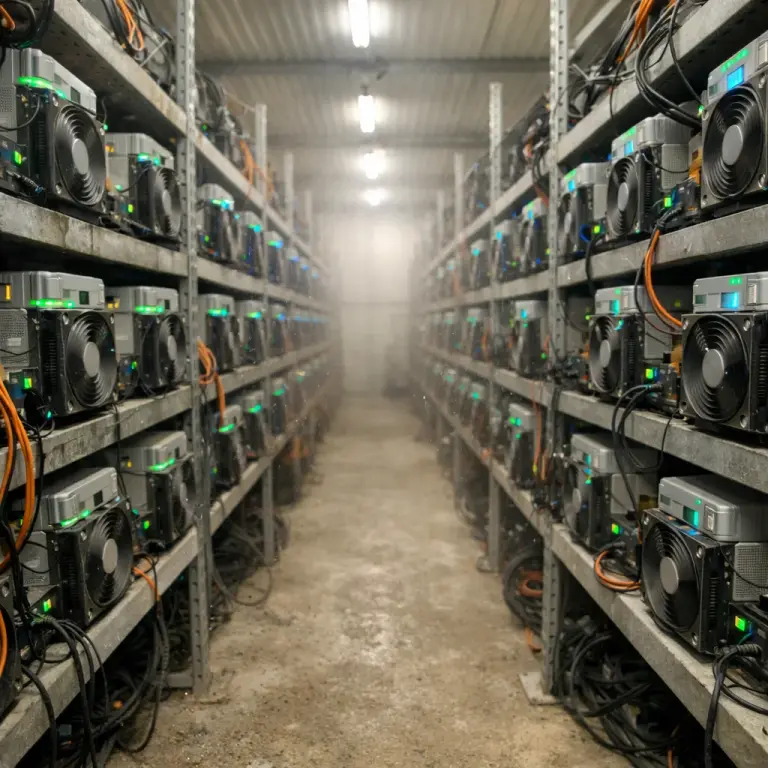
The Shape of 2026 So Far
The first quarter rewrote the playbook that carried miners through 2025. Network hashrate posted its first quarterly drop in six years, slipping roughly 4% year to date from a late-2025 peak above 1 ZH/s to around 920 EH/s by late March, according to reporting from CoinDesk on the Q1 hashrate reversal. The drop was not a collapse — it was a reallocation. Capital and megawatts are moving to AI and high-performance compute.
Meanwhile hashprice stayed bruised (dropping to the mid-$20s per PH/s/day at multi-year lows), difficulty whipsawed by 15% in a single adjustment, and production costs for some fleets pushed above the spot BTC price. These are the four themes that set the tone through April:
AI pivot accelerated
More than $70B in AI and HPC contracts have been signed across listed miners; several firms now project AI revenue will exceed mining revenue by year-end. Megawatts that used to point at SHA-256 now point at GPU racks.
Hashprice at multi-year lows
Daily revenue per petahash fell into the mid-$20s through March, the weakest stretch since the 2024 halving. Any fleet running above 30 J/TH or paying retail electricity was underwater on cash operating cost.
Difficulty whipsaw
February printed the largest difficulty jump since 2021 (+15%, to ~144.4T), followed by a sharp unwind as miners capitulated. Margin planning got noticeably harder for any operator on short-term power contracts.
Treasury sell-downs
Public miners collectively reduced BTC treasuries by over 15,000 coins from peaks. The era of hoarding self-mined BTC yielded to an era of funding AI pivots with it — a structural shift, not a cyclical one.
What to Watch Q2 to Q4
The next three quarters will be decided by how four tensions resolve. We'll update each of these sections at the end of Q2, Q3, and Q4 — for now these are the lenses we're reading every headline through.
AI vs mining for megawatts
Does the AI premium on power hold through 2026, pushing more US fleets out of SHA-256? Or do rate cuts and GPU oversupply cool HPC economics by Q4 and bring hashrate back?
Pool centralization
As US miners defect to AI, does hashrate redistribute geographically — and does the top-two-pool concentration loosen? Decentralization may be a quiet winner of the AI migration.
Next-gen ASIC cycle
Sub-10 J/TH machines are on Bitmain and MicroBT roadmaps. If they ship at volume in H2 2026, another hardware refresh wave could reprice every hashprice-sensitive fleet on the network.
The Year in Data
The table below is the quick-reference artifact that gets filled in over time. Q1 values reflect reporting through late March 2026. Q2, Q3, and Q4 update after each quarter closes.
| Metric | Q1 2026 (filled) | Q2 2026 | Q3 2026 | Q4 2026 |
|---|---|---|---|---|
| BTC price range (USD) | ~$67k to $95k | [TBD at year end] | [TBD at year end] | [TBD at year end] |
| Network hashrate avg | ~920 EH/s (-4% YTD) | [TBD at year end] | [TBD at year end] | [TBD at year end] |
| Hashprice avg (USD/PH/s/day) | ~$24 to $38 (multi-year low) | [TBD at year end] | [TBD at year end] | [TBD at year end] |
| Difficulty (peak) | ~144.4 T (Feb 20, +15%) | [TBD at year end] | [TBD at year end] | [TBD at year end] |
The Year's Biggest Stories
A vertical log of the defining moments of 2026. Q1 is recorded; later quarters are scaffolded and filled as they close.
The AI pivot became structural
Core Scientific, Riot, MARA, Bitdeer, and IREN all expanded HPC commitments through the quarter. Hashrate dropped quarter-over-quarter for the first time in six years — not from a ban, but from a capital-allocation decision. Public miners sold roughly 15,000 BTC to fund the transition.
[TBD at year end]
Updated at the close of Q2 2026.
[TBD at year end]
Updated at the close of Q3 2026.
[TBD at year end]
Updated at the close of Q4 2026 alongside the full-year review.
What 2026 Has Taught Us About Cloud Mining
Q1 validated a thesis we built the platform around: fleet efficiency and electricity cost become the dominant variables the further hashprice falls. When daily revenue per PH/s drops to the mid-$20s, any fleet running above 25 J/TH at retail power is underwater, and any fleet running at 12 to 18.5 J/TH on $0.035/kWh still has breathing room. The spread between the two widened all quarter.
For NoxHash specifically, the Kazakhstan economics held. Our industrial grid contract at $0.03 to $0.04 per kWh and our Antminer S21 series plus WhatsMiner M66S/M60S fleet at 12 to 18.5 J/TH mean the per-TH cash cost stayed inside sustainable territory through the February difficulty spike and the March hashprice trough. That's the entire reason a Basic Miner can still sit at $20 per month while many DIY setups had to power down.
Rent the same fleet that stayed in the money through Q1
When hashprice fell into the mid-$20s and home miners had to unplug, the Kazakhstan industrial contract and the S21 generation fleet kept running. Open a free account to see the platform and claim the 2-day Basic Miner trial — no deposit required.
Looking Toward 2027
The 2028 halving sits roughly two years out. Block reward moves from 3.125 BTC to 1.5625 BTC, cutting per-block subsidy in half again. Every J/TH of efficiency matters more in the run-up: the miners who reach 2028 solvent will be the ones who used 2026 and 2027 to refresh hardware at sub-15 J/TH and lock long-dated low-cost power. That's the framework we'll use when we close the books on Q4 and write the full-year summary.
Frequently Asked Questions
Why publish a year-in-review in April?
We treat this post as a living template. Q1 is closed and worth recording while the detail is fresh. Q2 to Q4 remain scaffolded with [TBD at year end] markers and update each quarter, so the piece grows into a full year-in-review by late December rather than being written all at once.
When does the full year-end update publish?
The final update publishes after the Q4 2026 close, in late December 2026. That version fills every [TBD at year end] cell, adds the full-year data table, and expands the looking-forward section with concrete 2027 and 2028 halving planning.
What has been the biggest 2026 surprise so far?
The quarterly drop in network hashrate. For six years the metric only climbed; the Q1 2026 decline showed that AI compute demand can pull megawatts off SHA-256 fast enough to move the chart. That changes the shape of the decentralization story for the rest of the cycle.
Are we in a mining bull market or a bear market?
Through Q1 2026 it looks like a miner bear market inside a neutral-to-bullish BTC market. Spot price held a broad range, but hashprice at multi-year lows and production costs above spot meant most fleets were operating at a cash loss. Efficiency and power cost decide who keeps running.
Does the AI pivot hurt NoxHash customers?
Indirectly, the opposite. Hashrate leaving the network lowers difficulty growth, which supports per-TH revenue for the fleets that remain. Our Kazakh site is SHA-256 dedicated; we benefit when competitors reallocate to AI and the share of BTC rewards per PH/s stabilizes or improves.
Not financial advice — template in progress
This article is a living template published April 24, 2026. Q1 2026 figures cite third-party reporting from CoinDesk and The Block and are accurate as of late March 2026; they can and will be revised as data providers update. Q2 through Q4 sections are placeholders and carry no data yet. Bitcoin mining returns depend on BTC price, network difficulty, energy costs, and regulation — all of which move sharply and sit outside our control. Past quarterly performance does not predict future quarters, and nothing here is investment advice. Only commit funds you can afford to lose, and consider consulting a local tax advisor about crypto earnings in your jurisdiction.