How Bitcoin Mining Can Stabilize Power Grids — The Demand Response Model
Bitcoin miners can interrupt load in milliseconds — how ERCOT Texas uses them as grid balancing capacity, and why this is unique among large electricity consumers.

Bitcoin mining can stabilize power grids because ASIC miners are the only large electricity consumer that can fully shut off in seconds and restart within minutes — with zero production loss. Grid operators like ERCOT Texas pay miners to stand by and drop load during heat waves, cold snaps, or renewable dropouts, turning mining into a flexible demand-response resource.
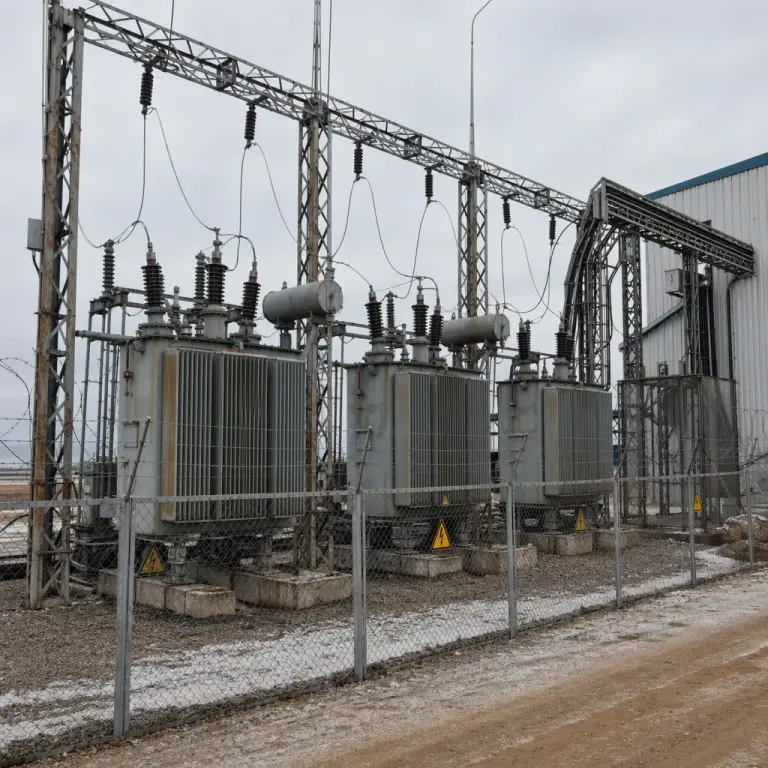
The grid flexibility problem
Electricity grids have a non-negotiable rule: supply and demand must match in real time, within a frequency tolerance of roughly 0.5 Hz around 60 Hz (or 50 Hz in Europe). Drift outside that band and equipment trips offline, blackouts cascade. Grid operators balance this every second of every day.
The hard part is that most large electricity consumers cannot easily pause. An aluminium smelter that loses power mid-pour loses the entire batch and damages the pot lines. A semiconductor fab loses weeks of wafers. A hyperscale data center serving live user traffic cannot simply go dark. Even commercial HVAC only flexes a small percentage of load before occupants notice.
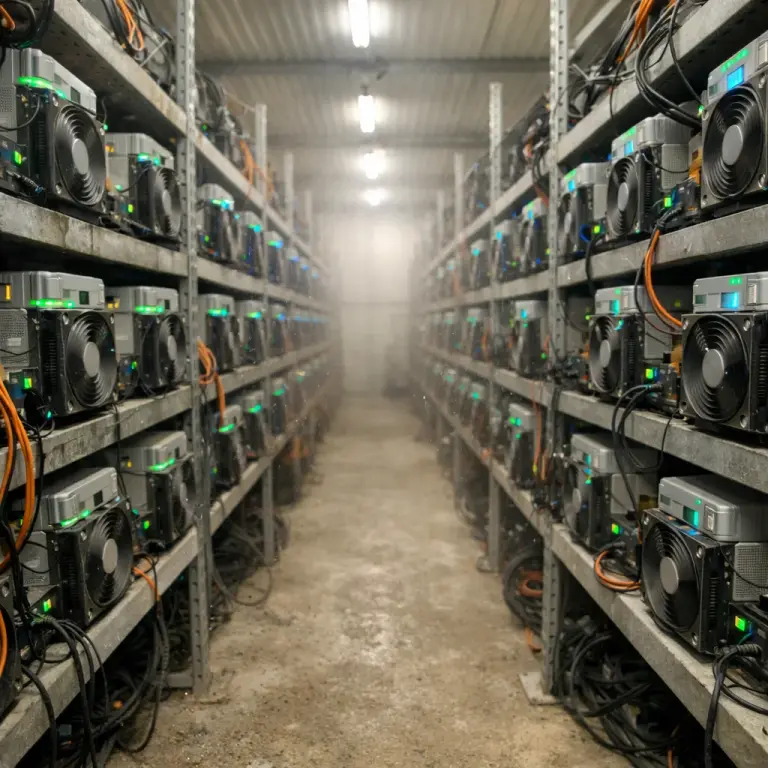
Bitcoin miners are the exception. An ASIC computes SHA-256 hashes — stateless, interruptible work. Turn the rig off, and you lose a few seconds of expected hash share; turn it back on, and you resume. No spoiled product, no half-finished process, no angry customers. This single property makes mining the most flexible gigawatt-scale load ever connected to a modern grid.
How demand response works
Demand response is a grid-services contract. Instead of paying a peaker plant to generate extra megawatts when demand spikes, the grid operator pays a consumer to reduce consumption on command. In ERCOT — the independent operator that runs most of Texas — miners participate through several overlapping programs:
Ancillary services
Responsive Reserve Service and ERCOT Contingency Reserve Service pay miners to stand ready and cut load within seconds to minutes when frequency drops.
4CP load management
Large consumers shave load during ERCOT's four highest summer peak intervals to lower transmission charges — miners simply curtail mining during those hours.
Spot-price curtailment
Miners on indexed power contracts switch off voluntarily whenever wholesale prices spike above mining's break-even — effectively reselling power to the grid.
The mechanism matters because it reshapes mining's economics. A miner enrolled in ancillary services earns two revenue streams: hashrate-denominated Bitcoin when running, and fiat-denominated grid payments when standing by. When power prices climb, the second stream can temporarily exceed the first — so the rational move is to stop mining and get paid to stop.
The ERCOT Texas case study
Texas went from near-zero mining load in 2020 to roughly 5+ GW of interconnected mining by 2024, with several additional gigawatts queued in ERCOT's generation interconnection pipeline. That is an extraordinary growth rate — and it happened largely because ERCOT built a framework that values flexibility.
Three real-world stress tests illustrate the model:
February 2021 (Winter Storm Uri). A historic polar vortex drove ERCOT demand past grid capacity; rolling blackouts left millions without heat. Many large Texas miners voluntarily shut off days before state-mandated curtailment, freeing roughly 1 GW of power for homes and hospitals. The episode cemented the policy case for grid-friendly miners.
Summer 2023 heat waves. During prolonged triple-digit heat, ERCOT publicly credited miners with curtailing several hundred megawatts during peak intervals. Riot Platforms, the largest public miner in Texas, disclosed more than $31 million in power and demand-response credits for August 2023 alone — an amount comparable to its mining revenue for the same month.
Spring wind lulls and solar clouds. Less dramatic but more frequent, miners ramp off within minutes whenever an unexpected renewable dropout tightens reserves — delivering the fast-dispatch response that gas peakers used to provide.
Why this matters specifically for renewable grids
Wind and solar are intermittent and non-dispatchable. When the wind dies at dusk or a cloud front rolls over a solar fleet, generation can drop hundreds of megawatts in minutes. Grids have historically handled this by firing up natural-gas peaker plants — expensive, carbon-intensive, slow to start, and idle most of the year.
Demand response flips the problem. Instead of turning on more generation to chase the shortfall, the operator turns off more load until supply recovers. The net effect on grid balance is identical, but the cost profile is very different:
| Response option | Time to deploy | Marginal emissions | Cost structure |
|---|---|---|---|
| Gas peaker startup | 10–30 minutes | High (CO2 + NOx) | Fuel + capital + O&M |
| Battery discharge | Milliseconds | Zero at point of use | High capex, limited duration |
| Mining curtailment | Seconds to minutes | Negative (demand removed) | Capacity payment only |
Because mining curtailment removes demand rather than adding supply, it is emissions-negative at the margin. And because the miner's only fixed grid payment is a capacity credit, there is no fuel burn when not dispatched — a structural advantage over peakers that must be warm-started or kept spinning.
This is why several grid analysts argue that interruptible mining load is complementary to wind and solar buildout. Renewables produce variable supply; flexible mining converts previously inelastic demand into a balancing asset.
How mining compares to other flexible loads
Utilities have experimented with demand response for decades, but the participating loads have always had tight physical limits. Refrigeration can defer compressors for an hour before food safety becomes an issue; HVAC can coast on building thermal mass for a similar window; aggregated residential thermostats can shave a few degrees before complaints flood the utility's call center.
Bitcoin mining operates in a different regime entirely.
| Load type | Bitcoin mining | Industrial refrigeration | Commercial HVAC | Residential thermostats |
|---|---|---|---|---|
| Max load drop | 100% | ~5–10% | ~10–20% | ~5–15% |
| Response time | Seconds | Minutes | Minutes | Minutes (aggregated) |
| Sustain duration | Hours to days | 1–2 hours | 1–3 hours | 2–4 hours |
| Recovery rebound | None | Large (compressor catch-up) | Moderate | Moderate |
| Comfort / product impact | None | Food-safety risk | Occupant discomfort | Household discomfort |
No other large load drops 100% of demand within seconds and holds it there for hours without side effects. That is the engineering proposition grid operators are buying when they contract with miners — not ideology, not enthusiasm for crypto, but a flexibility product with no real substitute at scale.
Understand which mining model fits your priorities
The ERCOT demand-response story is compelling, but NoxHash operates a different model — efficient baseload mining in Kazakhstan. If you want exposure to cloud mining on modern S21-class hardware at $0.035/kWh, see the plans. If grid-services revenue matters to you, a Texas-based operator is the right fit instead.
Criticisms and limits
The demand-response narrative is powerful, but it deserves honest pushback. Three critiques come up repeatedly:
Only monetized where markets exist
The flexibility is worthless without a buyer. ERCOT, PJM, and a few European grids run real ancillary-services auctions; Kazakhstan, most of Central Asia, and much of Africa do not. A miner in those regions offers the same technical capability but earns zero for it.
Net-new demand, not pure service
Critics fairly point out that mining creates the baseload it later curtails. A 5 GW miner that drops 500 MW during peaks still adds 4.5 GW of year-round demand. Demand response is a real service, but it does not erase the underlying load.
Subsidy dependence, not free lunch
Capacity payments and curtailment credits are transfers — ultimately paid by ratepayers through the wholesale market. Whether that cost is justified by improved reliability and avoided peaker plants is an empirical question, not a settled one.
Region-specific, not universal
The "mining stabilizes grids" argument only holds where there are live demand-response markets and a flexible generation mix. Coal-heavy or monopoly-utility grids do not need or reward this flexibility the same way.
Where NoxHash sits in this picture
We want to be honest: NoxHash's Kazakhstan facility does not provide grid-stabilization services, and we do not sell a demand-response product. Two reasons.
First, the market framework does not exist. Kazakhstan's power sector is a mix of vertically integrated utilities and bilateral industrial contracts. There is no ERCOT-style ancillary-services auction that pays large consumers to curtail on command. Even if our fleet technically could drop load in seconds — and it can, every ASIC fleet can — there is no counterparty writing the cheque for that capability.
Second, the grid does not need us that way. Kazakhstan's generation mix is coal-heavy with natural gas and hydro support, and it is structured for relatively steady baseload demand. It is not wrestling with the high-renewable intermittency problem that makes Texas want flexible miners. In this grid context, we operate as an efficient, predictable baseload consumer buying power under long-term industrial contracts at roughly $0.035/kWh — which is a real cost advantage for our customers, but a different value proposition from what a Riot or a Marathon offers in Texas.
The takeaway: if you're evaluating cloud mining and the grid-services narrative is important to you, a Texas-based operator plugged into ERCOT is the honest match. If your priority is low, stable per-kWh cost on modern SHA-256 hardware with 24/7 operations, Kazakhstan-based operations like ours are built for that. Both are legitimate models; they are just solving different problems.
For deeper background on mining-demand data and the wider grid debate, the Cambridge Centre for Alternative Finance (CBECI) publishes the most widely cited dataset on global mining electricity consumption, and Reuters reporting on ERCOT miners documents the scale of the Texas payments in real numbers.
FAQ
Does NoxHash help stabilize the grid?
No. NoxHash operates in Kazakhstan, which does not have an ERCOT-style demand-response market. Our fleet runs as an efficient baseload consumer on long-term industrial power contracts. Grid stabilization via curtailment is a real service, but it is specifically a Texas (and a few European) story, not ours.
How much do Texas miners actually earn from demand response?
Enough to move the income statement. Riot Platforms publicly disclosed over $31 million in combined power curtailment and demand-response credits for August 2023 alone — a figure comparable to its Bitcoin mining revenue that month. Smaller operators earn proportionally less, but the revenue is structurally meaningful.
Is demand response just greenwashing for Bitcoin mining?
Partly fair, partly not. The flexibility is real and measurable: ERCOT documents the megawatts curtailed. What is fair to push back on is the framing that curtailment "offsets" mining's baseload consumption — it does not. Both things are true at once: miners add demand, and miners provide valuable flex.
What share of a Texas miner's revenue comes from ancillary services?
It varies by operator and month. In normal months it is a few percent of total revenue. During extreme events — Uri, the 2023 heat waves — it can briefly exceed mining revenue. Across a full year, public filings suggest 5–20% of revenue for the largest ERCOT-active public miners.
Why don't European miners participate the same way?
Some do — Nordic miners access balancing markets in Norway and Sweden, and several UK-based operators provide frequency response services to National Grid ESO. But European mining capacity is a tiny fraction of Texas, and several grids lack the specific interruptible-load products that ERCOT built. Regulation, not capability, is the binding constraint.
Could every miner do this in principle?
Technically, yes — every ASIC can be curtailed in seconds without damage. Practically, participation requires a grid operator that buys the product, a contract that compensates standby capacity, and operations staff able to respond within the dispatch window. Most of global mining capacity still sits outside such markets.
Informational content, not investment advice
This article explains how grid demand-response programs interact with Bitcoin mining. It is not a solicitation or a guarantee of returns. Mining economics depend on BTC price, network difficulty, electricity markets, and regulatory shifts — all of which can move sharply. Only commit capital you can afford to lose, and research each operator's specific grid relationship before deciding.