Bitcoin Mining Profitability Report — Q3 2026
Rolling Q3 2026 Bitcoin mining profitability report. Seasonal outlook on BTC price, hashrate, hash price and miner economics — updated at quarter end.

Q3 2026 in Bitcoin mining will be shaped by summer heat curtailment across Texas, the August wave of public-miner earnings releases, and the September difficulty adjustments that historically close the quarter. This is our rolling Q3 profitability report — published early as a framing piece and fully updated with real numbers at the end of September 2026.
Editor's note — this is a template
Published April 24, 2026. Q3 2026 covers July 1 through September 30, 2026 — the quarter is still ahead. All live data tables below use [TBD at Q3 end] placeholders. We publish early so the narrative scaffolding is in place, then fill in BTC price, hashrate, difficulty and hash-price data at the close of September 2026. Bookmark this page — the URL will not change.

What Q3 Traditionally Brings for Bitcoin Miners
The third quarter has a distinctive signature in mining economics, and understanding that signature is useful even before the real Q3 2026 numbers land. Three patterns show up almost every year, and you can watch for them in real time as the quarter unfolds.
Summer heat and grid curtailment dominate July and August. In the United States, the Texas ERCOT grid comes under seasonal strain as air-conditioning load peaks. Large public miners — particularly those operating in West Texas — are paid to voluntarily power down during conservation alerts. In past summers this line item has, for some operators, exceeded their revenue from mining BTC itself. It is the single biggest reason Q3 North American hashrate tends to dip before recovering in September.
August is when public miners report Q2 earnings. Companies like Marathon, CleanSpark, Riot, Hut 8 and Core Scientific release their Q2 10-Q filings in August, and the market digests cost-per-BTC, fleet efficiency (J/TH), and treasury posture. If industry-wide cost-per-BTC is trending up faster than BTC price, weaker operators come under pressure — and that pressure usually shows up on-chain in the September difficulty adjustments.
September historically sees a hashrate rebound and the back-half difficulty moves. Once cooler weather returns to Texas and the Northern Hemisphere generally, curtailed capacity comes back online. New fleet deployments scheduled for Q4 also begin test-running in late September. Difficulty adjustments through the month typically re-price how much every TH/s earns for Q4.
Q3 2026 Snapshot — Live Data (filled at quarter end)
The table below tracks the four headline metrics every quarterly mining report should anchor on: Bitcoin price, total network hashrate, difficulty, and hash price (the daily USD revenue per TH/s that a miner can expect, before electricity cost). These cells will be filled with verified values from CoinGecko and Blockchain.info at the end of September 2026.
| Metric | Q3 start · Jul 1, 2026 | Q3 end · Sep 30, 2026 | Δ (quarter) |
|---|---|---|---|
| BTC price (USD) | [TBD at Q3 end] | [TBD at Q3 end] | — |
| Network hashrate (EH/s) | [TBD at Q3 end] | [TBD at Q3 end] | — |
| Difficulty (T) | [TBD at Q3 end] | [TBD at Q3 end] | — |
| Hash price ($/TH/day) | [TBD at Q3 end] | [TBD at Q3 end] | — |
Hash price is the most compact profitability indicator: multiply it by your TH/s and you have daily gross revenue. Subtract electricity and you have gross profit per TH. A 2024-era S19 XP at roughly 21 J/TH and a 2025-era S21 Pro at 15 J/TH do not behave the same way when hash price compresses — and Q3 tends to be when that compression or expansion becomes visible.
Miner Economics Across Electricity Tiers
The second table maps Q3 hash price onto three realistic electricity tiers. At end of September 2026 we will fill in gross revenue, electricity cost, and net profit per TH/day for each tier, using the fleet-weighted efficiency of a modern S21-class rig (around 15–17.5 J/TH). This is how you read whether a given deployment is above or below water for the quarter.
| Electricity tier | Gross revenue / TH / day | Electricity cost / TH / day | Net profit / TH / day |
|---|---|---|---|
| Industrial — $0.035/kWh (NoxHash, Kazakhstan) | [TBD at Q3 end] | [TBD at Q3 end] | [TBD at Q3 end] |
| Mid-range — $0.05/kWh (Texas industrial) | [TBD at Q3 end] | [TBD at Q3 end] | [TBD at Q3 end] |
| Residential — $0.12/kWh (typical home) | [TBD at Q3 end] | [TBD at Q3 end] | [TBD at Q3 end] |
The point of stacking the tiers this way is simple: when hash price compresses, residential miners go underwater first, mid-range operators protect margin through curtailment, and industrial-grade deployments at $0.03–0.04/kWh keep hashing. Q3 is typically when that spread is at its widest.
Industry Events to Watch Through Q3 2026
Four categories of events usually drive the narrative each Q3. We will track each one and expand the relevant card at quarter end with names, dates, and actual impact on hash price.
New ASIC releases
Bitmain and MicroBT typically announce next-generation hardware during summer conference season. We will note any model that pushes fleet-weighted efficiency below today's 12–18.5 J/TH window.
US regulatory windows
Congressional recesses and election-year dynamics shape when the SEC, CFTC, and state grid regulators move. We will log any Q3 rule changes that materially affect mining economics.
Public miner Q2 earnings
10-Q season in August reveals cost-per-BTC and fleet efficiency for the majors. We will summarise what the numbers imply for Q3 operating margins across the industry.
Grid stress and curtailment
ERCOT conservation alerts through July and August typically correlate with North American hashrate dips. We will tally curtailment hours and how demand-response revenue affected miner top lines.
What Q3 Means for Cloud Mining Users
If you are renting hashrate rather than running hardware yourself, the Q3 seasonal signature still matters — just more indirectly. Your rental price is fixed in USD, so your unit economics hinge on two things you do not control: the USD value of the BTC earned, and the network difficulty that decides your share.
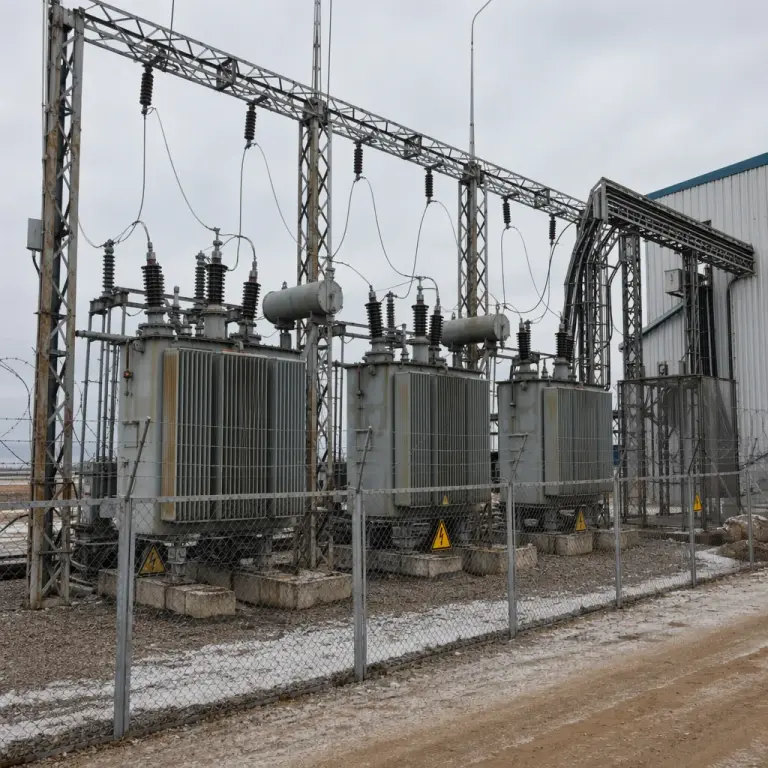
That is where the NoxHash industrial baseline matters. Our Kazakhstan facility — a country that sits in the global top-three for Bitcoin hashrate according to the Cambridge CBECI mining country data — runs at $0.03–0.04/kWh on an industrial contract, with a fleet averaging 12–18.5 J/TH across Antminer S21 XP Hyd, S21 Pro, S21, WhatsMiner M66S and M60S. Under a compressed Q3 hash price, that combination is the difference between a rig that still clears its electricity line and one that does not. When we publish the Q3 2026 numbers at quarter end, this is the baseline we compare against.
We also do not turn our fleet off for grid events. Kazakhstan's continental climate and stable industrial grid mean our Q3 uptime profile looks closer to Q2 than to a Texas operator's — 99.9% target uptime year-round, cooling done largely by the outside air even in summer. That is the operational reason we can hold plan prices constant through seasonal swings.
While you wait for the Q3 2026 fill-in, test the $0.035/kWh baseline yourself
You have just read the seasonal framing for Q3 — summer curtailment, August earnings, September difficulty moves. Rather than wait for the quarter-end update, open a free account and claim the 2-day Basic Miner trial to see how a 15–18.5 J/TH fleet on industrial Kazakh power actually behaves on a live dashboard.
Outlook to Q4 2026
The handoff from Q3 to Q4 usually re-prices mining in two ways. Cooler weather in North America brings curtailed capacity back online, so network hashrate tends to lift in October — which compresses per-TH revenue unless BTC price rises at the same time. And Q4 is also when new ASIC deployments targeted at year-end accounting get commissioned, adding incremental hashrate that shows up in November and December difficulty adjustments.
For cloud-mining users, the practical takeaway is that Q4 rental decisions are best made after the September difficulty reset — that is when the new baseline for "what a TH/s earns per day" settles. We will write that forward-looking note directly when we fill in the Q3 2026 data. Until then, the template is scaffolded, the seasonal logic is in place, and the waiting is the hardest part.
Frequently Asked Questions
Why publish a Q3 report before Q3 has happened?
The seasonal framing — Texas curtailment, August earnings, September difficulty moves — is already stable and useful. Publishing the scaffolding early sets context so when the real numbers land at quarter end, you can read them in a prepared narrative rather than raw data dropped from nowhere.
When is the full Q3 2026 update?
We target the last week of September 2026, once the September difficulty adjustments have printed and public-miner September production reports are in. The URL will not change, so a bookmark made today still resolves to the filled-in version.
When is the next Bitcoin halving?
The fifth halving is expected around 2028, when the block subsidy drops from 3.125 BTC to roughly 1.5625 BTC. Q3 2026 is therefore a post-halving, pre-halving quarter — miner economics sit in the slow phase between the two repricings, so transaction fees matter more than usual.
What usually happens to mining in summer?
In past years, large Texas miners have powered down during ERCOT heat alerts and collected demand-response payments that rivalled or exceeded their August mining revenue. North American hashrate typically dips in July–August and recovers in September. Operators outside curtailment zones — Kazakhstan, Paraguay, Canada — usually see little disruption.
How does summer heat affect NoxHash operations?
Our Kazakhstan site runs on an industrial grid contract not tied to a curtailment market, and the continental climate keeps summer temperatures manageable for fan-based cooling. We target 99.9% uptime across all four quarters, so plan prices do not change for seasonal reasons. More detail in the mining infrastructure knowledge base on-site.
Not financial advice — this is a forward-looking template
This article is a scaffolded report published before Q3 2026 begins. It frames what the quarter tends to look like based on historical seasonal patterns — it does not predict the actual values of BTC price, hashrate, difficulty, or hash price for Q3 2026. All [TBD at Q3 end] cells will be filled from verified public sources (CoinGecko, Blockchain.info, Cambridge CBECI, public-miner filings) at the end of September 2026. Cloud mining earnings depend on BTC price, network difficulty, and broader market conditions — all of which can move sharply and sit outside our control. Past seasonal patterns do not guarantee future results. Only commit funds you can afford to lose, and consider consulting a local tax advisor about crypto earnings in your jurisdiction.