Bitcoin Mining Profitability Report — Q2 2026 Preview
Q2 2026 opens with BTC near $75k and network hashrate at ~1,000 EH/s. Here's the early-April baseline and the four storylines miners should watch through June.

Q2 2026 is just three weeks old. Bitcoin trades near $75,000, network hashrate sits around 1,000 EH/s, and difficulty just slipped 2.43% to 135.59T on April 17. This preview maps the early-April baseline and the four storylines — price, hashrate, AI energy competition, and regulation — that will shape miner economics from now through June.
Editor's note — this is a Q2 preview, not a retrospective
Published April 24, 2026, roughly three weeks into Q2. All numbers below are from early April and clearly dated. We intentionally avoid forecasting May and June figures. A full retrospective with actual quarter data will replace this post at the end of June 2026.
Where Q2 2026 Starts
The quarter opened with miners in a noticeably better position than the same time last year. The spot BTC price is trading in the mid-$70,000s, global hashrate has grown past the 1 ZH/s (zettahash, or 1,000 EH/s) mark, and hashprice — the daily revenue one petahash of machines earns — has recovered roughly 13.65% from its mid-March trough, according to Hashrate Index data for April 2026.
Difficulty did miners a small favour on April 17: the network retarget printed a 2.43% decrease to 135.59T, the first meaningful easing since the start of the year. The next adjustment is currently projected around May 2 and would take difficulty back down to roughly 129.55T if hashrate stays flat — but that's the first piece of forward guidance that could change over the next week.
| Metric (early April 2026) | Q2 starting value | Direction from Q1 |
|---|---|---|
| BTC spot price | ~$74,000–$76,000 | Rebounding from March low |
| Network hashrate | ~1,004 EH/s | All-time-high territory |
| Difficulty (after Apr 17 retarget) | 135.59T | Down 2.43% |
| Hashprice (rolling 30d) | Up ~13.65% | Recovering, not yet 2024 levels |
| Block reward | 3.125 BTC | Unchanged until 2028 halving |
Data points as of April 17, 2026. All forward references ("through June", "rest of Q2") are descriptive of the observation window, not forecasts.
What Q1 Left Behind
Q1 2026 was the quiet, consolidating quarter miners had been asking for: a 12-month anniversary of the April 2024 halving, gradual hashprice recovery from late-2025 lows, and renewed public-miner M&A activity as weaker operators sold infrastructure to stronger ones. Nothing dramatic happened — no capitulation, no 2021-style melt-up — and in this industry that is usually good news.
The single biggest carry-over into Q2 is the margin gap. Miners running efficient fleets on sub-$0.05/kWh electricity ended Q1 with gross mining margins near 47%, while operators on $0.08–$0.12/kWh power continued to run at or below break-even after paying hosting and debt. Q2 is the quarter where that gap either widens or closes, depending on price.
Four Storylines Worth Watching Through June
Rather than predict a number, we're listing the four variables that will drive any Q2 outcome. Each one is a thing you can check yourself on a weekly basis — and each one could push the same BTC price into either "great quarter" or "painful quarter" territory depending on which way it breaks.
1. BTC price path
The quarter starts near $75k. The difference between a Q2 that closes at $85k+ and one that fades to $60k is the difference between miner profitability soaring and a second consolidation wave. Spot ETF flows remain the dominant weekly signal to watch.
2. Hashrate trajectory
Network hashrate has pressed past 1 ZH/s even as marginal miners capitulate. If the rate of new-ASIC deployment slows into Q2, difficulty could soften further and hashprice would climb independently of BTC price — a quieter but equally important tailwind.
3. AI & energy competition
Large public miners are signalling that AI/HPC hosting could reach up to 70% of their revenue by year-end. Q2 earnings releases will reveal how much grid capacity is being pulled out of SHA-256 and into GPU halls — a structural factor that can bend the hashrate curve.
4. Regulatory & tax calendar
Q2 always carries tax-season effects in the US plus any late-session energy or mining bills. Watch for updated guidance on mining-income classification and any jurisdiction-level rulings on energy caps — they tend to land quietly but change unit economics for months.
Miner Economics at the April Baseline
The table below takes a single Antminer S21 (200 TH/s, 3,500W) and runs it across three electricity tiers, using hashprice around mid-April 2026 levels. These numbers are snapshots, not forecasts — their only purpose is to show how sensitive margin is to $/kWh at today's hashprice.
| Electricity tier | Monthly power cost* | Gross mining revenue* | Net position |
|---|---|---|---|
| $0.04/kWh (industrial) | ~$101 | ~$280 | Healthy margin |
| $0.06/kWh (mid-tier hosting) | ~$151 | ~$280 | Thin but positive |
| $0.10/kWh (residential) | ~$252 | ~$280 | Near break-even |
*Illustrative. Assumes ~2,520 kWh/month, a hashprice snapshot of roughly $0.046/TH/day, and no hosting fees, amortisation, or taxes. Real-world outcomes move with BTC price and difficulty.
What Would Define a "Good" vs "Bad" Q2
Here's the framework we'll use when we come back to rewrite this post at end of June. Instead of putting a number on what happens, we're describing the three shapes the quarter could take.
Bull — "Good Q2"
BTC closes June above $85k, hashrate growth slows below +5% for the quarter, ETF flows stay net-positive. Hashprice improves meaningfully; high-cost miners breathe again; public miner multiples expand.
Base — "Middling Q2"
BTC chops between $70k and $85k, hashrate adds another 5–8%, hashprice holds the April level. Industrial miners stay profitable, mid-tier hosting stays thin, retail miners continue to exit. Quiet but survivable.
Bear — "Painful Q2"
BTC drops under $65k into June, hashrate keeps climbing as new fleets land, hashprice falls back below March lows. A second consolidation wave hits, more small miners unplug, high-leverage public miners come under stress.
Test your Q2 thesis on a free miner before you price it
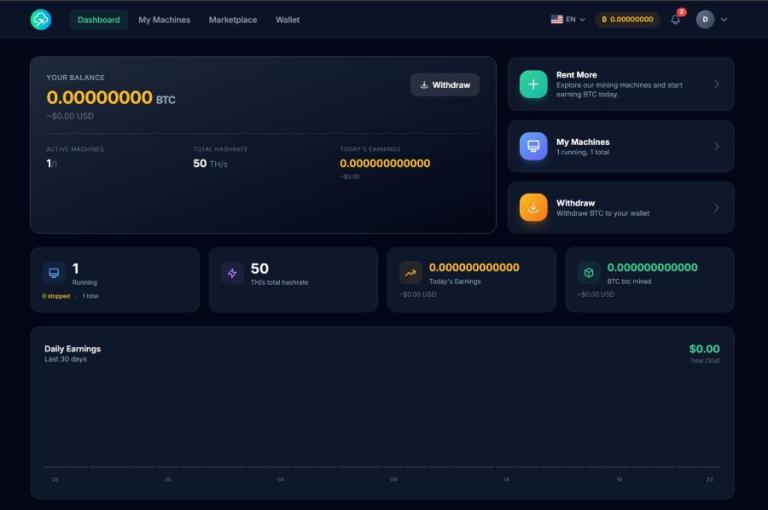
If the three scenarios above feel familiar, the fastest way to get a real feel for Q2 is to watch a live miner for 48 hours. Open a free NoxHash account and claim the 2-day Basic Miner trial — no USDT, no card, real hashrate on the Kazakhstan fleet.
The Economics That Stay True Across Scenarios
Regardless of which Q2 shape unfolds, the two numbers that matter most for any miner stay the same: the cost per kWh and the J/TH of the fleet. Those inputs determine how much of any future hashprice move translates into profit rather than electricity bills. They don't change week to week, and they're the reason industrial sites outlast retail rigs every cycle.
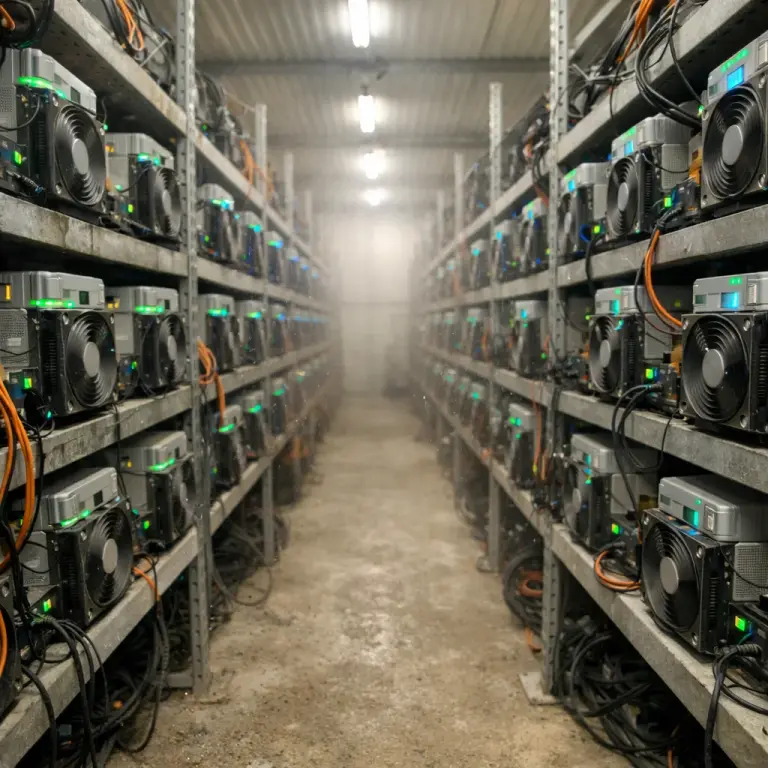
For NoxHash specifically, the Kazakhstan site runs on an industrial contract near $0.035/kWh and a fleet averaging 12–18.5 J/TH — Antminer S21 XP Hyd, S21 Pro, S21 and WhatsMiner M66S/M60S units. Those fundamentals don't forecast a Q2 outcome; they just determine how much of whatever Q2 brings reaches the user's wallet after power.
$0.035/kWh power
Industrial Kazakh contract, backed by UPS and diesel failover. The floor cost of every TH/s we rent to users.
12–18.5 J/TH fleet
Current-generation ASICs — roughly twice as efficient as 2021-era S19 Pro rigs. Cushions hashprice swings both ways.
Plans fixed in USD
From $20/month. Rental price doesn't move with BTC — users choose when the entry point looks right for their own thesis.
Frequently Asked Questions
Why is this a preview and not a full profitability report?
Because Q2 2026 runs April 1 through June 30, and we're publishing April 24 — only about three weeks in. A proper retrospective needs the full quarter of data. Writing one now would either require fabricating May and June numbers or describing the quarter based on three weeks, both of which would mislead the reader.
When will this post be updated with real Q2 numbers?
Shortly after June 30, 2026. We'll rewrite the same URL into a full retrospective with quarter-end BTC price, average hashrate, realised hashprice, difficulty adjustments that actually happened, and a check against the bull/base/bear scenarios listed above.
When is the next Bitcoin halving?
The fifth halving is projected around early 2028, cutting the block reward from 3.125 BTC to 1.5625 BTC. That's well outside the Q2 2026 window, but it's why transaction fees keep taking a larger share of miner revenue with every cycle — worth tracking even during "quiet" quarters.
Should I wait for Q2 to finish before renting hashrate?
That depends entirely on your view of BTC and your risk tolerance — we can't answer it for you. What we can suggest is using the free 2-day Basic Miner trial to see the platform and the live hashrate before committing any capital, and sizing any paid rental at a level you can comfortably run for multiple quarters.
What one number should I watch weekly during Q2?
Hashprice. It bundles BTC price, difficulty, and transaction fees into a single $/TH/day figure, which is the cleanest measure of miner revenue. Public trackers at Hashrate Index publish a daily value, and a rising hashprice is the quickest signal that Q2 is trending bullish for mining operators.
Not financial advice — forward-looking content
This post is a preview, not a forecast. Every number dated "April 2026" is a market snapshot at publication; nothing in this article predicts May, June, or end-of-quarter values. Bitcoin mining profitability depends on BTC price, network difficulty, transaction fees, energy prices, and regulation — all of which can move sharply and sit outside our control. Past performance does not guarantee future results. Scenarios (bull / base / bear) are illustrative frameworks, not probabilities. Only commit funds you can afford to lose, and consider consulting a local tax advisor about crypto earnings in your jurisdiction.