Best Cloud Mining Platforms 2026 — What to Look For
A 2026 evaluation framework for cloud mining platforms: 10 scored criteria, post-halving industry context, red flags, and a worked scoring example.

The best cloud mining platforms in 2026 are the ones that survived the post-halving squeeze with transparent operations, named hardware, verifiable withdrawals, and balanced risk disclosures. After block rewards dropped to 3.125 BTC in April 2024, weak operators collapsed and real ones professionalised. This guide hands you a 10-criterion rubric — with "excellent / acceptable / avoid" scoring bands — so you can score any platform in twenty minutes instead of twenty forum threads.
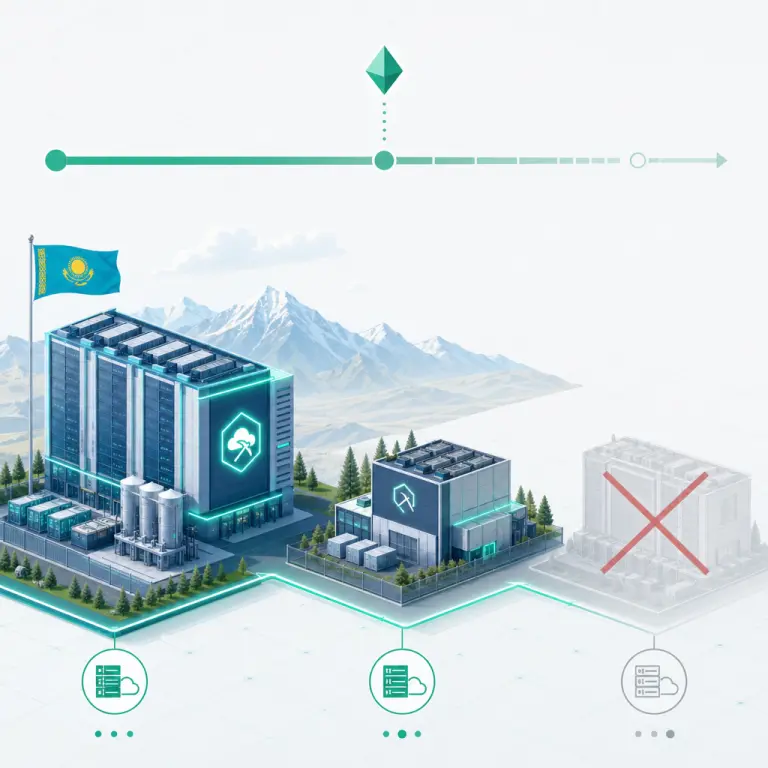
The 2026 Cloud Mining Landscape, Briefly
The industry in 2026 looks very different from 2024. The April 2024 halving cut block rewards from 6.25 to 3.125 BTC, and the market has spent two years absorbing the shock. Three shifts matter for anyone choosing a platform today.
First, consolidation is real. Tighter margins pushed under-capitalised operators out, while the top pools — led by Foundry USA and MARA Pool — now account for over 38% of global Bitcoin hashpower, according to AMINA Bank's post-halving miners landscape research. Larger players survived; smaller ones either got acquired, pivoted to AI/HPC hosting, or went offline.
Second, scams scaled faster than legitimate operators. Americans lost $11.4 billion to crypto scams in 2025 per the FBI's Internet Crime Report, a 22% jump year-on-year. Cloud-mining–style fraud alone accounted for roughly half a billion dollars, with copycat sites mimicking legitimate operator branding. The December 2025 SEC action against VBit Technologies — which allegedly defrauded 6,400 investors by selling hosting for rigs that largely did not exist — set the template for what you are filtering against.
Third, transparency became a competitive moat. Real operators in 2026 disclose the country, the electricity contract rate, the ASIC models, and the pool. Platforms that still hide behind "proprietary next-gen infrastructure" stand out now — not in a good way. The rubric below is designed to surface exactly that gap.
Block reward
3.125 BTC per block since April 2024. Next halving around 2028 will cut it again to 1.5625 BTC. Every evaluation starts from this baseline.
Network hashrate
800–900 EH/s in 2025–2026. Difficulty is hovering around 110–120T. Each TH/s earns less BTC than pre-halving — economics demand efficient fleets.
Scam losses
~$500M in cloud-mining–style fraud in 2024, growing into 2025. The SEC's VBit case and the Tophash/GlobaleCrypto copycats define the failure mode to filter for.
The 10-Criterion Rubric for 2026
Score a platform 2, 1, or 0 on each row. A total of 16 or higher is an infrastructure-grade operator worth trialling. 10–15 is acceptable but demands extra scrutiny. Below 10, the platform is not shopping-ready — walk away regardless of marketing.
The criteria cover what you can verify from a browser tab before depositing a dollar. Major players like NiceHash and Bitdeer disclose their fleet and pool relationships openly; smaller operators like NoxHash — which runs a Kazakhstan facility on $0.03–0.04/kWh industrial power with Antminer S21 and WhatsMiner M60/M66 fleet at 12–18.5 J/TH — should meet the same bar. The rubric is deliberately operator-agnostic.
| # | Criterion | Excellent (2) | Acceptable (1) | Avoid (0) |
|---|---|---|---|---|
| 1 | Location & power | Country, region, $/kWh named | Country only, no rate | "Global infrastructure" |
| 2 | Hardware | ASIC model + J/TH disclosed | Manufacturer only | "Proprietary ASICs" |
| 3 | Free trial | No-deposit, real hashrate | Promo credit after deposit | No trial or fake demo |
| 4 | Fee structure | Flat USD rental, BTC payout | Rental + maintenance fee | Fixed daily % |
| 5 | Withdrawal minimum | ≤ 0.0001 BTC | 0.0001–0.005 BTC | > 0.005 BTC |
| 6 | Custody | Withdraw to your own BTC address | External withdrawal behind KYC | Internal wallet only / "reinvest" |
| 7 | Audit & pool | FPPS via named public pool | Named pool, undisclosed model | "Internal algorithm" |
| 8 | Support | < 24h human reply, multi-channel | Email only, 24–72h reply | Chatbot or silence |
| 9 | Uptime disclosure | Live dashboard + public SLA | SLA stated, no dashboard | No uptime disclosure |
| 10 | Risk transparency | Balanced: price, difficulty, halving | Generic "crypto is risky" | Upside-only marketing |
Ground your scoring in public data. Cross-check any platform's implied earnings against the Cambridge Bitcoin Electricity Consumption Index and published difficulty charts. If a site's projected yield implicitly assumes 2021 difficulty or pre-halving rewards, the rubric has already answered for you.
Score a real platform against the rubric
The rubric works best when you apply it to a live dashboard. NoxHash discloses every row — Kazakhstan location and $0.03–0.04/kWh power, Antminer S21 and WhatsMiner M60/M66 fleet at 12–18.5 J/TH, FPPS pool payouts, 0.00001 BTC withdrawal minimum at 1.5%, 99.9% uptime commitment, and a no-deposit 2-day trial. Open an account and tick the boxes yourself.
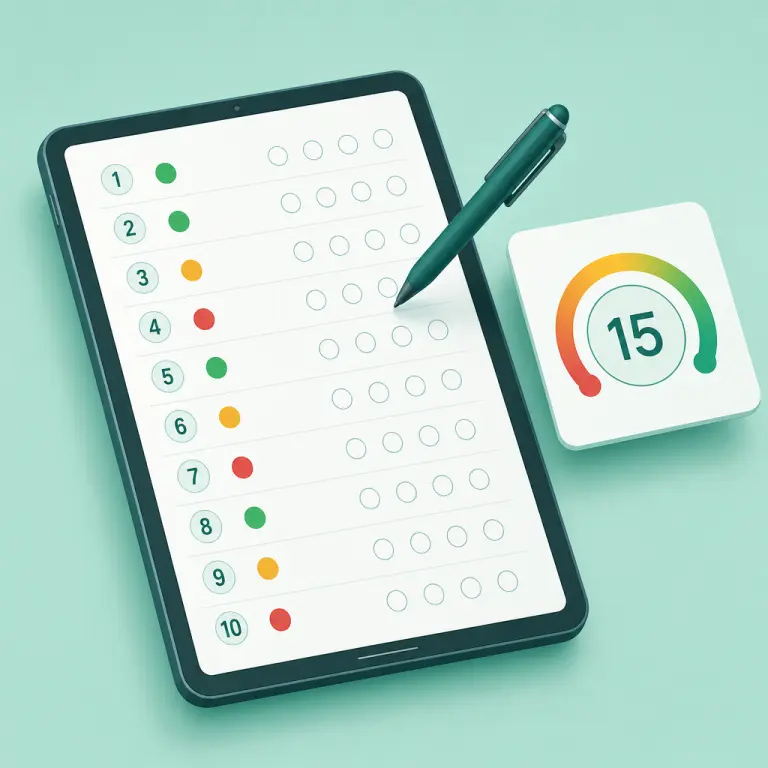
Worked Example: Scoring a Hypothetical Platform in 20 Minutes
Here's what a complete scoring pass looks like. Imagine a site called HashBright Cloud — a composite, not a real operator. The point is to demonstrate how quickly the rubric sorts signal from marketing copy.
Minutes 1–4: scan the footer and About page
HashBright says "global data centers in multiple jurisdictions" — no country, no rate. Score 0 on criterion 1. The About page mentions "latest-generation SHA-256 ASICs"; no model, no J/TH. Score 0 on criterion 2. Two rows in, the platform is already under the 16-point threshold.
Minutes 5–10: check pricing and free trial
HashBright offers a "$100 trial bonus" that only unlocks after a $200 deposit. That is not a free trial — score 0 on criterion 3. The pricing page quotes "1.4% daily ROI, contract-guaranteed." Fixed daily returns collapse the entire rubric: score 0 on criterion 4. The platform has now failed the terms pillar outright.
Minutes 11–16: check withdrawal terms and pool
Withdrawal minimum: 0.01 BTC. At current price, that locks out small users for weeks or months — score 0 on criterion 5. Custody supports external BTC addresses: score 1 on criterion 6. The payout model is described as "smart yield distribution" — no FPPS, no public pool named. Score 0 on criterion 7.
Minutes 17–20: support, uptime, and risk disclosure
Support is a chatbot that loops to a "contact form". Score 0 on criterion 8. Uptime is marketed as "industry-leading" with no number and no live dashboard: score 0 on criterion 9. The risk page says "crypto involves risk" and then promises "consistent returns regardless of market conditions." Upside-only marketing: score 0 on criterion 10. Final total: 1 out of 20. Close the tab.
A real infrastructure operator would produce a very different scorecard. NoxHash, for comparison, is built to score in the excellent band across all ten rows — country ($0.035/kWh Kazakhstan), hardware (Antminer S21 series at 12–17.5 J/TH, WhatsMiner M60/M66 at 17–18.5 J/TH), trial (2-day Basic Miner, no deposit), terms (flat $20/$50/$100/$250 per month, BTC payouts), withdrawal (0.00001 BTC minimum), custody (bc1/1/3 Bitcoin addresses), pool (FPPS, public), support (ticket system), uptime (99.9% stated with live hashrate per machine), and risk (explicit halving, difficulty, and price-drop warnings in user-facing copy).
Red Flags, Briefly Recapped
These four patterns show up again and again in scam reports, from Tophash and GlobaleCrypto to the VBit case. If you see any of them, the rubric score doesn't matter — do not deposit.
Fixed daily returns
"1.5% per day, guaranteed" is mathematically impossible in real mining. BTC output tracks difficulty and price, both of which move. A fixed daily yield is a financial product funded by new deposits.
No country disclosed
A real operator names the country and the electricity rate even without publishing coordinates. "Multiple jurisdictions" and "global hubs" are marketing adjectives — they describe nothing you can verify.
No hardware specified
Bitmain and MicroBT together produce ~90% of Bitcoin ASICs. Real fleets cite Antminer S21 or WhatsMiner M60/M66 with J/TH figures. "Proprietary next-gen" without model numbers typically means no hardware at all.
Withdrawal friction at cash-out
A minimum withdrawal of 0.01+ BTC, new verification hoops appearing the moment you try to cash out, or a first withdrawal stalled for weeks. The VBit case made this pattern textbook — test withdrawals early and small.
A 4-Step Test-Drive Before Scaling
Even a platform that scores 18+ on the rubric should earn your larger deposits, not get them. Run these four checks in order — stop at the first failure.
Claim the free trial and watch the dashboard
Register, enable TOTP 2FA, and activate the trial. On NoxHash that's a 2-day Basic Miner at 50 TH/s. Check the live hashrate, and if the platform exposes a CGMiner terminal or desktop view, confirm the output looks real. Trial earnings don't credit to the withdrawal wallet — that's expected and normal.
Deposit the smallest rental unit
If the trial convinces you the infrastructure is real, deposit the smallest viable amount. NoxHash's Basic Miner is $20/month; a $25 USDT deposit on TRC-20 or BEP-20 covers one month with a small buffer. USDT should land in 10–30 minutes — longer delays at this stage are a warning.
Run the smallest possible withdrawal
After a few days of BTC accrual, withdraw the minimum to a wallet you control. On NoxHash that's 0.00001 BTC with a 1.5% fee. The only question that matters: did BTC actually settle on chain? If yes, you have empirical evidence — not a marketing claim — that the platform honours withdrawals.
Scale only after the first successful withdrawal
Only then consider a Standard, Pro, or longer-term contract with its discount (NoxHash: 5% at 3 months, 10% at 6, 15% at 12, 20% at 24). Keep withdrawing periodically even at scale — self-custody remains the safest end state regardless of how long you have been with an operator.
Try the rubric against NoxHash's free trial
You have the rubric, the worked example, and the test-drive protocol. NoxHash is designed for this exact process — a no-deposit 2-day trial on a 50 TH/s Basic Miner, a dashboard that exposes live hashrate and remote desktop, and a withdrawal floor low enough to verify before scaling. Register and run the four-step sequence yourself.
Frequently Asked Questions
What changed in cloud mining after the 2024 halving?
Block rewards dropped from 6.25 to 3.125 BTC, which halved the revenue per block. Under-capitalised operators exited or pivoted to AI/HPC hosting. The survivors in 2026 run efficient fleets (12–18.5 J/TH) on cheap industrial power and disclose more than they used to.
What minimum score on the rubric is "safe enough" to try?
16 out of 20 is the infrastructure-grade threshold. 10–15 means acceptable but extra scrutiny — verify with a tiny test deposit and withdrawal first. Below 10, the platform has failed due diligence; no amount of positive reviews should override the rubric.
Why is the withdrawal minimum weighted so heavily?
Because it gates your single most important test. A low minimum — NoxHash sets 0.00001 BTC — lets you verify the withdrawal pipeline within days. A 0.01+ BTC minimum forces you to deposit more and wait longer before you can confirm the platform actually pays out.
Are large brand-name platforms automatically safer?
Not automatically. Scale helps with infrastructure transparency but the rubric should apply uniformly. Smaller specialised operators often score higher than larger ones when they publish exact fleet composition, pool relationships, and electricity rates. Score each platform — don't defer to brand.
How does the rubric handle platforms that also pivoted to AI/HPC?
Score only the Bitcoin mining side. A mixed operator can still rate well if its mining rental terms are transparent. The risk is shared power capacity — ask whether your rental is on dedicated ASIC hashrate or pooled against AI workloads, and check the hardware row accordingly.
Should I score term discounts as part of the fee criterion?
Look at whether discounts are stated transparently rather than at the discount size. NoxHash publishes 5/10/15/20% for 3/6/12/24-month terms. Opaque "VIP pricing" or discounts gated behind a sales conversation are a minor red flag — it suggests terms change per customer.
Is the rubric enough, or do I still need to read reviews?
The rubric is the first filter; community reports on withdrawal delays are the second. Spend 20 minutes scoring, then 10 minutes searching "platform name withdrawal delay" and "platform name review 2026". If both pass, run the four-step test drive. Skip any single step and you are relying on marketing.
Educational content — not financial advice
This rubric and worked example are for due diligence support, not financial advice. Industry figures, platform parameters, and network statistics reflect conditions as of April 2026 and can change. Cloud mining yields depend on BTC price, network difficulty, operator reliability, and your tax jurisdiction — all outside your direct control. Past results do not guarantee future performance. Only commit funds you can afford to lose, and verify local legal and tax treatment with a qualified professional before scaling any allocation.