7 Reasons Cloud Mining Is Easier Than Mining at Home
Skip the 3,500W electrical upgrade, 75 dB ASIC noise, and summer AC load. 7 practical reasons cloud mining beats home mining on effort in 2026.
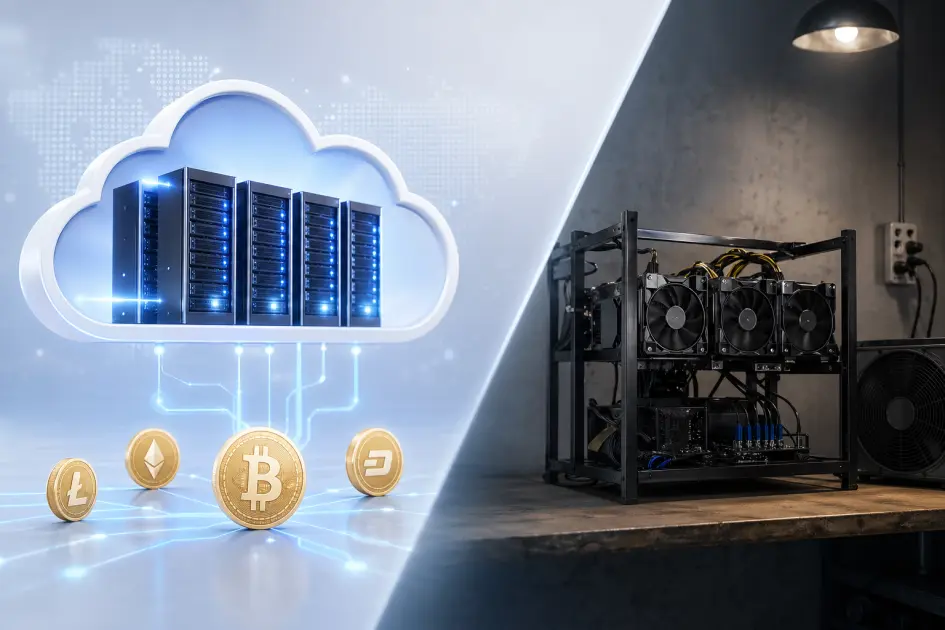
Cloud mining is easier than home mining because someone else already solved the seven hardest problems of running an ASIC: sourcing a $1,700 Antminer S21, feeding it 3,500 W on a dedicated 240 V circuit, muffling 75 dB of fan noise, exhausting 12,000 BTU/h of heat, updating firmware, diagnosing failed fans, and babysitting a pool connection. You keep the BTC yield and the 2-day free trial; they keep the hassle.
What "Easier" Really Means When You're Mining Bitcoin
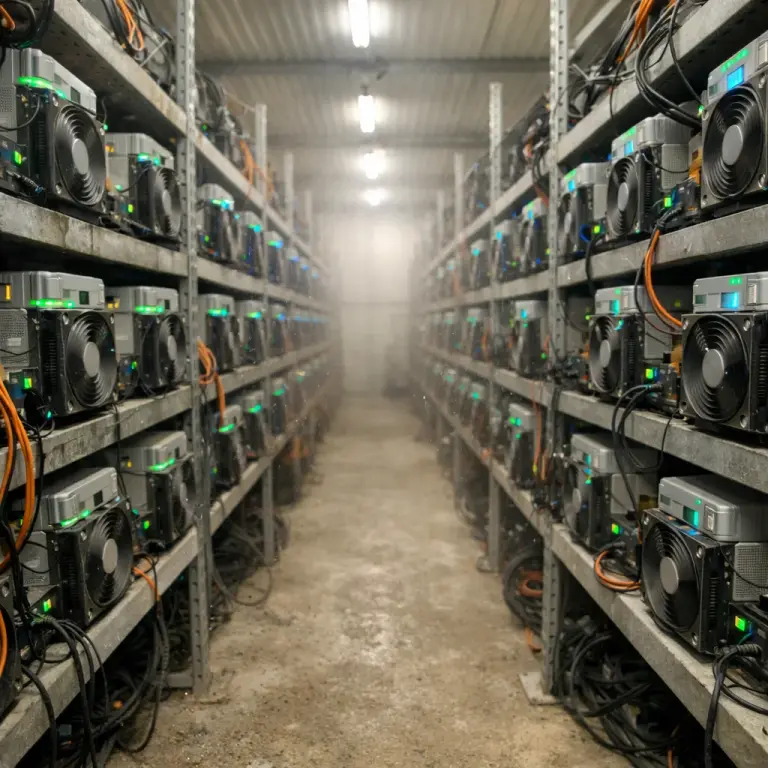
A home miner and a cloud miner both end up holding BTC — that part isn't different. The gap is in everything that happens before the first satoshi lands: sourcing hardware, wiring the circuit, quieting the noise, handling the heat, keeping firmware current, replacing failed parts. Home mining forces one person to be their own logistics, electrical, HVAC, and ops team. Cloud mining unbundles those seven jobs and hands them to a data center that already runs them at industrial scale.
This list ranks the seven hassles cloud mining removes, from most physical to most technical. Each one is something we genuinely handle inside the NoxHash Kazakhstan facility every day, so the "easier" claim is structural, not marketing. The caveat — when home mining still makes sense — is at the bottom.
The 7 Reasons Cloud Mining Is Easier
No hardware procurement — skip the $1,700 order
An Antminer S21 costs about $1,700 new in April 2026, plus $150 for a PSU if it isn't bundled, plus $50 domestic shipping. Cross-border orders add customs duties that vary by country. Back-order queues for the latest model can stretch 4-8 weeks. Cloud mining skips all of it — NoxHash buys at wholesale quantities and lets you rent in a single page click.
No 75 dB miner turning your bedroom into a data center
A running S21 measures around 75 dB at one meter — roughly a loud dishwasher that never turns off. It also dumps around 12,000 BTU/h of heat, enough to make a spare room unusable in summer. A DIY sound-isolation box runs $150-400, and you still have to route intake and exhaust air. In the cloud, noise and heat both live 4,000 km away in Kazakhstan.
No dedicated 240 V circuit or electrical panel upgrade
At 3,500 W continuous, an S21 draws ~14.6 A on a 240 V line or ~29 A on 120 V — more than a standard US bedroom outlet can safely handle 24/7. You need a dedicated 240 V 20 A circuit, and in older homes a panel upgrade. Electrician quotes land between $200 and $1,200. Apartments often rule it out entirely. A data center's industrial substation does this job as its baseline.
No cooling engineering — Kazakhstan does it for free
Home miners spend 15-30% of their mining power again on HVAC in warm months, because the same AC that cools the room has to remove the heat the ASIC just dumped into it. The NoxHash facility sits in a region where winter runs -15 °C to -30 °C, so intake air is already colder than any room you could cool. We use exhaust fans instead of compressors, and cooling costs fall out of the budget.
No firmware, pool, or failure troubleshooting
Home mining includes firmware updates, stratum URLs, pool failover, wallet configuration, fan replacements, and hashboard RMAs. A dead fan can mean 3-7 days of zero hashrate while you order a replacement. NoxHash runs a 24/7 technician team with on-site spares and swaps a failed unit inside 4-8 hours. Nothing in the chain requires you to read a CGMiner log at 2 a.m.
Start in under 2 minutes — and stop just as fast
Building a home rig is a 1-3 week project: order, wait for shipping, book an electrician, set up the circuit, unbox, configure the pool, flash firmware, test. Cloud mining is a form and a click — register, activate the 2-day Basic Miner trial with no deposit, and your first BTC starts dripping before the page finishes loading. Stopping is symmetric: you don't resell a rig, you just don't renew.
One dashboard, automatic BTC payouts every minute
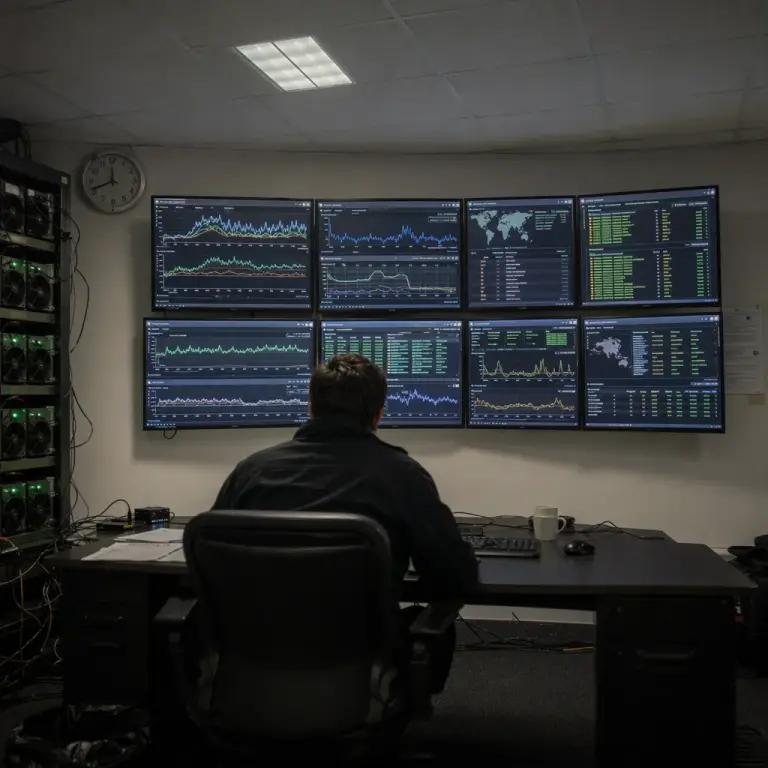
A home miner flips between CGMiner logs, a pool dashboard, a wallet, and a price app to figure out whether the rig is alive and earning. NoxHash consolidates hashrate, BTC balance, USD equivalent, a 30-day earnings chart, and a live price ticker into a single page. Block rewards are credited every minute via FPPS accounting, and withdrawals fire from the same screen.
Side-by-Side — What Setup Actually Looks Like
The seven reasons collapse into one short picture when you list the setup tasks required before hashrate goes live. The home column has steps you may not have considered when you first priced a rig; the cloud column is what remains after a data center absorbs the rest.
| Setup task | Home mining | Cloud mining (NoxHash) |
|---|---|---|
| Source the ASIC unit | Order + 3-7 day ship + customs | Not your problem |
| Electrical wiring | Dedicated 240 V 20 A circuit, possible panel upgrade | Industrial substation already installed |
| Noise control | DIY sound box, $150-400, airflow tuning | Not your problem |
| Cooling / HVAC | AC uplift +15% to +30% of mining load | Natural-air cooling in Kazakhstan |
| Pool / firmware / wallet config | You configure stratum, wallet, updates | FPPS pool pre-connected |
| Failure response | You diagnose and RMA, 3-7 days downtime | On-site techs, 4-8 h unit swap |
| Monitoring | CGMiner log + pool + wallet + price app | One unified dashboard |
| Time to first satoshi | 1-3 weeks | ~2 minutes (free trial) |
Test "easier" without the $1,700 order — spin up a Basic Miner in 2 minutes
You've just read seven things a home miner has to solve before the first satoshi lands. The 2-day Basic Miner trial lets you skip all of them: no hardware, no circuit, no noise box, no pool config. Same Kazakhstan fleet the side-by-side above is priced against.
Where Home Mining Still Wins
Easier doesn't mean universally better. Home mining beats cloud mining in three narrow cases, and it's worth naming them honestly.
Sub-$0.06 kWh households. If you're on hydro in Québec, Washington State, parts of Iceland, or a grandfathered industrial tariff, your power cost is close to our wholesale rate. You still pay the hardware capex and deal with the hassle list above, but the economics can pencil out.
Hobbyists who want the physical machine. Cloud mining is financial and operational; it isn't a hardware hobby. If the reason you're mining is that you want to live with the fan roar and flash custom firmware on a Saturday, home mining is the point — "easier" isn't the metric you're optimizing.
Large-scale miners with site access. If you can negotiate your own $0.04/kWh industrial contract and deploy 100+ units, you're not the audience for either home or cloud mining in the retail sense — you're building a competing data center.
4 Tips Before You Rent Your First Cloud Miner
Use the 2-day trial first
The Basic Miner trial credits simulated BTC but uses the real dashboard, hashrate telemetry, and fleet. It's the cheapest way to verify "easier" holds up on your side of the screen before you commit any USDT.
Pick your term deliberately
Month-to-month is zero commitment and full flexibility. 12-month and 24-month terms cut 15-20% off the rate but tie you to whatever BTC does over that window. Start shorter if you're new.
Turn on 2FA day one
Cloud mining removes physical risk but puts your BTC behind an account. Activate TOTP 2FA the same session you register, store the eight recovery codes offline, and your "easier" set-up stays secure.
Mind BTC price before you scale
Rental prices are fixed in USD; earnings are in BTC. Starting small during a weak BTC window makes it easier to adjust without locking in a 12-month contract at the wrong price. The 7 hassles are gone — market risk isn't.
For the full cost side of the same comparison, see our line-item 12-month TCO model across three electricity regions, which prices the seven hassles above in dollars instead of effort. Residential power data from the Cambridge Bitcoin Electricity Consumption Index backs the residential-vs-industrial spread we cite here.
Put the 4 tips into practice — trial first, then scale deliberately
The trial, the term choice, 2FA, and price-awareness are all steps you can run inside the account you haven't created yet. Open the dashboard, activate the free 2-day miner, secure the login, and decide on a term only when the "easier" side proves itself.
Frequently Asked Questions
Is cloud mining genuinely easier than home mining, or just marketing?
Structurally easier. Home mining requires hardware, a 240 V circuit, noise control, cooling, firmware, failure response, and monitoring — seven jobs done by one person. Cloud mining hands those to an industrial facility and exposes one dashboard. The 2-day free trial lets you verify the claim before paying anything.
How long does it take to actually start cloud mining?
Under two minutes in the free-trial path. Email plus password, verify the inbox link, activate the 2-day Basic Miner, watch hashrate come online on the dashboard. Funded accounts add a USDT deposit step via TRC-20 or BEP-20, which clears in 5-15 minutes once you send the exact amount.
Does "easier" mean I also earn more than I would at home?
Only above about $0.06/kWh of residential power. Below that threshold — hydro regions, grandfathered industrial rates — home mining still wins on cost despite the effort. Above it, cloud wins on both effort and cost. Effort and cost are separate axes, and this article is specifically about effort.
What happens when a cloud miner fails in the data center?
On-site technicians swap the failed unit from the spare pool, typically within 4-8 hours. Your contract is tied to hashrate, not a specific serial number, so the replacement picks up where the old one left off. At home, the same fan failure usually means 3-7 days of downtime while you order parts.
Can I still mine at home later if I start with cloud?
Yes — they're not exclusive. Many miners start in the cloud to learn the workflow (pool accounting, BTC custody, difficulty math) then buy hardware once they've confirmed their power rate justifies it. Cloud mining functions as a low-risk on-ramp to the physical version, not a competitor to it.
Educational content — not financial advice
This article compares the practical effort of home versus cloud mining. It is not a profit forecast. Mining revenue depends on BTC price and network difficulty, both of which are volatile and outside your control. Hardware prices, electrical labour rates, and electricity tariffs vary by country and time, and all figures reflect publicly available April 2026 data. Past performance does not guarantee future results. Only commit funds you can afford to lose, and verify local regulations before operating any mining activity in your jurisdiction.